WORTH THE READ: MATT AXLEY GUEST EDITORIAL

Our many RAF supporters have such vast and varied experience, and we’re capturing some of their words of wisdom to share with you. This guest editorial is by Matt Axley, a pilot and RAF Tennessee Ambassador.

Leave No Trace but a Generational Trace

As backcountry pilots, we are incredibly fortunate to have organizations like the RAF and Tread Lightly! charting the course for our community. Over the years, they’ve provided the gold standard for stewardship, ingraining phrases that we all know by heart: “Pack it in, pack it out,” “Leave no trace,” and “Leave it better than you found it.” These are the principles that have protected and sustained countless airstrips across the country.


Here in East Tennessee, we’ve been reflecting on these foundational ideas as we continue to build out the new Fly Rocky Top network. As we work to connect these beautiful Appalachian airfields into a cohesive network, we’re looking at how we can build on the incredible groundwork already laid by the organizations and the people that have gone before us, and expand our definition of stewardship beyond just the physical dirt and grass.


Rethinking “Pack it in”
The traditional meaning of this phrase is straightforward and vital: don’t leave anything behind. But what should you pack in? Maybe a shovel in case a rut needs filling. An extra cup of coffee for the pilot in the tent next door. A willingness to put a little more into a place than we take from it. It's not only packing out what you brought in; it’s about packing in an investment in the future.


This fall, a handful of volunteers will head out to McGraw’s Backyard and Higdon Field. They aren’t just flying in to relax by a fire; they’re meeting up to dig holes, level the ground, and pour concrete footers for new pilot facilities. They’re doing this so that fellow aviators – some they may never meet – will have a welcoming place to relax.


The magic of these airstrips isn’t just the pristine grass; it’s the energy invested in them by our community. Every time we depart on a new adventure, we pack the culture of aviation with us, so let’s be sure it’s a culture worth passing along.


Leaving a Generational Trace
As we practice “Leave no trace” of our campfire, our food, or our tie-downs; we should aim to leave a massive trace for future generations. EAA’s Young Eagles program champions this approach, inspiring those who come after us. Our aviation community relies entirely on shared passion. Let's actively foster these new experiences for the folks “looking through the fence,” or we risk losing the very lifestyle we are working so hard to create and protect. Let’s face it—the only things aging faster than the fabric on our airplanes are our knees and backs. So next time you head out, bring someone new along, offer the right seat to a neighbor, show your kids how to clean the cooking grill, or simply share a story around the campfire. If we don't actively pass the torch on each journey, there won’t be anyone left to carry on the stewardship we’ve started.


Leaving It Better, Together
Leaving a place better than you found it usually means picking up stray litter. That’s essential, but true stewardship goes a little further. It’s about building a resilient, welcoming community of pilots who view stewardship as an ongoing, collective action. Whether it’s helping clear brush at Smuggler’s Landing or simply greeting a new pilot who just landed in the backcountry for the first time, “leaving it better” means ensuring our collective community is stronger, safer, and more inviting than it was yesterday.


The RAF’s “Fly, Stay, Play” philosophy works beautifully, but only when there are places left to play and people who care enough to maintain them. The next time you drop the flaps and slip into your favorite grass strip, secure your aircraft, and ask yourself one more thing: How can I leave this community a little better than I found it today?

Matt Axley is a Naval Aviator with an 18-year Navy career, where he continues to serve today in the U.S. Navy Reserve. In his civilian career, he is a Captain for American Airlines, flying the A320. A passionate advocate for aviation and outdoor recreation, Matt is also helping develop the Tennessee backcountry network, Fly Rocky Top.

Submitted September 29, 2026


Posted in Guest Editorial, News

    Recent Posts
By Carmine Mowbray • November 13, 2026
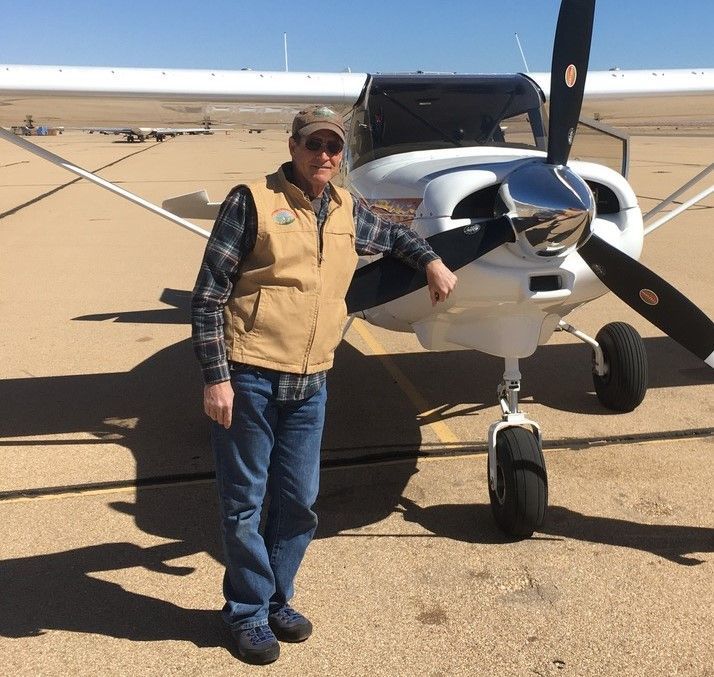
The RAF is fortunate to have notable scientist John Priscu as a supporter. John has helped at work parties, assisted HQ with the Airfield Guide, and contributed his wide academic/science expertise on occasional airfield projects. John grew up in the clear sunshine of Las Vegas, NV, where his uncle introduced him to flying. “My first flight was at age four, roped to my father in the open cockpit of my uncle’s PT-19. At the ripe age of 15, my uncle taught me to fly his Howard DGA-15P during our many visits to dirt strips in the Southwest, including Chicken Strip,” he says.  Like many, John got the aviation bug early on, then spent years raising a family before returning to flight. He settled in Bozeman, MT, where in 1984 he began his 40+ year career at Montana State University. He earned his SEL ticket in 2002 and bought a Maule, which he says suits his flying profile, supporting conservation flying, and flying the backcountry. When he’s not flying the Mountain West or caring for his 1979 Porsche 911SC, he might be found anyplace in the world as he fulfills his assignments as Regents Professor Emeritus at MSU. He has spent over 40 seasons conducting ice field research in Antarctica, Alaska, Greenland, and the Himalaya. Or he may be nosed into a project for JPL or NASA. He returned recently from a whirlwind lecture tour for the US State Department in the far Southern Hemisphere. Engaging John in conversation, one will always learn something scientific before the talk turns to flying. While flying in the backcountry, he met McKennas. “We bonded because we like to camp, mountain bike, and fly, among other things. I became an enduring RAF supporter. My wife, Barbara, and I took McKennas’ suggestion to buy a winter place near St. George, Utah, a decision we do not regret. We bought a hangar in Hurricane, where I met other RAF supporters like Gordon Rock (RAF supporter extraordinaire and all-around great guy), and we all enjoy flying in the Southwest.” While mountain biking together, John McKenna told him about the great biking and flying in Bentonville, AR. “I was sold.” In spring of 2024, John planned a flight to Bentonville with a stop in New Mexico. “One phone call to John McKenna mentioning my intentions was all it took to get the RAF connections moving. Within days I received emails from RAF New Mexico Liaison Ron Keller and RAF Arkansas Liaison Dave Powell, providing background and support. I began by flying to Gallup to visit RAF supporters Perry and Sandra Null, who were superb hosts. I highly recommend their Perry Null Trading Post.” At Bentonville, he was met by a welcoming crew organized by Dave Powell. The next day they flew “The OZ” with Dave in John’s right seat, Chip Gibbons leading, followed by RAF Texas/Montana Ambassador Steve Maus. “Having Dave in the right seat was invaluable because everything was so green, I couldn’t tell a grass strip from a mowed agricultural field.” The next day Dave had a mountain bike delivered to his hangar, and he took John on a “fantastic ride” followed by dinner with his wife Julie and Steve. Grounded for three days by IFR at Bentonville, John was able to depart in an MVFR window. After dodging weather through Oklahoma, Texas, and eastern New Mexico, he overnighted in Santa Fe, then flew directly back to 1L8, ending his journey. "Returning home, I reflected on the great folks who helped me along the way, and the huge role those RAF connections played. RAF really is a huge family of individuals who drop what they’re doing in a minute to help a fellow RAF’er. I am honored to be part of the RAF, and am forever indebted to all the RAF folks who make this happen.” Submitted November 13, 2026 By Carmine Mowbray
By John McKenna • November 12, 2026
Credit this month goes to Angela Duckworth, whose new book Situated suggests that our best comes when we work to shape our external environment so that good choices become automatic. To an outsider, it might seem obvious where the RAF finds itself today, but I assure you there has been a good deal of effort put into arranging the table so that good things are on it, and good people are there to be a part of it. I believe it starts with our RAF culture. You have heard it before around the RAF campfire when someone asks a question beginning with “why.” The answer they often hear is, “Well, that’s just the way we do it around here.” That applies to how we manage our resources, take on new projects, and most importantly, treat the people we deal with, as well as one another. To build that culture, the RAF has chosen people and partners who share the ideals and values our organization represents. I am pretty sure that most all of us would concur that the RAF has the best of the best when it comes to its greatest asset, its people. Author Duckworth goes on to say that you may not be able to control the world, but you can reign supreme over your surroundings. The RAF, IMHO, has done this as well as any organization. We have clearly focused on sticking to our mission in the backcountry, and that has allowed us to be a useful voice in the larger world of aviation. When you roll the principles of Ms. Duckworth's book into a formula for success, it’s my hope that you will see how the RAF has worked darn hard to be the kind of organization that is respected, and that you all are happy to be part of it. So, the next time you are asked “why” about something the RAF does, you too can answer, “It’s just the way we do things around here.” - John McKenna, RAF Chairman Submitted November 12, 2026
November 12, 2026
RAF Outfitter Holiday Sale - up to 50% off! Get a head start on your holiday shopping with the RAF Outfitter Holiday Sale! Now through December 31, enjoy up to 50% off select RAF Outfitter gear and apparel. Whether you're shopping for the backcountry pilot on your list or treating yourself to something new, it's the perfect time to stock up on your favorite RAF gear! Start shopping here ! Submitted November 12, 2026
November 12, 2026
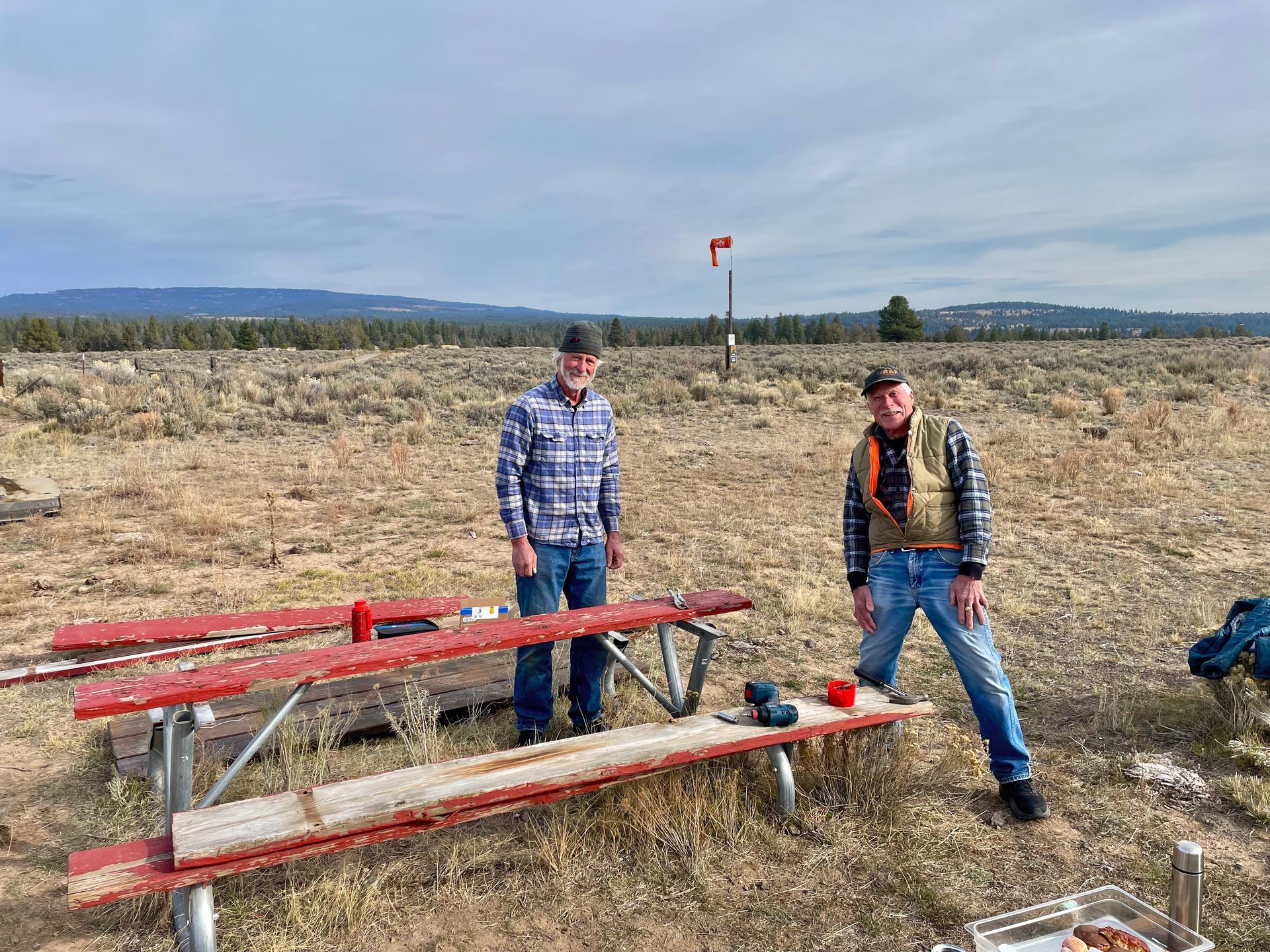
USFS Rager Guard Station Airstrip in Central Oregon’s Ochoco National Forest is a popular destination for backcountry pilots. RAF volunteers have long collaborated with the USFS to undertake seasonal maintenance of the airstrip. Braving early winter conditions, eight Central Oregon RAF volunteers gathered in early November to improve safety and amenities at the airstrip. While fighting a nearby wildfire in 2024, the USFS brought in heavy equipment to grade and profile the 2,800-ft gravel runway. “This greatly increased safety, making it suitable for use by a wider variety of aircraft and pilot capabilities,” RAF Oregon Liaison Richard Mayes said. The RAF had previously provided a grant for the installation of a new windsock and picnic table and the rental of equipment to mow the runway, turnarounds, and parking areas. This year, Mayes reported that volunteers in five aircraft flew to the airstrip while others drove two and one-half hours hauling their own equipment for mowing and grading. The team cleared overgrown brush from the runway, parking, and camping areas; mowed and leveled the gravel runway; restored a badly weathered picnic table; repainted runway markers; and installed new signage. “Paulina District Ranger Robbie Piehl expressed his appreciation for the volunteers’ commitment to maintaining the airstrip,” Mayes reported. As a result of these efforts, the District Ranger has asked that RAF investigate what may be required to reopen two other long-neglected airfields. Find more information on Rager USFS Airstrip in the Airfield Guide . Submitted November 12, 2026
November 11, 2026
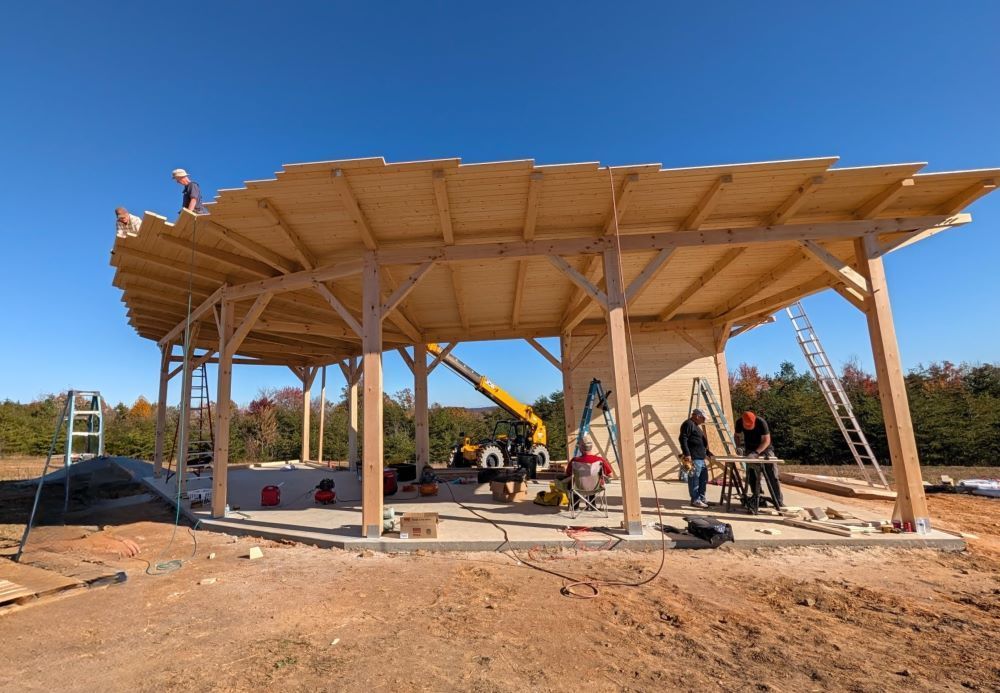
Volunteers gathered at Rockwood Airport in eastern Tennessee the first weekend of November to continue working on two Fly Rocky Top airfield projects. The RAF project leaders are Tennessee Ambassador Matt Axley and Fly Rocky Top Team Lead Jeff Smith of nearby Lenoir City. RAF Ambassadors Kevin Johnson (OR) and George Weaver (ID), along with Liaison Steve Thompson (OK), traveled to help direct the efforts, aided by dozens of local and regional volunteers, many of whom camped on site. Heavy rains had ceased, leaving morning mists and sunshine for outdoor work. The crew concentrated efforts on a large pilot pavilion at Smuggler’s Landing, the 2,400-ft turf landing area with under-wing camping at Rockwood, KRKW, which will be the basecamp for the network of up to seven backcountry airfields, as part of the RAF’s Expanding the Map initiative. In October, the crew poured concrete for the pavilion, and started building small post-and-beam picnic shelters at McGraw’s Backyard and Higdon Field. The crew focused work on McGraw’s and Smuggler’s Landing. Higdon Field is currently closed, with a planned opening date in 2027.