PUBLIC COMMENTS REQUESTED TO SUPPORT ACCESS TO 10 OF UTAH'S BACKCOUNTRY AIRSTRIPS
CALL TO ACTION:


Public Comments Requested to Support Access to 10 of Utah's Sensational Backcountry Airstrips


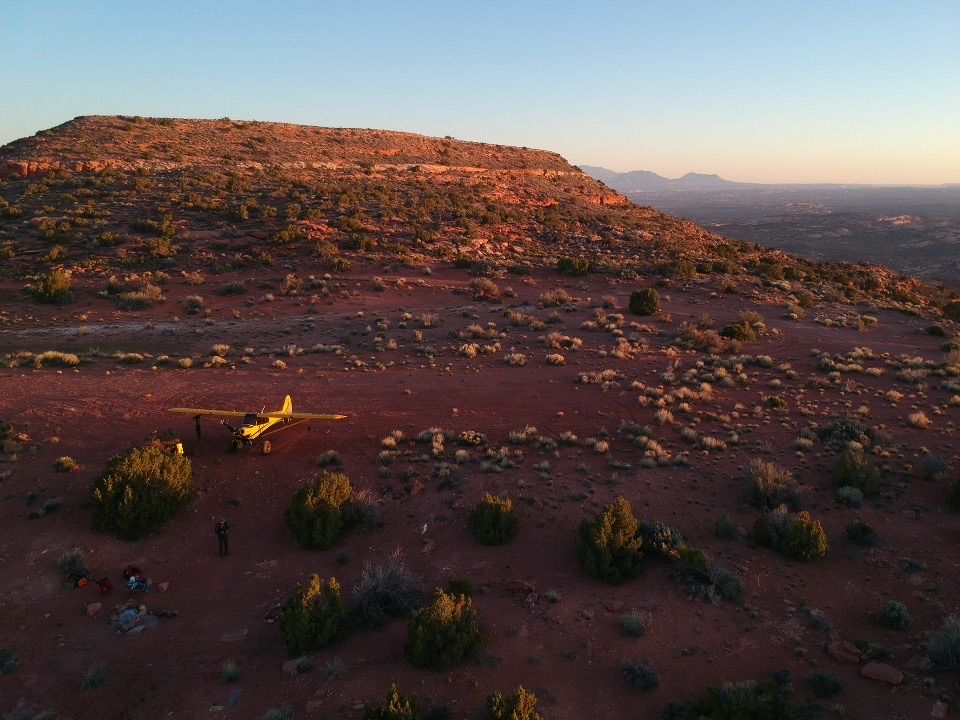
The BLM has issued an Environmental Assessment (EA) regarding the following ten Moab-Monticello backcountry airstrips. Pilot comments will help to open access to the airstrips.


Your Comments are Needed by Thursday, September 3.


Please use the link below to state in your own words why you support access to these backcountry airstrips:

  • Nokai Dome
  • Piute Canyon
  • Potato Ridge
  • Playa
  • Big Flat
  • Red Canyon
  • Spring Canyon
  • Castle Creek
  • Steer Ridge West
  • Wee Hope Mine
Submit Comment Now

For more specific information about the BLM's Environmental Assessment click here.


Talking points:

  • Thank the BLM for their careful evaluation and for approving the airstrips. As a recreational pilot, I/we support BLM's decision to formally designate the 10 Moab-Monticello airstrips in the BLM Travel Management Plans and to limit their use to aircraft use only, to promote safety between OHV recreationists.
  • These existing airstrips have been in use for as many as 70 years and have not attracted public attention, nor have disturbed other recreational users. They will create no additional impacts to our public lands.
  • Pilots are responsible for familiarization with all seasonal wildlife or nesting bird closures at these airstrips. These conditions will be posted on aeronautical resources. 
  • No maintenance takes place March 1 through July 31 during migratory bird nesting season. 
  • Most of the airstrips are adjacent to roads designated for motorized use. One is next to a paved highway. Aircraft impact to sight and sound is considerably less than other motorized use. Aircraft noise is infrequent and extremely temporary.
  • Once parked, pilots and passengers are no different from backpackers and hikers. Aircraft have no driving wheels, and create minimal impact to surface area.
  • Peaceful solitude and enjoyment of the remote Utah backcountry is a primary motivation for pilots to seek these 10 airstrips. 
  • The RAF has an MOU with the BLM for cooperative maintenance, saving the agency resources. We are available to work with the BLM on the stewardship and care of the airstrips. 


Your public comments count. Remember to use your own words when writing comments; templated comments are seen as one comment, not individual submissions. Personal comments are counted as individual comments, so please take the time to make it personal.


Thank you for helping preserve these backcountry aviation assets.


Submitted August 25, 2026

    Recent Posts
November 19, 2026
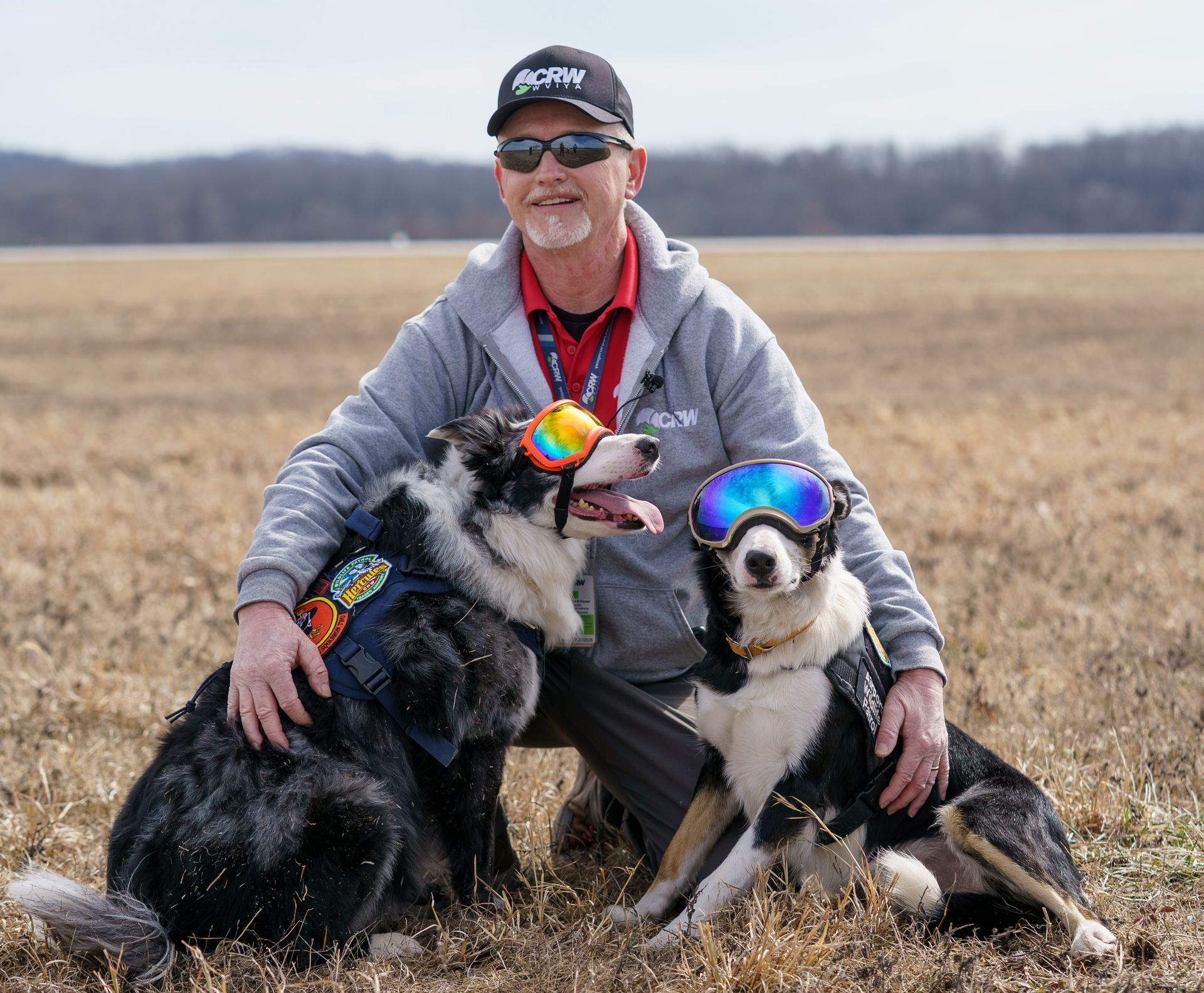
Our many RAF supporters have such vast and varied experience, and we’re capturing some of their words of wisdom to share with you. This guest editorial is by Wildlife Specialist Chris Keyser, who is the handler of Hercules and Ned: West Virginia International Yeager Airport's Wildlife Patrol dogs.
November 18, 2026
For many, the word “backcountry” brings to mind a setting in the wilderness. We at the RAF consider “backcountry” to be more than a place. It describes a style of flying we enjoy. Where patterns may not be rectangles, and where extra care must be taken to safely land and depart. In our world, “backcountry”…
November 16, 2026
Imagine escaping the crowded New York metro area in your taildragger, and within a half hour, you’re over a forested valley, heading for an open turf runway with lakes on either end. You roll out on the turf at Andover Aeroflex Airport in Kittatinny Valley State Park, less than 40 nm northwest of the city. Tie down and stroll to New Jersey’s deepest natural lake and discover why folks love to ply Lake Aeroflex for trout, landlocked salmon, and bass. Choose to explore any of several hiking and biking trails. It’s hard to believe that an idyllic gem like this exists, yet it does. Wouldn't it be a tragedy to lose it? The future of Andover Aeroflex (12N) is less than certain at the moment. “The RAF is not sitting idly by. We are working hard to help change the course of this potential disaster,” RAF Director Jeff Russell said. New Jersey Congressman Josh Gottheimer visited the airport October 2, and said, “This would be a devastating blow if closed.” The New Jersey Department of Environmental Protection (NJDEP) has moved to evict all tenants – including the flight school academy. They are to vacate by December 31 of this year so it can refit the historic hangars to accommodate New Jersey Forest Fire Service’s helicopter firefighting facility for this region’s short six-week fire season. 
By Carmine Mowbray • November 13, 2026
The RAF is fortunate to have notable scientist John Priscu as a supporter. John has helped at work parties, assisted HQ with the Airfield Guide, and contributed his wide academic/science expertise on occasional airfield projects. John grew up in the clear sunshine of Las Vegas, NV, where his uncle introduced him to flying. “My first flight was at age four, roped to my father in the open cockpit of my uncle’s PT-19. At the ripe age of 15, my uncle taught me to fly his Howard DGA-15P during our many visits to dirt strips in the Southwest, including Chicken Strip,” he says. Like many, John got the aviation bug early on, then spent years raising a family before returning to flight. He settled in Bozeman, MT, where in 1984 he began his 40+ year career at Montana State University. He earned his SEL ticket in 2002 and bought a Maule, which he says suits his flying profile, supporting conservation flying, and flying the backcountry. When he’s not flying the Mountain West or caring for his 1979 Porsche 911SC, he might be found anyplace in the world as he fulfills his assignments as Regents Professor Emeritus at MSU. He has spent over 40 seasons conducting ice field research in Antarctica, Alaska, Greenland, and the Himalaya. Or he may be nosed into a project for JPL or NASA. He returned recently from a whirlwind lecture tour for the US State Department in the far Southern Hemisphere. Engaging John in conversation, one will always learn something scientific before the talk turns to flying. While flying in the backcountry, he met RAF Chairman and RAF Administrative Director John and Tricia McKenna. “We bonded because we like to camp, mountain bike, and fly, among other things. I became an enduring RAF supporter. My wife, Barbara, and I took McKennas’ suggestion to buy a winter place near St. George, Utah, a decision we do not regret. We bought a hangar in Hurricane, where I met other RAF supporters like Gordon Rock (RAF supporter extraordinaire and all-around great guy), and we all enjoy flying in the Southwest.” While mountain biking together, John McKenna told him about the great biking and flying in Bentonville, AR. “I was sold.” In spring of 2024, John planned a flight to Bentonville with a stop in New Mexico. “One phone call to John McKenna mentioning my intentions was all it took to get the RAF connections moving. Within days I received emails from RAF New Mexico Liaison Ron Keller and RAF Arkansas Liaison Dave Powell, providing background and support. I began by flying to Gallup to visit RAF supporters Perry and Sandra Null, who were superb hosts. I highly recommend their Perry Null Trading Post.” At Bentonville, he was met by a welcoming crew organized by Dave Powell. The next day they flew “The OZ” with Dave in John’s right seat, Chip Gibbons leading, followed by RAF Texas/Montana Ambassador Steve Maus. “Having Dave in the right seat was invaluable because everything was so green, I couldn’t tell a grass strip from a mowed agricultural field.” The next day Dave had a mountain bike delivered to his hangar, and he took John on a “fantastic ride” followed by dinner with his wife Julie and Steve. Grounded for three days by IFR at Bentonville, John was able to depart in an MVFR window. After dodging weather through Oklahoma, Texas, and eastern New Mexico, he overnighted in Santa Fe, then flew directly back to 1L8, ending his journey. "Returning home, I reflected on the great folks who helped me along the way, and the huge role those RAF connections played. RAF really is a huge family of individuals who drop what they’re doing in a minute to help a fellow RAF’er. I am honored to be part of the RAF, and am forever indebted to all the RAF folks who make this happen.” Submitted November 13, 2026 By Carmine Mowbray
By John McKenna • November 12, 2026
Credit this month goes to Angela Duckworth, whose new book Situated suggests that our best comes when we work to shape our external environment so that good choices become automatic. To an outsider, it might seem obvious where the RAF finds itself today, but I assure you there has been a good deal of effort put into arranging the table so that good things are on it, and good people are there to be a part of it. I believe it starts with our RAF culture. You have heard it before around the RAF campfire when someone asks a question beginning with “why.” The answer they often hear is, “Well, that’s just the way we do it around here.” That applies to how we manage our resources, take on new projects, and most importantly, treat the people we deal with, as well as one another. To build that culture, the RAF has chosen people and partners who share the ideals and values our organization represents. I am pretty sure that most all of us would concur that the RAF has the best of the best when it comes to its greatest asset: its people. Author Duckworth goes on to say that you may not be able to control the world, but you can reign supreme over your surroundings. The RAF, IMHO, has done this as well as any organization. We have clearly focused on sticking to our mission in the backcountry, and that has allowed us to be a useful voice in the larger world of aviation. When you roll the principles of Ms. Duckworth's book into a formula for success, it’s my hope that you will see how the RAF has worked darn hard to be the kind of organization that is respected, and that you all are happy to be part of it. So, the next time you are asked “why” about something the RAF does, you too can answer, “It’s just the way we do things around here.” - John McKenna, RAF Chairman Submitted November 12, 2026