WORTH THE READ: JEFF SMITH GUEST EDITORIAL

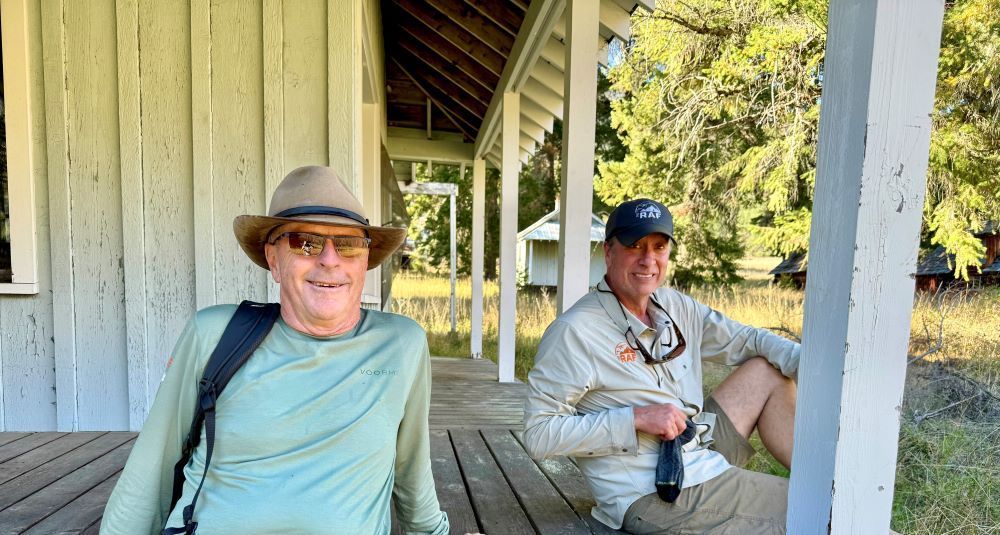
Our many RAF supporters have such vast and varied experience, and we’re capturing some of their words of wisdom to share with you. This guest editorial is by Jeff Smith, a pilot and an RAF Supporter.

Backcountry Season Is Here—Are You Prepared to Take Care of Each Other?

It’s that time of year again when our conversations shift toward backcountry flying. Annuals and condition inspections are wrapping up, new gear has found its way into our airplanes, and many of us are flying more regularly. Plans are being made, routes discussed, and airplanes repositioned. All of this is part of the fun—but it may not be enough.


In June of 2018, during my first backcountry trip, I found myself in the right place at the right time to help a friend. Not by design, but because earlier in life I had training as a medic—training that suddenly mattered when an accident occurred in our group while flying in the Idaho backcountry.


Forty years earlier, I had served as an EMT in southeast Ohio as part of a rural emergency care initiative. Back then, accidents in rural America too often ended badly simply because timely, competent care wasn’t available. That experience stayed with me.

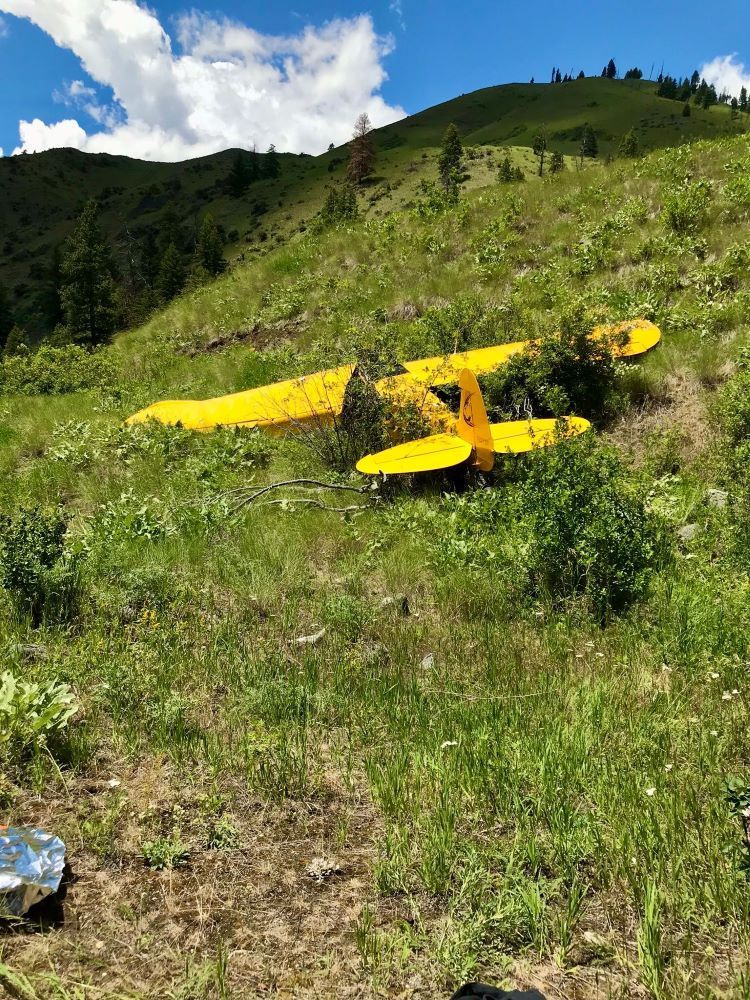
In 2018, a stall-spin accident at a no-go-around strip left a close friend pinned in his aircraft, unconscious and fighting for his life. The three of us who were not involved in the accident worked together to extract him, provide critical care, and get rescue services moving. Because of teamwork—and preparation—that day had a good ending.


I’m sharing this with our RAF community for one reason: as you prepare your airplane, your gear, and your flying skills for the coming season, please consider adding basic first aid training to your toolkit. Courses are widely available through organizations like the American Heart Association, the American Red Cross, and even low-cost online options through OSHA. And if you really want to be prepared, there are many Wilderness First Responder courses available that will prepare you for the unique circumstances you’ll likely face in the event of an accident in remote areas. Practical skills, including bleeding control, wound management, bandaging, splinting, spine stable patient packaging, hypothermia management, as well as treating illnesses and critical thinking skills, are covered in these courses.

We all work hard to manage airspeed, fly close to terrain, and land precisely. Those skills keep us safe. But the first aid skills you bring into the backcountry may save someone else’s life. Treat them as seriously as your tie-downs or survival gear.


And while care is being given, make sure someone in your group is summoning help—whether by satellite communicator or modern phone capability. Be intentional about having a plan.


With basic first aid skills and a reliable way to call for help, we improve the odds that we—and our friends—get to come back and do this again.

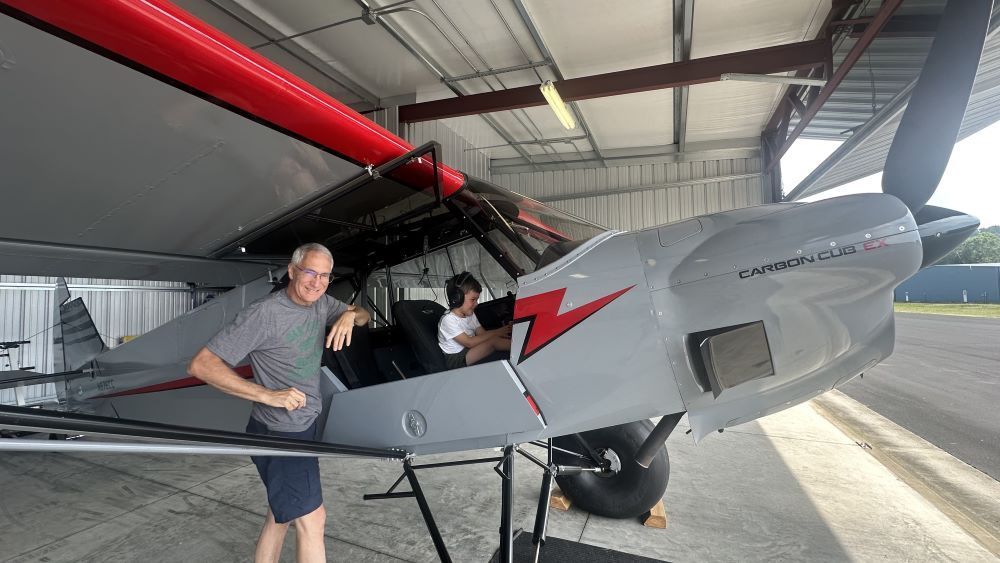
Jeff didn’t start flying until later in life, obtaining his private license and instrument rating at age 40.  Over the next several years, Jeff built time in a Cherokee Six, then built a Van’s RV-7A, eventually purchased a Cirrus SR22, and recently built a Carbon Cub EX-2.  Despite the late start, Jeff has always been interested in aviation.


Jeff retired from Oak Ridge National Laboratory as the Interim Director and served as the lab’s Chief Operating Officer for 22 years.


Confirmed by the U.S. Senate, he served as a Director on the Tennessee Valley Authority (TVA) Board, the nation’s largest public utility, from 2017 to 2021.  In 2002, he served a temporary assignment with the White House Transition Office after 9/11, supporting the consolidation of numerous federal agencies into the Department of Homeland Security.


Jeff served as a Commissioner for the Metropolitan Knoxville Airport Authority from 2004 to 2021, where he championed the recruitment of Cirrus Aircraft to Knoxville.  


Jeff’s focus during retirement has been with Rockwood Aviation, a company he started with Todd Simmons, Mike Goulian, and Randy Massey to manage and develop the Rockwood Airport (RKW) in East Tennessee.  Most recently, Jeff supported the Recreational Aviation Foundation in the development of their current five-year strategic plan.

Submitted March 3, 2026


Posted in Guest EditorialNews

    Recent Posts

July 16, 2026
We have a BIG announcement planned for AirVenture this year, and you're invited to join us to celebrate the news. Put these special events on your AirVenture schedule for Tuesday, July 21: 8:30 - 10:30 am: Donuts & Coffee at the Redbird Booth, #301 11:30 am - 12:45 pm: RAF Forum - Beyond The Pavement by Mike Goulian, Forum Stage #10 We can't wait to share what our volunteers have been working on. Submitted June 15, 2026
By Carmine Mowbray July 14, 2026
“It's hard to describe the emotions associated with this effort,” said RAF California Liaison Katerina Barilov of the restoration of Monache Meadows airstrip, on the Kern Plateau south of California’s Mount Whitney. This High Sierra airstrip had been accessed for recreation for years until the US Forest Service unofficially closed it in the 1970s citing the Wilderness Act, although the strip is not in a Wilderness area; it lies between the Golden Trout and South Sierra Wildernesses. The RAF is thrilled to announce that Monache Meadows is officially charted as L80, and has been brought back into safe operation after many years of neglect. It is open for public access, thanks to years of effort and support by RAF volunteers and donors. RAF California Liaison Rick Lach first learned of the airstrip in the 80s on a Jeep excursion planting trout in the High Sierras. Lach became an RAF Liaison in 2011, and determined ways to approach the appropriate land managers about restoring the airstrip for use after being abandoned. Persevering for 15 years with respectful communications with a series of District Rangers, he finally delivered a breakthrough in 2024 when the Forest Service agreed to include Monache Meadows in its scope of work, allocating some funds in cooperation with RAF volunteer efforts. "After years of patience and persistence, I am glad to announce that we have restored Monache Meadows back to safe operation to be enjoyed by pilots once again," said Lach. Both Lach and Barilov organized repeated work parties, seeing as many as 20 volunteers making the arduous drive to help. A Monache resident and RAF supporter donated the windsock. The remote area is popular for camping, hiking, and fishing, and up until now was only accessible seasonally by a rough and rocky road, requiring high-clearance 4WD vehicles. The road becomes soft and impassable during wet conditions and closes due to snow. Barilov said, “We appreciate everyone's help. The strip ended up nearly 2,400 feet in length, is very flat, and is covered with grass. Frankly, it looks like one of the best grass airstrips I have ever landed on.” The airstrip lies at an elevation of 7,874, so those wishing to access it must consider density altitude, and that it seasonally gets heavy snows. The RAF's Expanding the Map initiative is a nationwide effort focused on opening, improving, and restoring access to airstrips, helping connect aviators to more of the places they love to explore. Learn more about Monache Meadows Airstrip and how the RAF is Expanding The Map . Submitted July 15, 2026 By Carmine Mowbray
By Matt Foster July 14, 2026
By Matt Foster - Safety, Education, and Etiquette Committee Chair Your backcountry adventure likely involves a heavily loaded airplane, a short strip, challenging terrain, and limited options. Your practice should reflect those realities – at your home airport. Weave exercises into your normal flying, and consider bringing someone along to observe and keep you honest. Make your normal operations backcountry-ready operations. Seek out an instructor with backcountry experience or challenge your local instructor to learn about your upcoming mission and play a role in your preparation. Load the airplane as you expect to fly it. Bring the camping gear, survival equipment, and ballast that simulates your expected weight and center of gravity. You’ll learn more about how the airplane performs when it's configured for the mission…not when it's empty and light. Make all your landings “spot” landings (remember: your “worst” landing is your standard). Know your performance for takeoff distance and power settings. Learn to lean for density altitude. Practice these calculations for your aircraft. Fly non-standard patterns where airports allow. Practice go-arounds with varying flap settings. Practice slow flight and canyon turns. You can do many of these on every local mission with only a little more thought and purpose…and it can be fun and rewarding. Visualize the adventure, and practice before you launch your adventure. The backcountry is no place to discover your limitations. Submitted July 14, 2026 Photo Credit: Bill Brine
July 14, 2026
The annual Meadow Creek, Montana cooperative work party occurred on June 20. Volunteers from Montana Pilots Association, Montana Aeronautics, and the RAF flew in to do seasonal maintenance together on this popular NW Montana Forest Service airstrip adjacent to the Bob Marshall Wilderness. 
By Carmine Mowbray July 14, 2026
RAF New Hampshire Liaison John Meade originally came on board as Liaison in 2016 and has recently volunteered to add Vermont to his Liaison role. We are thrilled to have his help in both states going forward. John grew up in New York and had the Navy take him away; eventually depositing him in Massachusetts. John’s father-in-law was a pilot, and in the late 80s, John got bitten by the flying bug as well. Eventually, a SuperCub on floats became his pride and joy. It became a convertible with Bushwheels, skis, and floats. He credits his association with SuperCub.org for coast-to-coast friendships and finding a cadre of local New England pilots in search of backcountry adventures. John’s current airplane is a Bearhawk Patrol that he built. John and his wife Jennifer split their work week between Massachusetts and New Hampshire, where they have a home and airfield. Their Wentworth Aerodrome – affectionately known as the “WAD” – is located 12 miles from Vermont, where he flies routinely. John has one son and five grandchildren. RAF NH/VT Liaison John Meade can be reached at jmeade@theraf.org . Submitted July 14, 2026 By Carmine Mowbray