WORTH THE READ: CHRIS NUGENT GUEST EDITORIAL

Our many RAF supporters have such vast and varied experience, and we’re capturing some of their words of wisdom to share with you. This guest editorial is by Chris Nugent,  Arizona Pilots Association President and RAF Supporter.


I hope some of you have had the opportunity to enjoy the winter flying season in Arizona. The weather is spectacular, which allows us to get out and enjoy some of the backcountry airstrips like Double Circle Ranch, Pleasant Valley, and Grapevine Airstrip. They truly are special places and are the product of a lot of volunteer sweat equity and the partnership between the RAF, Arizona Pilots Association, and the US Forest Service.

 
My home base is a municipal airport in the Phoenix suburbs with hard surface runways and a control tower. It’s certainly not one of the special places we love in the backcountry, but it has a strong general aviation community with a lot of history, and it provides everything I need to keep my airplane safe from the elements and in flying trim. So, you might say I have my feet in two camps – part-time hard surface aviator and part-time backcountry aviator.

 
Even if you are relatively new to flying, you know that general aviation and municipal airports are facing a broad set of challenges. We’ve seen a lot of these challenges before, like residential encroachment and the resulting complaints about aircraft noise and more recently, concerns about lead pollution from aviation fuel. Some are new, like the conflict with municipal airports using ADS-B to collect fees.

 
Unfortunately, all these issues have recently converged at my home airport, and the local municipality that operates the airport has chosen to implement significant operational changes, including charging landing fees for based aircraft. Decisions like these set a broad precedent for general aviation nationwide, and as you might expect, the interactions between the city and local aviation community have been difficult. I could write volumes about how this all unfolded, but they have been written before at other times at different airports in the US.

 
What I will offer is that strong advocacy by the general aviation community as a whole is paramount. This is why national organizations like The RAF and AOPA, and the local and state organizations, like the Arizona Pilots Association, are important in representing the shared interests of the general aviation community. The outcomes are not guaranteed, but as my dad always told me, just showing up is 90% of being successful.


If you’re wondering what “showing up” looks like in practical terms, here are a few thoughts:

  • Join and stay current with a national advocacy group, like The RAF and AOPA, and your local pilot association. Membership numbers and engagement matter to airports and legislators.
  • Make the effort to attend airport advisory board or city council meetings when airport items are on the agenda - calm, factual, and respectful voices make a difference.
  • Volunteer at special events and with local aviation organizations – a little personal effort helps build credibility and community.
  • Support good-neighbor flying: fly noise-abatement procedures and help newer pilots learn local best practices.
  • Tell the airport’s story and what it does to contribute to the community - invite a neighbor to see what happens on the field and why it matters.


Advocacy is a team sport—leveraging these relationships and investing volunteer sweat equity are key to preserving access to the hard surface places we call municipal airports, and by extension, the backcountry.
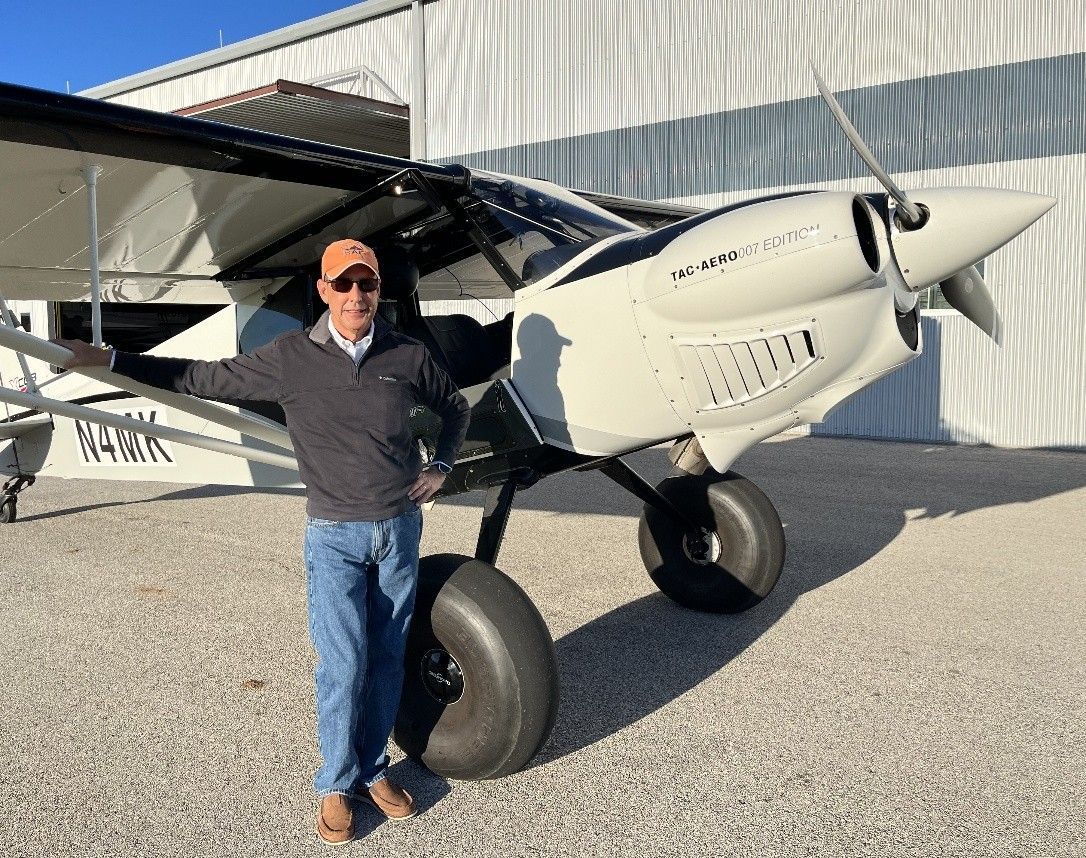
Although Chris is a relatively new pilot, he has been involved in aviation and aerospace for the past 40 years and recently retired as Vice President of Engineering for an aerospace company that designs and manufactures safety systems for military aircraft and launch vehicles. He currently serves as President of the Arizona Pilots Association and bases his Carbon Cub at Mesa’s Falcon Field.

Submitted April 24, 2026


Posted in Guest EditorialNews

Recent Posts

April 24, 2026
Thanks to an RAF grant awarded to Oregon Ambassador Sarah Brown and Oregon Liaison Richard Mayes, volunteers have completed improvements at Siletz Bay State Airport (S45) on the Oregon coast. Twenty-seven volunteers led by Brown met on April 17 to clean up the camping sites and replace the rusted fire rings and collapsed wooden picnic tables. The project was conducted in partnership with the Oregon Department of Aviation. 
April 14, 2026
RAF Wyoming Liaison Joe Feiler has tapped his passion for teaching and is applying an innovative approach to building a pilot's shelter or “ramada” at Lusk Airport in southeastern Wyoming. Feiler was awarded an RAF grant for materials for this planned 12 x 20-ft ponderosa timber-framed structure, and he has gathered a team of career and technical education teachers from all over Wyoming to collaborate on the structure, to be built of Wyoming-made materials. “While it would be relatively easy to gather a small group of pilots and construct a basic shelter in just a few days, the true value of this project lies in the collaboration and educational opportunities it creates,” Feiler said. The project begins with Casper College engineering students providing plans. The timbers will be milled at the Devils Tower Wood Products sawmill located in Hulett, WY. The University of Wyoming will host a timber framing workshop, offering graduate credit to career and technical education educators interested in expanding their knowledge of timber framing. Local pilot volunteers from the Lusk community will work alongside Career and Technical education teachers to construct the 12 x 24-ft concrete pad. The final phase of the project will be the erection of the ramada, completed by SkillsUSA middle school students for their community service project, which will be entered in the 2027 Wyoming State SkillsUSA contest. Gold medalists advance to the national competition. “It is noteworthy that these students earned a national gold medal in 2025 for a previous Lusk community service project,” Feiler pointed out. Each student participant will benefit from the practical experience in carpentry and woodworking, construction planning and safety, team-based project execution, and gain the skills aligned with Wyoming’s workforce needs. “By intentionally integrating education, industry, and community needs, this project becomes more than a pilots’ shelter—it becomes a hands-on learning environment and a showcase of high‑quality construction using locally sourced materials,” Feiler added. Learn more about Lusk by visiting the Airfield Guide . Submitted April 14, 2026
By Matt Foster April 14, 2026
By Matt Foster, RAF Director and Safety, Education, & Etiquette Committee Chairman
By Carmine Mowbray April 13, 2026
The RAF is proud to call the Arizona Pilots Association an early partner in its mission to preserve, improve, and create airstrips for recreational access. From GA advocacy at Falcon Field, a towered Class-D airport, to picking rocks and chopping brush at remote backcountry airstrips, APA volunteers selflessly work to fulfill their mission of “Promoting, Preserving, Protecting General Aviation in Arizona – Advocating the common interests of Arizona's general aviation community at the local and state level.” Since their founding in 1978, they’ve accomplished this by promoting aviation safety and pilot education, elevating public awareness of GA; preserving, and re-opening Arizona’s backcountry airstrips; broadcasting Arizona aviation news; and connecting Arizona pilots through aviation events. One of the RAF’s first state liaisons was APA then-vice president Mark Spencer. By 2012, Mark emerged as the ideal person to engage the US Forest Service in his vision to upgrade some of Arizona’s under-used and abandoned USFS airstrips. Mark formed a lasting “orange and green” alliance, with many successes to show for the partnership. The restoration of Double Circle Ranch airstrip, rehabilitating Grand Gulch in the Arizona Strip, and repaving and adding visitor amenities to Grapevine near Roosevelt Lake are just a few destinations that have new life and visitation to show for it. APA volunteers contribute labor and resources, and thanks in large part to these early efforts, the RAF executed a Cost Share agreement with the USFS to work on further improvements to airstrips in the Tonto National Forest and the Apache-Sitgreaves National Forest. APA volunteers' ongoing efforts continue to help facilitate airstrip improvements through the RAF's Cost Share agreements in Arizona. APA efforts include attention to all of Arizona’s public-access airports and the wide scope of GA flying. Pilots can find an impressive lineup of resources online, listing local safety seminars and backcountry airstrip safety briefings, maps, and videos. Pilots can win honors through APA’s Passport program – created with help from Embry-Riddle Aeronautical University students – that promotes pilot proficiency. You’ll find an event calendar, listings for scholarships for aspiring students pursuing careers in aviation, and more. Current President Chris Nugent said, "APA has volunteers from all over Arizona and other states who support Arizona aviation in many different ways, including people who have volunteered for decades and continue to participate even after they've stopped flying." Go to arizonapilots.org and tempt yourself with the flying opportunities that APA has fostered throughout the Grand Canyon State. Submitted April 13, 2026 By Carmine Mowbray Photo credit: Matt Haag, Grapevine Airstrip
April 13, 2026
RAF Oregon Liaison Richard Mayes reported that at the end of March, the RAF collaborated with the Oregon Department of Aviation (ODA) to complete improvements at McKenzie Bridge Airport (00S). The 2,600-ft turf airfield is located within the Deschutes National Forest. For the past ten years, RAF volunteers have assisted the ODA and US Forest Service to maintain and improve the airfield facilities for recreational use. Using a skid steer-mounted masticator, the brush that was adjacent to the airfield was removed to improve safety. A vibratory compactor, donated by RAF supporter Paul MacClanahan, was employed to compact and improve the runway surface. McKenzie Bridge is a popular destination in the Central Oregon Cascades. The airfield has a primitive camping area maintained by RAF volunteers. Just a short walk from the airfield is recreational access to the McKenzie River, and the popular McKenzie River mountain bike trail with over 20 miles of single-track hiking and biking through Douglas firs, with waterfalls and river views. Find more about this airstrip in the Airfield Guide. Submitted April 13, 2026