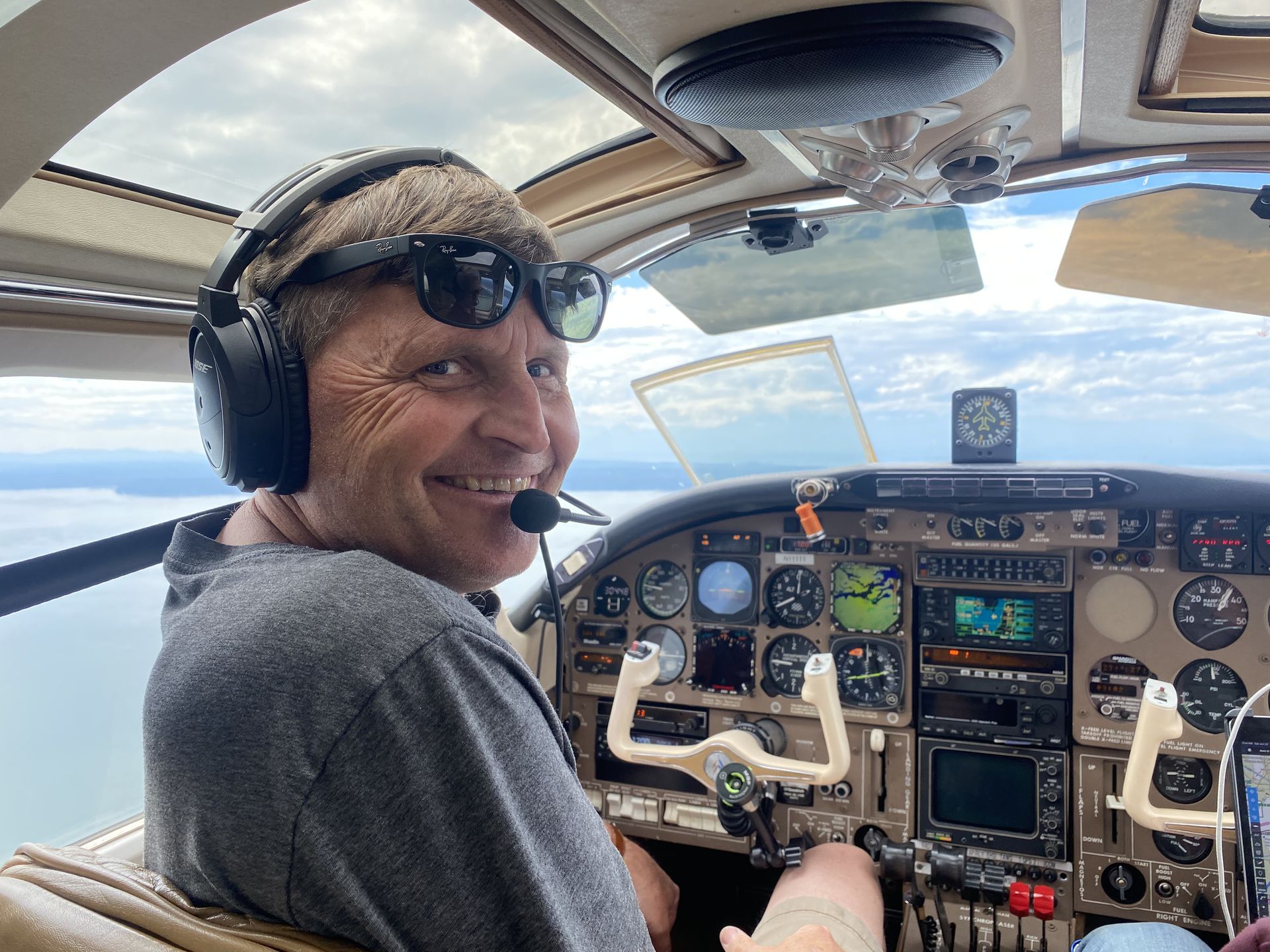
WORTH THE READ: JOHN NADEAU GUEST EDITORIAL

Our many RAF supporters have such vast and varied experience, and we’re capturing some of their words of wisdom to share with you. This month’s guest editorial is by John Nadeau, one of the RAF’s RUS Liaisons and a longtime RAF supporter.


When Opportunity Knocks, Open the Door – Better Yet, Knock First – Opportunity May Be Lurking


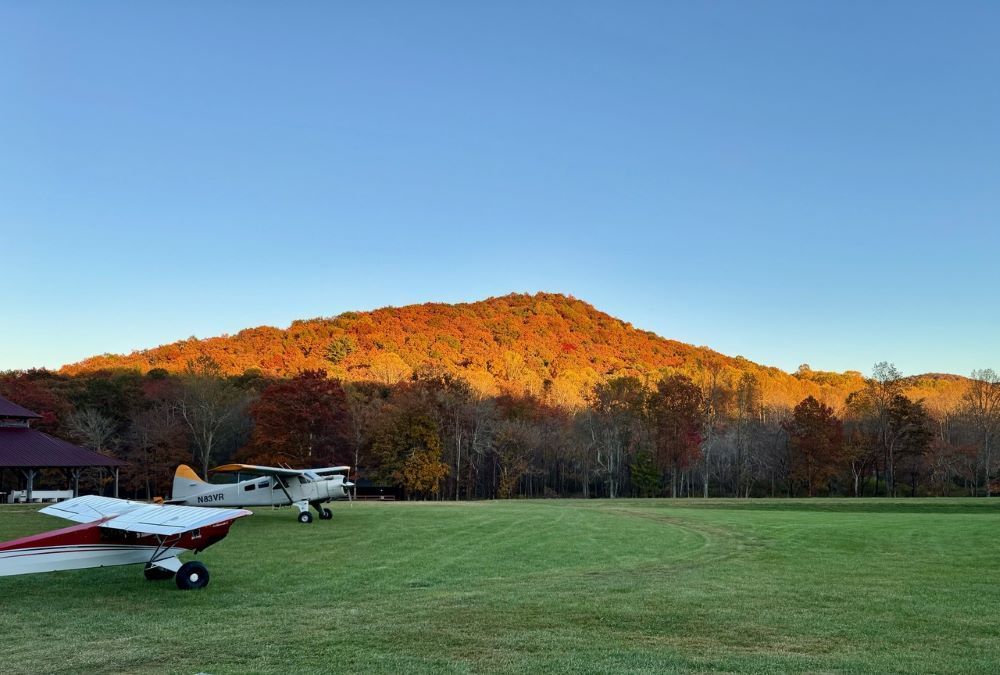
The first grass runway I landed on was the one I owned. I had an opportunity to purchase an airfield before buying an airplane. The runway had been neglected for over a decade. As a physical therapist, I felt a need to “rehabilitate” it. For ten years, I’d rented Cessna 150s, flying pavement to pavement from a very busy, towered airport just west of Boston, Mass. Suddenly I owned a grass airfield in Maine. This sort of opportunity just doesn’t come up very often. 


That first summer was spent plucking young birch trees, filling holes and mowing ten-year long grass and weeds. I literally worked a good riding lawn mower to a nasty demise. I allowed other pilots to access the airfield, but liability was always a major concern. 


Circa 2007, a blurb appeared in AOPA Pilot that caught my eye. A group based in Montana calling itself the Recreational Aviation Foundation had just gotten the State of Montana to add “aviation” to its Recreational Use Statute (RUS).


I called the phone number. On the other end John McKenna explained the RAF, and that an RUS limits the liability of airfield owners. I had saved an abandoned airfield and wanted that liability protection – another opportunity.


Recreational Use Statutes basically state that if a landowner keeps land open to the public for recreational purposes, and does not charge a fee, and there is no malicious intent to injure others, then the owner is not responsible if someone using the land is injured. Some states list recreational purposes, preceded with the phrase, “…including but not limited to…” Aviation for recreational purposes may be implied, but airfield owners tend to want to see it in black and white in the RUS.


We wanted to add “aviation” to Maine’s RUS. It took two years to get through the legislative process. Maine pilots and other airfield owners, as well as the RAF helped. Once “aviation” was added to Maine’s RUS, use of my airfield became “free” for all. 


John called me with the opportunity to participate in an RAF Strategic Planning Conference in Driggs, Idaho, adding, “Come out a couple of days early and we will fly you around a bit.” Enter Tim Clifford, and RAF co-founders Chuck Jarecki, Jerry Cain, and Dan Prill. What a fun opportunity! I met some wonderful and interesting people, as you can imagine.


During the conference, John offered me the opportunity to lead the RAF’s national effort to include aviation in each state’s RUS. At the time, there were only five states. He had just arranged to have me flown all over creation in the Rocky Mountains. He had me hooked, netted, and landed.


I acquired the help of Bob Kay and Dave Myrick. We started a campaign to get this done. The opportunity for additional aviation destinations was unimaginable… if only RUS liability protection could be assured in the minds of the private-use airfield owners. 


I knew nothing about owning an airfield, nor the process of getting a bill through state government. Same for Bob Kay (Boeing test pilot) and Dave Myrick (artisan glass blower). But as people volunteered to lead their own state’s effort, we grabbed these opportunities and got ‘er done. We learned more as we went along from state to state, advising RAF volunteers and airfield owners about the legislative process. We simply used the experiences we had gained, team effort, persistence, pleasantness, generosity and patience. Today there are 28 states that include aviation in their definition of recreation. Four states have no list but merely state generically, “recreation,” so we assume aviation is implied.


Recently RAF Supporter Rick McCraw of Vermont has stepped up, and he and I are available to answer RUS questions. Eighteen states still don’t specify “aviation” in their RUS, and airfield owners in these states need aviation language to be included.


So, I encourage you to open the door when opportunities knock, even if it’s all new to you. And don’t just wait for that knock. Rap on some doors yourself. Speak to airfield owners about RUS protections and airfield maintenance needs. An opportunity may be waiting within each conversation. Your knock may even be answered by someone who’ll lead the charge to add aviation language into one of those remaining 18 states’ Recreational Use Statutes. 


It sure has been a fun and satisfying ride for me.
A physical therapist, John started a unique practice in 1975 that treated children and young adults with cystic fibrosis (CF) with daily chest physical therapy in their homes before and after school/work. At the time, half of CF patients lived only to age 16. The CF clinics in Boston saw such positive results that his practice grew to provide physical therapists for hundreds of patients in three states. Though his practice survives today, CF research has made tremendous advancements in medical treatment, diminishing the need for his services just in time for his retirement.


Flying his Cessna Skyhawk provided 35 years of stress relief and sanity from fighting medical insurance companies on behalf of young terminally ill patients.

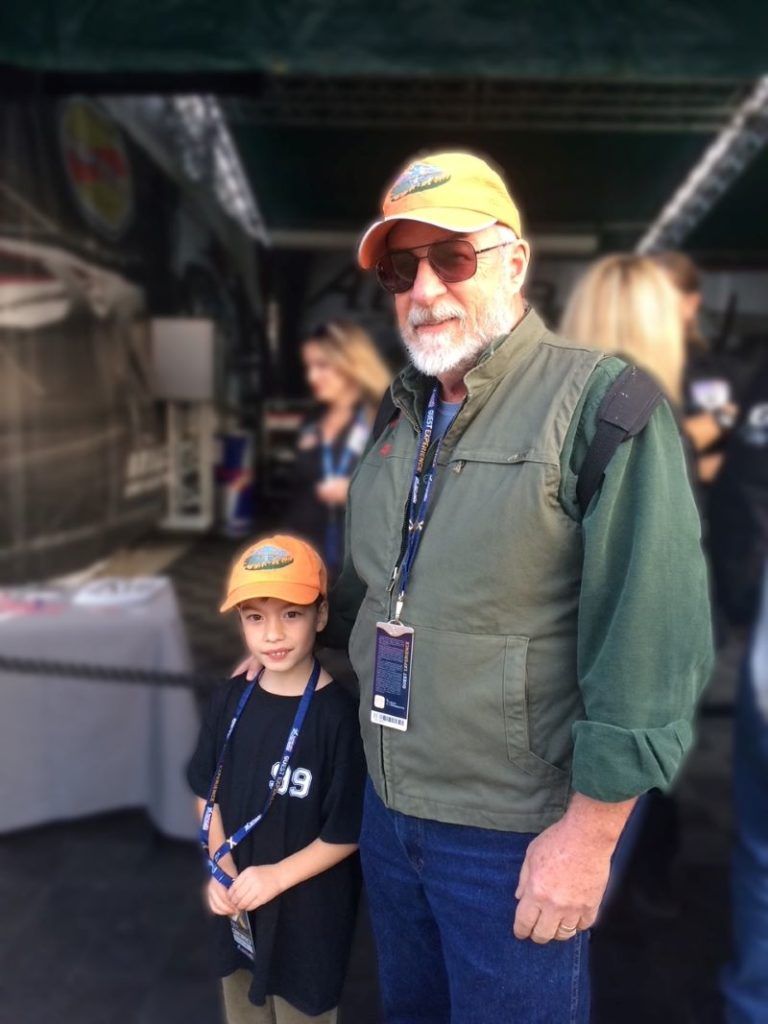
Photo: John with Eli, John’s grandson and future pilot extraordinaire


Submitted January 17, 2025


Posted in Guest EditorialNews

Recent Posts

By Kodi Myhre December 23, 2025
At about this time, every year, we have this conversation at the RAF about what our year end letter (code for asking for your financial support) should say to you, and about the RAF and the accomplishments of the past year.
By Taylin Trafton December 23, 2025
Our many RAF supporters have such vast and varied experience, and we’re capturing some of their words of wisdom to share with you. This guest editorial is by Stef Goza, a pilot and an RAF Alaska liaison.
By lellington December 21, 2025
Bill credits aviation for much of his success in business and the ability to serve his companies and family. What began in a Champ, and a Tri-Pacer owned by five people, turned into what Bill calls, “a key business tool” in which he accumulated 9,000 hours – in a Cheyenne, a Pilatus, and a TBM, where ninety-five percent of his flying was for business. “My retirement enabled me to recall ‘Why I Learned to Fly’, a slogan from an old RAF video.” Bill’s son, Patrick, purchased the C185 they now share. “While attending a business function, some associates arrived in corporate jets. As they joined up on the tarmac, the jet pilots gathered around Patrick’s 185, and one of the passengers asked, ‘What’s special about this?’ No explanation needed for this RAF audience,” Bill says. “My involvement in the RAF is, in a partial way, repaying the rewards aviation has endowed me with. Having been involved in many worthwhile nonprofits, this is one where financial support is only part of the picture. Physically participating in great projects that have a lasting effect, with good people, returns a great personal benefit,” he says. “My only regret is that I wasn’t there at the start.” Bill and his wife Jane are privileged to be able to split time between their long-time home in eastern Nebraska and Scottsdale, Arizona. While still serving on several boards, he enjoys golf “about every third shot,” biking, cars, and reading, but always looks forward to the time he can be involved in the RAF. “It’s flying with a purpose,” he adds. Bill can be reached at bdugan@theraf.org
December 15, 2025
AR Ambassador
By Taylin Trafton December 11, 2025
A Christmas gift of flight lessons from his parents started Scott Anttila’s aviation journey in 1985. “I learned at Johnson Field, a small grass strip tucked into the woods in Michigan’s Upper Peninsula, and that early exposure to simple backcountry flying stuck with me,” Scott says. Growing up in the U.P., he spent a lot of time outdoors and found that flying was another way to get to the places he liked to explore—especially the ones most people never saw. As he earned more ratings and eventually moved to the Detroit area for work, Scott realized he needed a way to stay connected to northern Michigan. He bought an airplane and used it to get back to the smaller airstrips and lake country he enjoyed. Along the way, he also flew gliders out of Frankfort, soaring along the Sleeping Bear Dunes and towing sailplanes over the Great Lakes. “Those flights gave me a different appreciation for the landscape and made me even more interested in the small, out-of-the-way airports scattered around the state,” he says. Visiting those kinds of places, Scott first came across the Recreational Aviation Foundation. He started using RAF-supported airstrips both inside and outside Michigan. “I noticed how well-kept they were and how much access they opened up,” he says, adding, ”Over the years, I’ve watched a number of grass strips close, which made the RAF’s mission feel especially important to me. Maintaining these airstrips keeps aviation connected to the outdoors and makes it possible for more people to reach the quiet, remote areas that inspired me to fly in the first place.” Scott joins the other two RAF Michigan Liaisons, General Grant and Tanmoy Ganguly. He can be reached at santtila@theraf.org . Submitted December 11, 2025.