Crista V. Worthy lives in Hidden Springs, Idaho and is Editor of “The Flyline,” the monthly publication of the Idaho Aviation Association, as well as the Washington Seaplane Pilots Association newsletter. A freelance writer and editor with land and seaplane ratings, she has authored over 1,000 magazine articles, edited several books, and is the author of “Images of Aviation: Idaho Aviation” with 277 photos. The book is available on Amazon or from cristaworthy@hotmail.com.
WORTH THE READ: CRISTA WORTHY GUEST EDITORIAL
Our many RAF supporters have such vast and varied experience, and we’re capturing some of their words of wisdom to share with you. This guest editorial is by Crista Worthy, a pilot, freelance writer, and editor.
Our Aviation Inheritance :
You, and other pilots who support organizations like the Recreational Aviation Foundation (RAF), Idaho Aviation Association (IAA), and Montana Pilots Association (MPA) know these organizations are dedicated to preserving recreational airstrips across the U.S. and in their respective states. But who first built them, and why? And why are they still here? Follow my journey of discovery, summarized below, and your understanding and appreciation of these places will grow.
Based in Santa Monica, Calif., we’d flown our Robertson-STOL-equipped C-210 to 44 states, but never Idaho or the backcountry until August 2001 when I discovered Galen Hanselman’s book, Fly Idaho! On our first trip, we camped at Wilson Bar and swam in the Salmon River. At Johnson Creek, I watched huge Chinook salmon spawn in the shallows. I wept; those fish had overcome giant dams and fought their way 900 miles inland and a mile above sea level, for this, their final act of survival, to perpetuate their line. And at Fish Lake, we spent the day watching cow moose forage in the lake, calves at their sides. These were among the happiest days of my life.
I joined the above organizations, made more trips to Idaho, and, after seeing a spectacular photo of RAF supporter Michael Todd’s silver Skywagon in the Missouri Breaks during a lightning storm, wrote letters in support of the Missouri Breaks airstrips. By the time we moved to Idaho in 2011 I was Managing Editor of Pilot Getaways magazine. I began producing the IAA’s monthly Flyline and became deeply involved with the recreational aviation community.And then Arcadia Publishing asked me to write a book about Idaho’s aviation history.
Wow! In the process of gathering historic photos and stories for my book Images of Aviation: Idaho Aviation , I “met” an amazing array of courageous, hard-working, innovative, and often hilarious characters: the men and women who used aviation as a tool to make their living in the wilderness. You see, we use these airstrips for recreation. But they were built for work.
In 1910, a terrible drought struck the West. Late that summer over 1,000 fires converged into the “Big Burn,” which scorched 3.25 million acres in just 36 hours, destroying towns, wasting 8 billion board feet of timber, and killing some 85 people. The USFS turned to aviation for help. In 1922, WWI veteran Nick Mamer, an Air National Guard pilot out of Spokane, began flying patrols to report forest fires. 100 years ago this year, he landed at Stonebraker Ranch in Idaho’s Chamberlain Basin to make a deal with William Stonebraker, a hunting outfitter. Mamer flew hunters into the ranch for Stonebraker, and commercial backcountry aviation began.
But it didn’t stop there. Mines like the Stibnite in Idaho had to shut down every winter, but once pilots like Mamer and A.A. Bennett figured out how to put skis on airplanes, supplies and people could be ferried in and out year-round. Airstrips were built and new planes like the Zenith, in which Bennett carried everything from mining equipment to a piano and even a cow, were designed.
The USFS built some 5,000 fire lookouts in the 1930s, but they also built airstrips so pilots could fly firefighters into the forest. Mamer taught Bob Johnson and Penn Stohr to fly, and soon Johnson Flying Service out of Missoula had a fleet of sturdy aircraft and skilled pilots who flew in lumber, mail, and literally the kitchen sink so homesteaders could build ranches for themselves and visitors. Those primitive airstrips were lifelines. Bill Gowen made the first-ever landing at Cabin Creek in 1931 to rescue a critically-injured man. An old miner, hiding in the trees, watched the Travel Air 6000 take off from the hastily-cleared field and ran to the backcountry phone, exclaiming, “Slim! It’s all over for that plane! It’s gonna crash! The wings weren’t flapping!” He’d never seen an airplane.
In 1935, the Zimmerly brothers flew 60,000 pounds of freight, trained 20 students, and carried 3,600 passengers. In the 1950s, Jim Larkin rescued 4 prize horses from Morgan Ranch in the winter. Bob Woods regularly flew horses and ponies into Pistol Creek for the little girls who summered there.
This is just a tiny peek into the legacy you have inherited, and that the 1980 Central Idaho Wilderness Act, and subsequently the RAF, IAA, and MPA have preserved. Enjoy!

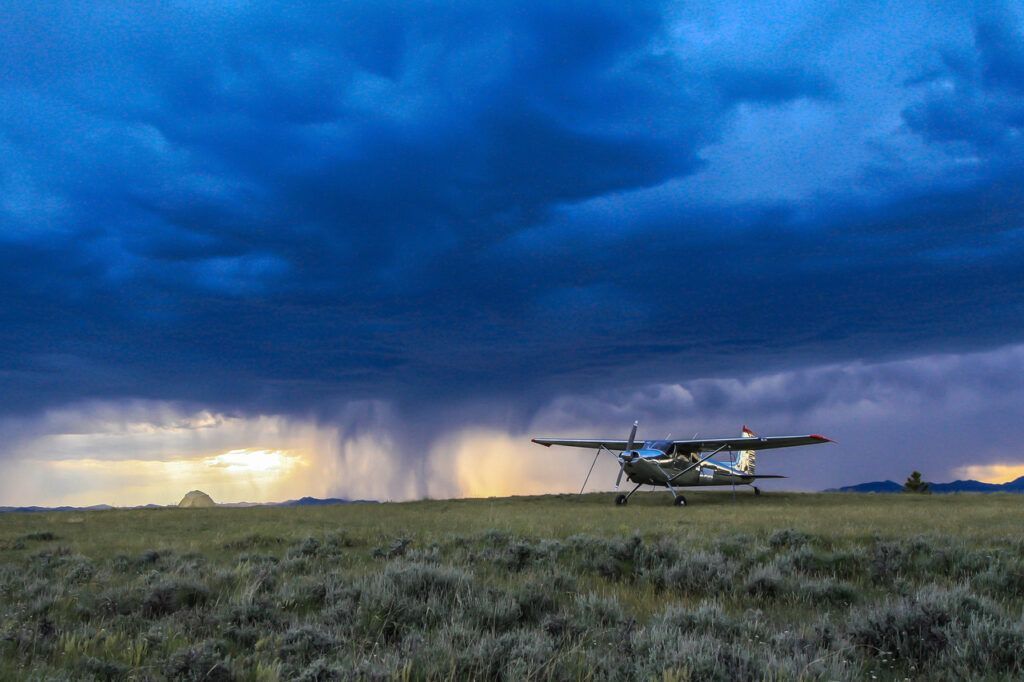
Missouri River Breaks Storm
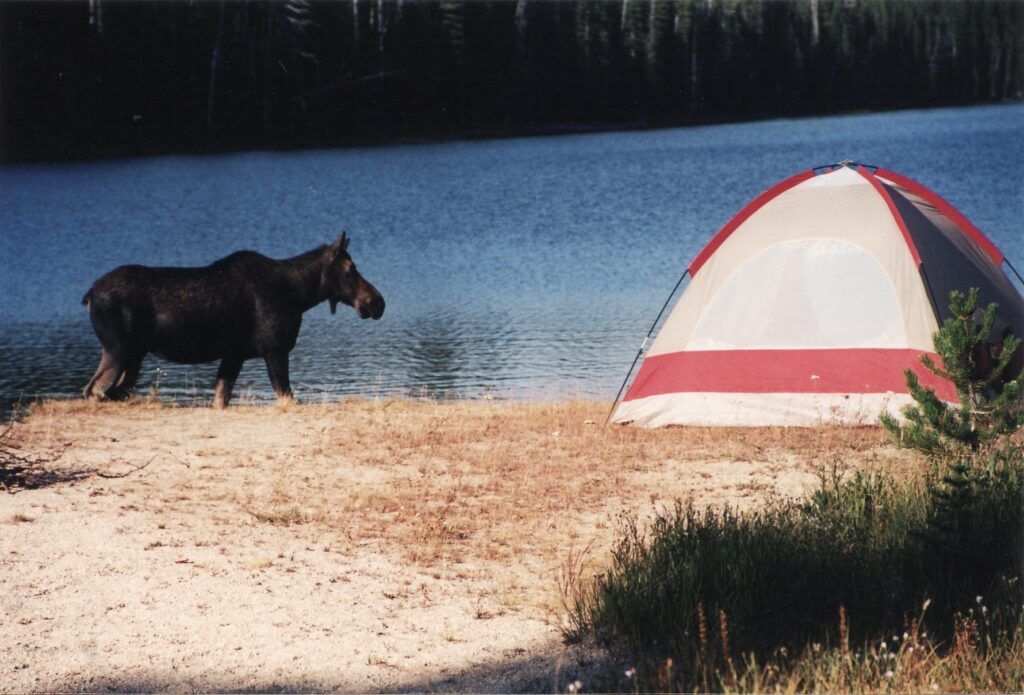
Moose, Fish Lake Campsite
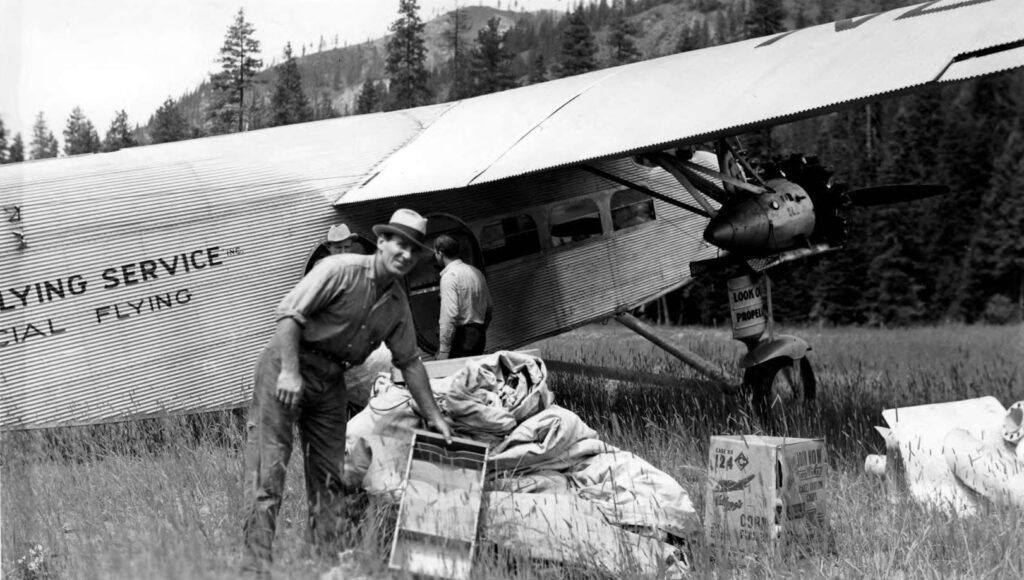
Moose Creek Ranger Station, 1938
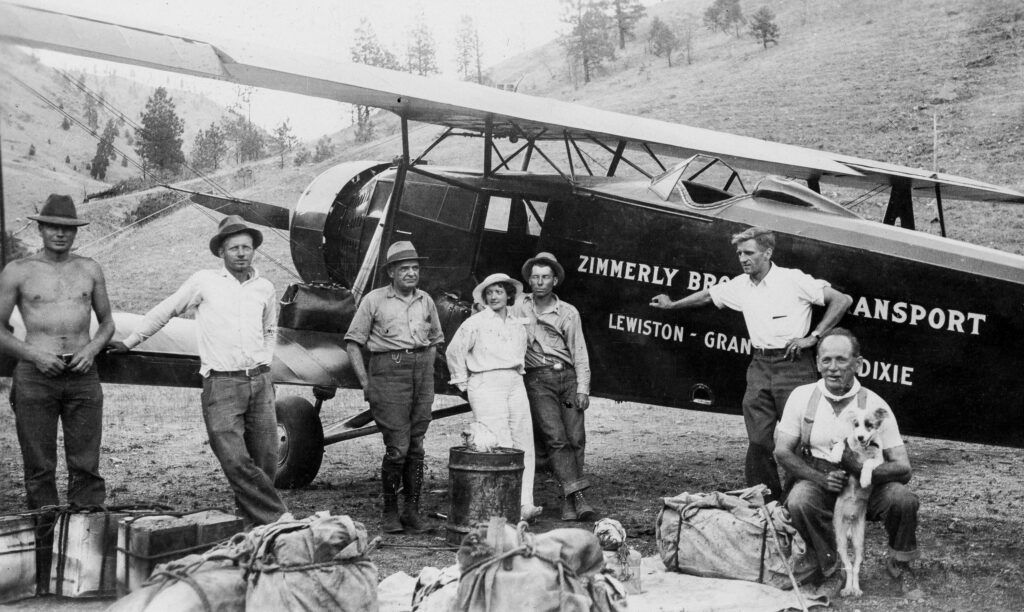
Zimmerly Brothers with Passengers, 1935
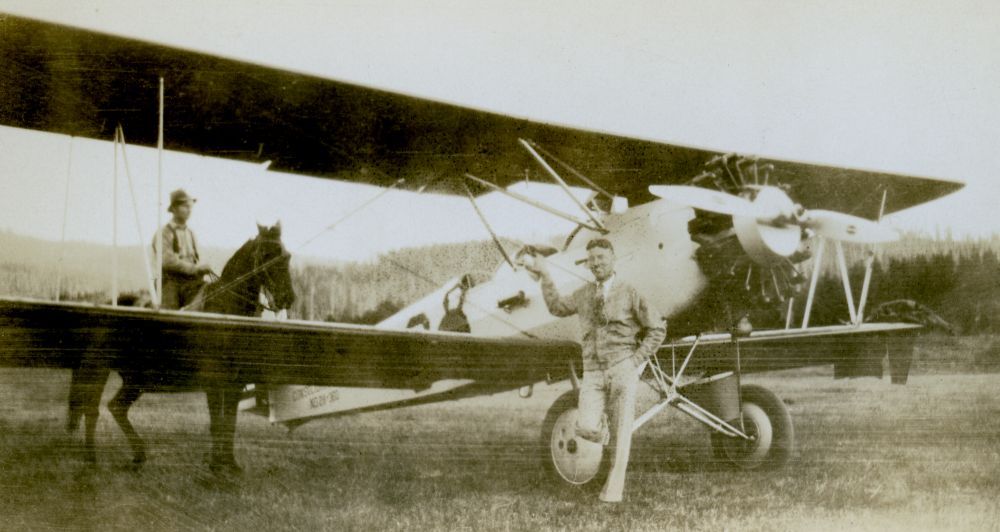
Nick Mamer, Spokane Air National Guard Airplane with William Stonebraker, Stonebraker Ranch, 1925
Photos courtesty of Mike Todd, Crista Worthy, and University of Idaho Library.
Submitted July 31, 2025
Posted in Guest Editorial, News
Recent Posts
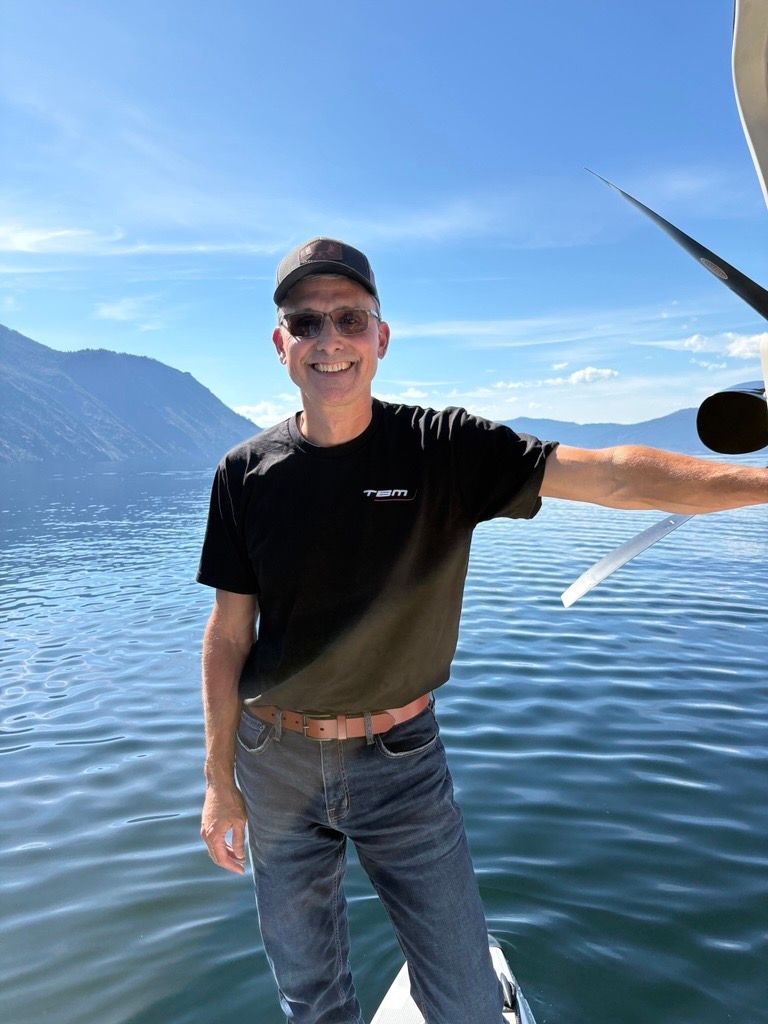
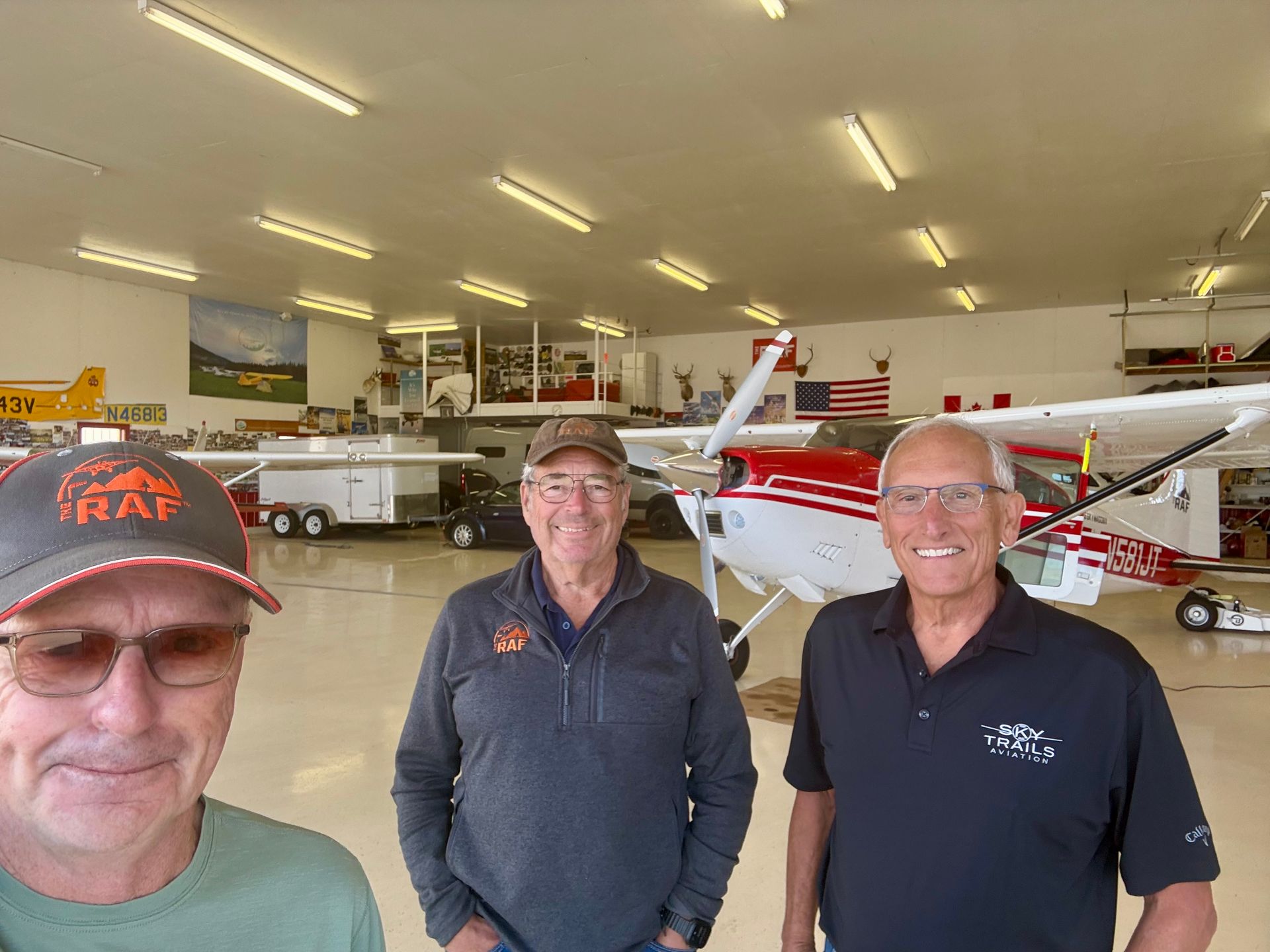
Sometimes one needs to look no further than one's incoming correspondence to find inspiration. Just this past week, folks passionate about the RAF mission reached out to me with suggestions that would bring resources to the RAF. Whether they be one-off items that we might offer, or events like large fundraisers, these folks are offering some thoughts on how we might continue to pay the bills. Additionally, we’re receiving word from folks with new destinations on their mind, and some pretty cool ones at that. Along the way, my inbox – as well as my calendar – is filled with updates on our Expanding the Map effort, with an emphasis on Fly Rocky Top. The Fly Rocky Top initiative in Tennessee is generating strong interest, and for good reason. It feels great. Folks are showing up to pitch in, with significant work projects planned. Trish and I, along with other board members, will be there to lend a hand to this exciting project. We are coming up on our annual year-end letter, which you will be seeing not long from now. In addition to showcasing a few more of our successful projects, we will be seeking your support. Stand by. I’ll wrap this up by letting you know that we could not be more pleased with how you all are doing your part. Thank you. It is so healthy to have an organization that uses passion as a primary energy source. - John McKenna, RAF Chairman Submitted September 14, 2026

“We had a busy day at Garrison Dam Recreational Airpark, as we continue to work on the underwing camping area,” RAF North Dakota Liaison Brian Rau reported. Rau was awarded an RAF grant in spring of 2026 to convert an adjacent day-use park into an airport camping area, and had organized volunteers who began the project in May. The airport, 37N, is closed while the runway and taxiway are being upgraded by a contractor for the ND Aeronautics Commission.
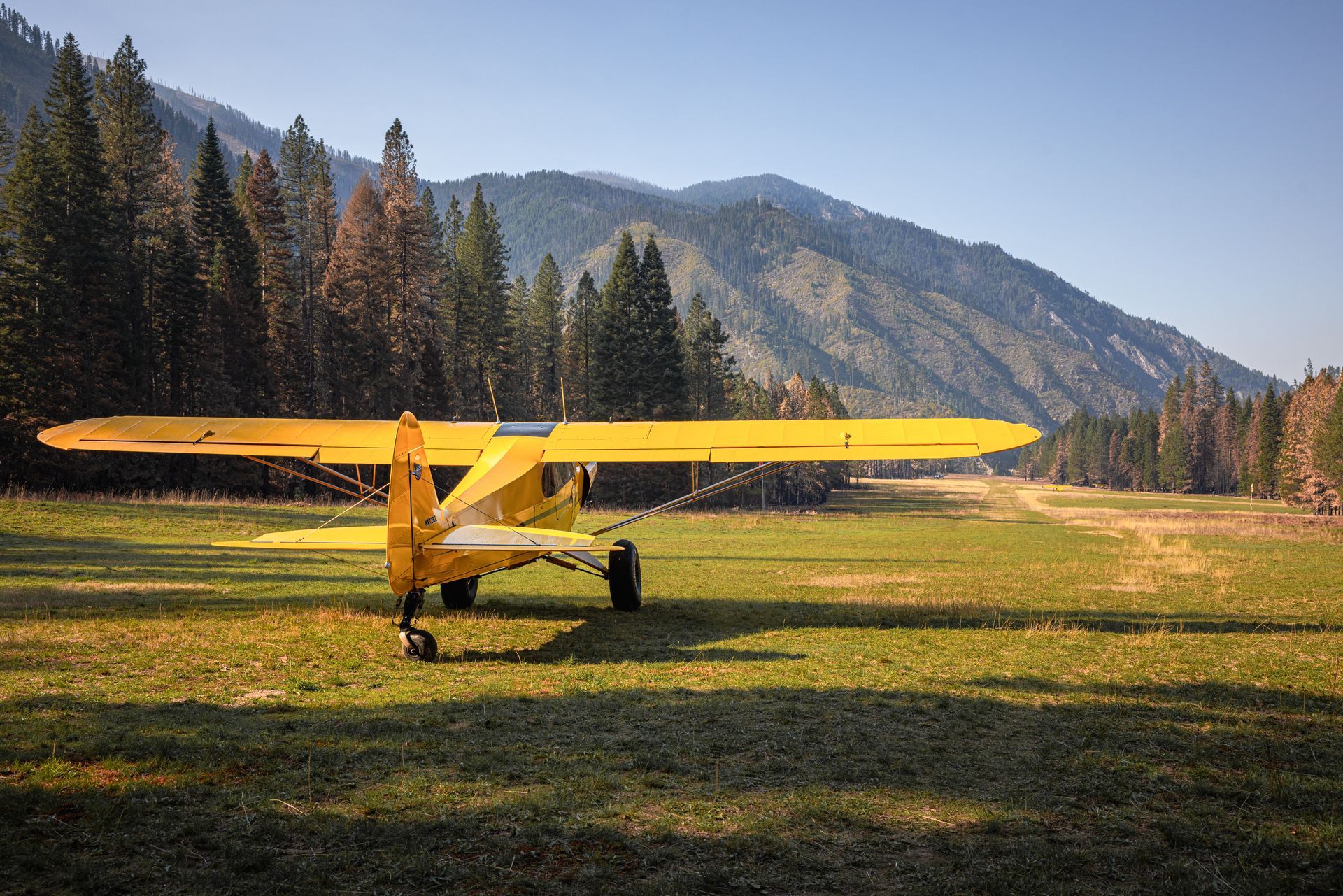
You know the feeling. You set the airplane down somewhere spectacular, shut off the engine, and enjoy the pristine landscape in front of you. This is why you fly. Keeping airstrips pristine is everyone's responsibility. But one item that doesn’t always make it into the airplane is a good trash bag. Not for the trash you planned to make. For the trash you didn’t. Cans left in a fire ring, fishing line along the river, or food wrappers working their way through the brush. None of it came in your airplane, but you have the ability to get it out. That’s reason enough to tuck a couple of heavy-duty contractor bags in with your tie-down gear. They earn their space in other ways, too. A contractor bag can keep wet or muddy gear out of the baggage compartment, cover equipment in a downpour, collect rainwater, or become an emergency poncho or windbreak. It weighs almost nothing and takes up very little room. Throw a few in the airplane and leave them there. You may not need one for your own trash, but there is a good chance you’ll find another use for it—or find something worth carrying out. Submitted September 9, 2026 By Stef Goza, Etiquette Chair, Safety, Education, and Etiquette Committee
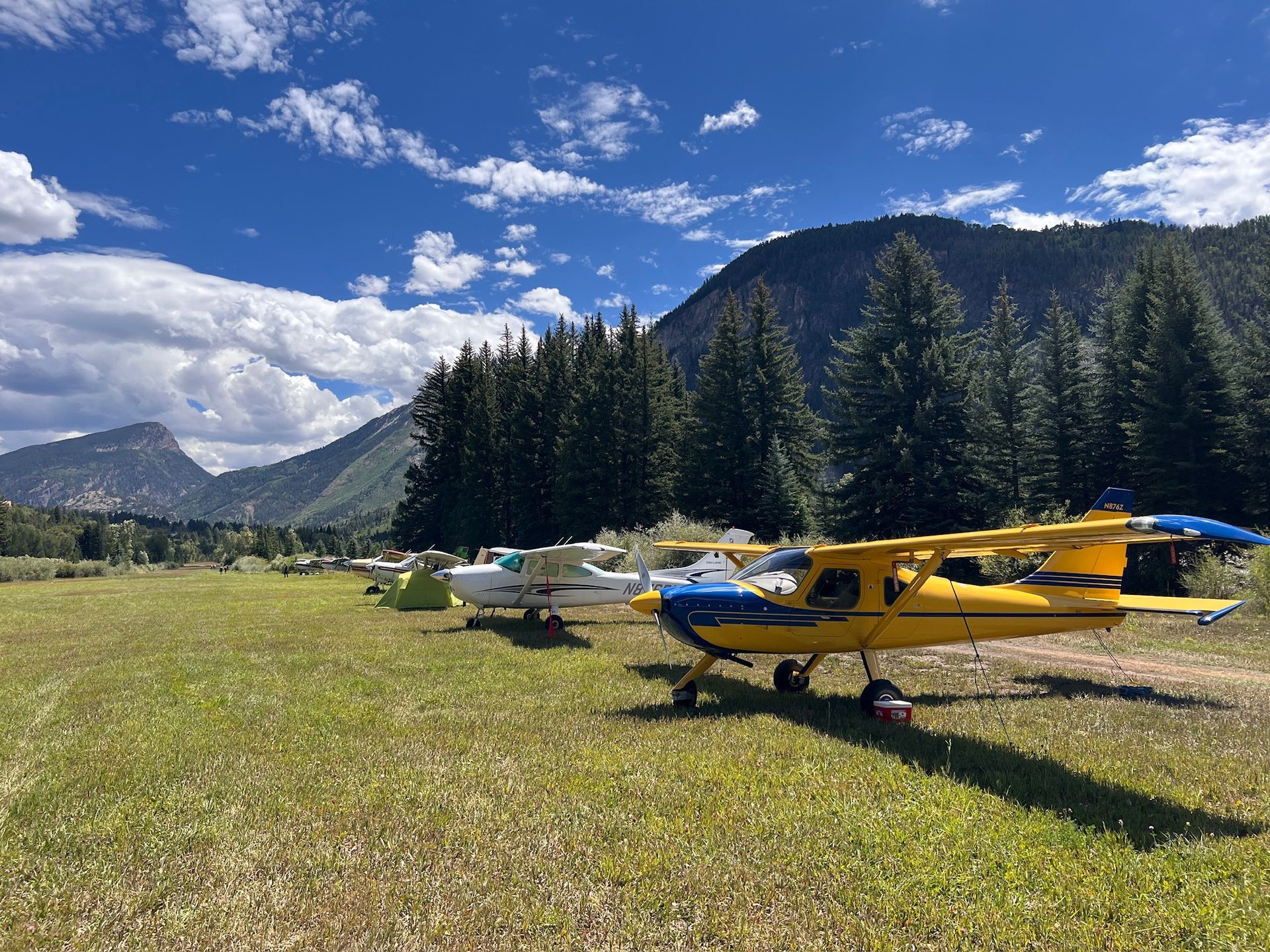
RAF Colorado Liaison Ken Long, Ambassador Mike Langersmith, and other RAF volunteers participated in an August work event at Marble, Colorado, a mountain airfield about 20 nm up the Crystal River drainage south of Carbondale. Airfield Manager Susan Blue put together the task list and oversaw the event that brought 21 volunteers in ten aircraft and four dogs.