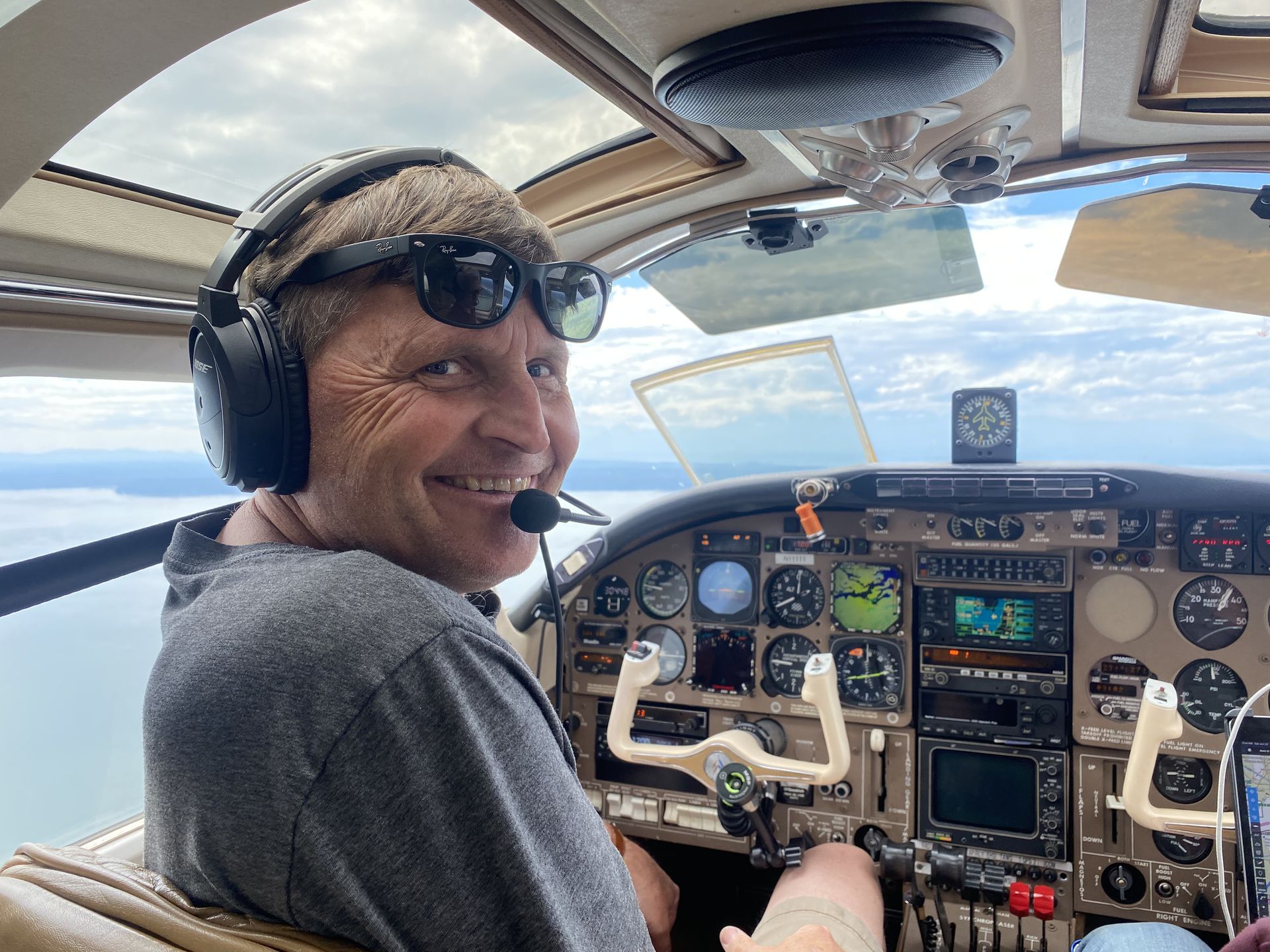
WORTH THE READ: ANDY TURNER GUEST EDITORIAL

Our many RAF supporters have such vast and varied experience, and we’re capturing some of their words of wisdom to share with you. This month’s guest editorial is by Andy Turner, a pilot, aquatic ecologist, and longtime friend of the RAF.

Growing Up With The RAF:

I recently rousted Joshua and Caleb, my two teenage sons, out of bed early on a rainy Sunday morning. The task at hand was cutting and stacking firewood at the campground we are developing at our local airport. Getting teenage boys out of bed on a Sunday morning to go work in the rain might seem nearly impossible, but Josh and Caleb got up without complaint, found breakfast, and spent a few satisfying hours wielding chainsaws and stacking wood. I think my success in getting them rolling on this job, and our successes in navigating the complexities of raising teenagers, might be traced in part back to a camp some 14 years earlier in the Bob Marshall Wilderness.

It was the summer of 2009. My wife, Sharon, and I loaded our 15-month-old twins into the back seat of the family hauler, a Cessna 172, and flew to northern Montana from our home in Pennsylvania. Looking back, flying two children across the country in the back seat of a 172 was a bit crazy, but dealing with twins will make a person resort to extreme measures. We set up camp at Schaffer Meadows and felt a bit sorry for our fellow campers who had to put up with the antics of two toddlers. Among the campers were most of the RAF Directors, then a fledgling organization working to sharpen its focus. John McKenna and crew were discussing strategic directions over a campfire but graciously invited us, toddlers and all, to join them. We shared meals and stayed up late sharing stories. I have fond memories of Tim Clifford bouncing Josh on his knee, with Josh laughing in the way only a 15-month-old child can. We enjoyed a wonderful week hiking the mountains and resolved to fly west each summer for a week or two of hiking, fishing, and catching up with friends.

Fast forward 14 years to June 2023. Josh, Caleb and I are camped at Meadow Creek, part way through our annual adventure of long hikes through the Bob Marshall Wilderness. The first hike, a three-day backpack trip towards Silvertip Mountain, ended earlier than we had planned, turned back by deep snow on the ridge lines. I gave my sons a list of options as to how we could spend the coming weekend. The conversation ended when they heard that the annual Ryan Field work party was one of the options, as they both insisted on helping out. We made the short hop over to Ryan where they woke up early on Saturday morning and spent the day happily cutting firewood, clearing brush, painting, and mowing grass. Most of all, we enjoyed sharing a dinner table and campfire with old friends and meeting new friends. We traded stories of flying, mountain adventures, and reflected on memories. On the surface of it, you might think that we are building an airport, but look a little closer, and you will see that we are building friendships and community. Ryan Field benefited from our labors, but we all emerged from the experience grateful for the opportunity to be a part of something larger than ourselves.

There is a straight line connecting our early experiences at Schaffer with the growth of two hard working young men, eager for mountain adventures and eager to volunteer for community service, and the line runs right through the RAF. Raising teenagers in 2023 isn’t a simple task and I often turn to trusted friends for help. I employ a simple recipe: find a challenging activity, assign my sons a task on that activity working side by side with folks I admire and respect, and let what happens, happen. In our family the activity often involves hunting or fishing, and we have a close knit “outdoors family” of friends that have mentored Joshua and Caleb from a young age under the guise of flyfishing or bird hunting. Aviation is a huge part of our lives too and we are fortunate that our RAF family has provided valuable mentorship. The RAF is an important part of our family because it embodies traits we teach our children: politeness, persistence patience, and humility. Further, the RAF seems to attract people who are uniformly hard working, kind, generous, and good humored. Josh and Caleb have spent many hours over the years working on projects side by side with our RAF family, quietly absorbing the examples of their character, and I can see how those experiences have helped shape them into the people they are. Thus, Josh and Caleb carry a bit of the RAF influence with them in all they do and are. As a parent, I couldn’t be more grateful.
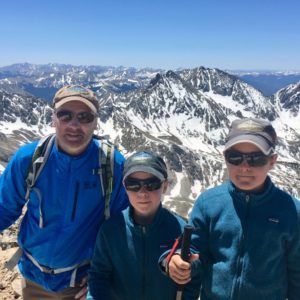
Andy has been a pilot for nearly 40 years and flies a RV-10 that he built to carry his family on long cross-country trips. Using their airplane to access the backcountry, Andy and his sons have climbed a number of high peaks in wilderness areas including the Bob Marshall of Montana, the Wind River Range of Wyoming, and the mountains of Colorado. Andy is an aquatic ecologist and holds a faculty position at Pennsylvania Western University, where he spends much of his time conducting research and training students in stream ecology and fisheries biology. In addition to his work as RAF Pennsylvania Liaison, Andy holds leadership positions with his local chapter of Trout Unlimited and his county conservation district.


Submitted on September 27, 2023.


Posted in Guest EditorialNews

    Recent Posts

July 5, 2026
FEATURING: RAF PULASKI GLASSES Raise a glass to the work that keeps backcountry aviation alive! These RAF Pulaski Glasses are a perfect addition to your bar or a thoughtful gift for any aviation or backcountry enthusiast. Each glass features the RAF’s signature Pulaski tool, a tribute to the hardworking volunteers who preserve, improve, and protect airstrips across the country. Just like the tool itself, these glasses celebrate grit, utility, and a commitment to getting the job done. The Pulaski is a versatile, heavy-duty tool used for trail building, chopping wood, and clearing brush, making it an essential part of backcountry work for RAF volunteers. Made in the USA from high-quality glass, they’re built to last. Get yours today. 
By Carmine Mowbray July 1, 2026
You’d have a hard time finding a more beautiful place to fly than Driggs-Reed Memorial Airport (KDIJ). The Grand Teton, Big Hole, and Snake River mountain ranges surround this eastern Idaho valley. Driggs has become a world-class destination for the pilot community. National Geographic magazine listed Driggs as “one of the ten best outdoor recreation destinations in the U.S.” Just a 45-minute drive over Teton Pass is Jackson, Wyoming, a famous Western destination. The airport, at an elevation of 6,257, accommodates aircraft on both its 7,300-ft paved runway and 3,000-ft turf landing area, marked with cones. Note: The SW 3,451 feet of the paved runway is closed until August for reconstruction. Check NOTAMS before landing. Fly-in visitors are welcome to camp underwing at its grassy tie-down area. It’s an ideal gateway to the Idaho backcountry. Enjoy views of the nearby Teton Range from the 12' x 16' cedar pilot shelter. There is potable water, a toilet, power, a gas barbecue, and a charging station nearby. Within walking distance of the campground is the Forage restaurant. A bike shed and loaner bikes, provided by the Idaho Aviation Association Borrow-A-Bike program, are available to ride into town. If you desire a more urban experience or wish to explore further, the airport has rental cars. “It’s a great destination for the pilot community, with access to hiking, biking, fishing, floating, golf and a small town with numerous shops and restaurants,” RAF Director and Driggs resident Tim Riley says. He and a local RAF supporter recently completed a spring cleanup to ready it for the season. The amenities were provided cooperatively through the RAF, the Idaho Aviation Association (IAA), the City of Driggs, and its Airport Board, with financial contributions from each. For more information on Driggs, see the Airfield Guide . Submitted July 1, 2026 By Carmine Mowbray
June 30, 2026
It’s bear grass season around West Glacier, Montana, and nearly a score of volunteers from three different states drove in to Ryan Field June 12-13 to complete seasonal maintenance, and enjoyed spotting the showy blooms throughout the woods. Bear scat was also seen in several places – a reminder that a clean camp protects both campers and wildlife. The airfield remains closed until the new runway grass has stabilized for landing, so watch the Airfield Guide for an announcement that the field has re-opened. As a result, there was no annual Ryan Fly-in this year. Volunteers removed downed trees, cleared and marked hiking trails, mowed around the buildings and part of the runway, cleaned bear boxes, the pilot shelter, cabins, and barn. “We welcomed new volunteers and continue to work hard maintaining the field. We are as eager as everyone for the grass to take good hold so the runway can open again,” Administrative Director Tricia McKenna said. Submitted June 30, 2026
June 26, 2026
RAF President Bill McGlynn met in mid-June with the US Forest Service, Idaho Dept of Aeronautics, and Idaho Aviation Association to evaluate steps to improve Magee (S77) airstrip, 23 nm east of Coeur d’Alene. On the way, Bill picked up Joe Sober, one of two airport engineers from Oklahoma City who have volunteered their professional services and have been instrumental in creating maintenance and remediation plans on Idaho backcountry airstrips. “The Forest Service engineering teams have too much on their plate just addressing roads, so having this resource to make airstrip engineering assessments and plans is instrumental to resolving challenges on USFS airstrips like Magee,” McGlynn said. The improvement project at Magee has been organized through a Cost Share Agreement that the RAF has with the USFS. McGlynn, Sober, Willy Acton of the Idaho Airstrip Network, along with USFS District Ranger Holly Hampton, Don Macintosh of IAA, Dan Conner of Idaho Aeronautics, and RAF Idaho Ambassador George Weaver investigated the sources of flooding that plague Magee airstrip every spring and analyzed means of redirecting the problematic water. Magee airstrip was created in the 1940s by the Corps of Engineers as a hidden fighter base in case of a Japanese attack on the western US coast. A dike that was built to channel water away from the runway has eroded over the past eighty years. Sober took numerous measurements and will develop a plan to submit to the USFS for approval. Work could begin over the next year or two to recover about 700 feet of runway. “We truly could not do this work without our volunteer engineers and are very fortunate to have their expertise,” McGlynn said. Weaver said, “The airstrip is a real gem, and the restoration work will make it a great backcountry destination.” Submitted June 28, 2026
June 26, 2026
“It was really nice to spend some time with Wyoming folks cleaning up a little piece of history,” RAF WY/UT Ambassador Karen Larson said of the May 30 work party at Medicine Bow airport, on the historic US airmail route. RAF Wyoming Liaison Joe Feiler organized the work and reports that about 15 people with a wide range of backgrounds arrived at 9 am to help. Attendees included RAF supporters, EAA Chapter 420 members, local residents, as well as Lee Cook, Medicine Bow airport board member and town council member.