WATERBURY TASKS DRAW CROWD OF VOLUNTEERS
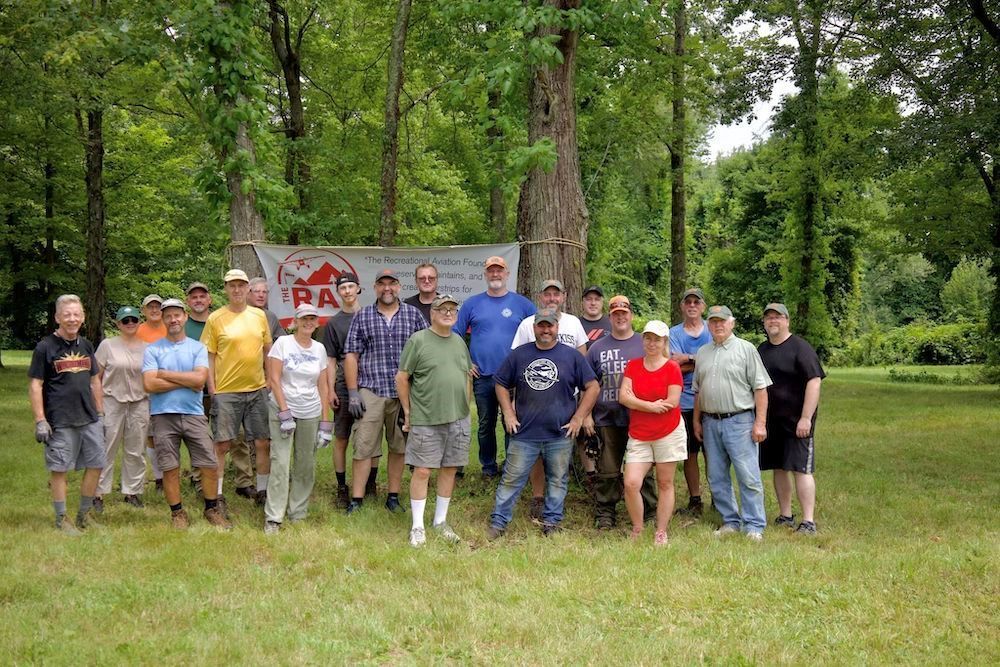
“We could not be more impressed with the turnout we had today for the RAF work party at N41 Waterbury Airport,” RAF Connecticut Ambassador Brian Thomas said of the July 29 airfield event. RAF Connecticut Liaison Andrew Lyons, Ambassadors Greg Delp and DJ Nicholson, and members from local EAA chapters accomplished a variety of tasks. “The group of 25 volunteers put in a hard day’s work to improve our beloved little grass airport on its hundredth year of operation,” Thomas added.
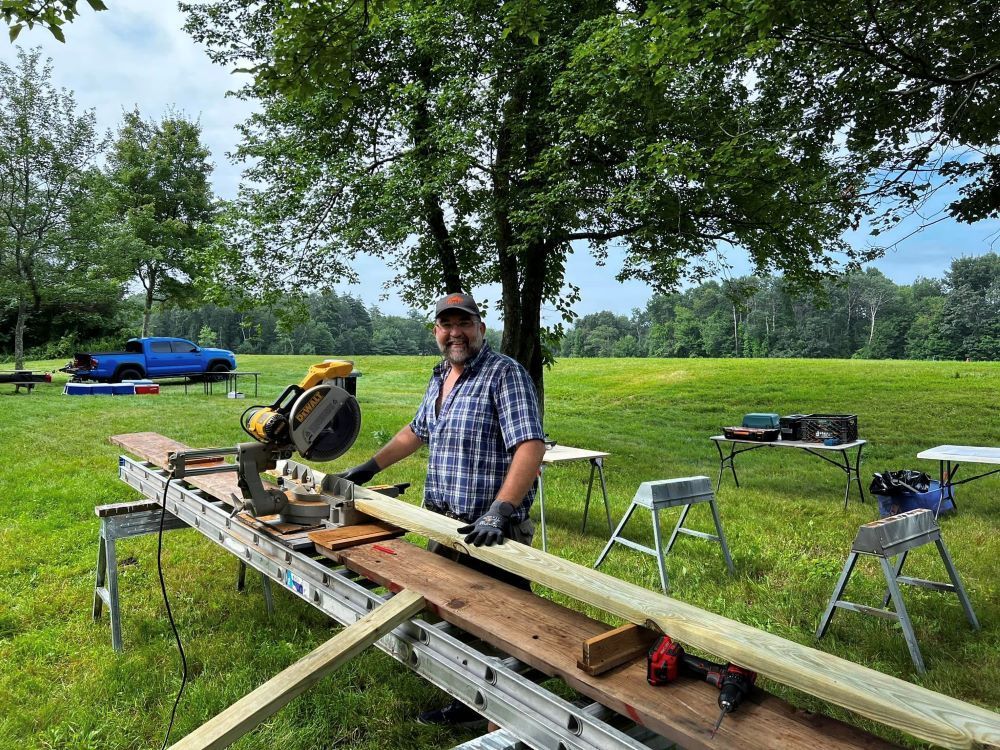
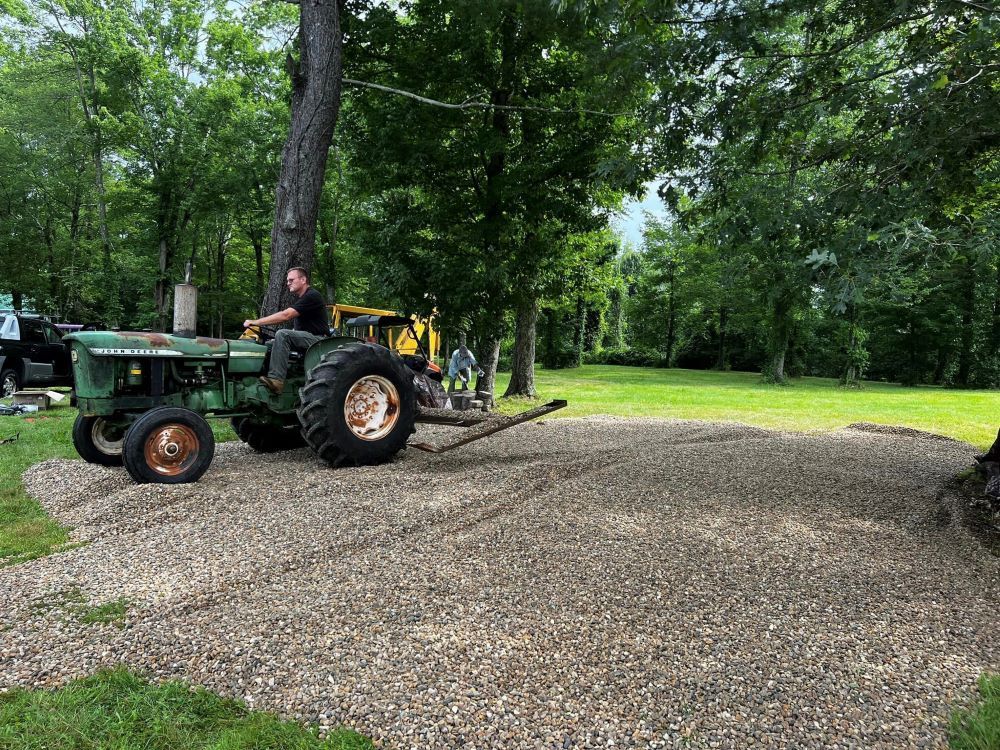
A June 2023 RAF grant, and funds raised during the airfield’s Mount Toberfest fly-in went toward the purchase of materials for two picnic tables, RAF fire ring, park-style barbecue grills, and a composting outhouse. The group assembled the tables, installed a grill and removed large standing dead trees that were threatening the camping area. They split and stacked firewood, spread and leveled 18 tons of stone around the fire pit area, whacked weeds and “pesky” vines, and picked up and removed fallen leaves and branches.


“The many hands made quick work of the tasks, and N41 is looking better than ever, and ready for prime camping season,” Thomas said. He thanks Billy Segalla of Segalla Sand and Gravel for the generous donation of all the stone. “The aviation community here is strong and thriving here in Connecticut!” Thomas added.
Thomas is planning another work party in mid-August to set up and install the much anticipated outhouse and seal the tables the group assembled.

For information on Waterbury, see the Airfield Guide.

Submitted on August 7, 2023.
By Carmine Mowbray


Posted in News

Recent Posts
By Kodi Myhre December 23, 2025
At about this time, every year, we have this conversation at the RAF about what our year end letter (code for asking for your financial support) should say to you, and about the RAF and the accomplishments of the past year.
By Taylin Trafton December 23, 2025
Our many RAF supporters have such vast and varied experience, and we’re capturing some of their words of wisdom to share with you. This guest editorial is by Stef Goza, a pilot and an RAF Alaska liaison.
By lellington December 21, 2025
Bill credits aviation for much of his success in business and the ability to serve his companies and family. What began in a Champ, and a Tri-Pacer owned by five people, turned into what Bill calls, “a key business tool” in which he accumulated 9,000 hours – in a Cheyenne, a Pilatus, and a TBM, where ninety-five percent of his flying was for business. “My retirement enabled me to recall ‘Why I Learned to Fly’, a slogan from an old RAF video.” Bill’s son, Patrick, purchased the C185 they now share. “While attending a business function, some associates arrived in corporate jets. As they joined up on the tarmac, the jet pilots gathered around Patrick’s 185, and one of the passengers asked, ‘What’s special about this?’ No explanation needed for this RAF audience,” Bill says. “My involvement in the RAF is, in a partial way, repaying the rewards aviation has endowed me with. Having been involved in many worthwhile nonprofits, this is one where financial support is only part of the picture. Physically participating in great projects that have a lasting effect, with good people, returns a great personal benefit,” he says. “My only regret is that I wasn’t there at the start.” Bill and his wife Jane are privileged to be able to split time between their long-time home in eastern Nebraska and Scottsdale, Arizona. While still serving on several boards, he enjoys golf “about every third shot,” biking, cars, and reading, but always looks forward to the time he can be involved in the RAF. “It’s flying with a purpose,” he adds. Bill can be reached at bdugan@theraf.org
December 15, 2025
AR Ambassador
By Taylin Trafton December 11, 2025
A Christmas gift of flight lessons from his parents started Scott Anttila’s aviation journey in 1985. “I learned at Johnson Field, a small grass strip tucked into the woods in Michigan’s Upper Peninsula, and that early exposure to simple backcountry flying stuck with me,” Scott says. Growing up in the U.P., he spent a lot of time outdoors and found that flying was another way to get to the places he liked to explore—especially the ones most people never saw. As he earned more ratings and eventually moved to the Detroit area for work, Scott realized he needed a way to stay connected to northern Michigan. He bought an airplane and used it to get back to the smaller airstrips and lake country he enjoyed. Along the way, he also flew gliders out of Frankfort, soaring along the Sleeping Bear Dunes and towing sailplanes over the Great Lakes. “Those flights gave me a different appreciation for the landscape and made me even more interested in the small, out-of-the-way airports scattered around the state,” he says. Visiting those kinds of places, Scott first came across the Recreational Aviation Foundation. He started using RAF-supported airstrips both inside and outside Michigan. “I noticed how well-kept they were and how much access they opened up,” he says, adding, ”Over the years, I’ve watched a number of grass strips close, which made the RAF’s mission feel especially important to me. Maintaining these airstrips keeps aviation connected to the outdoors and makes it possible for more people to reach the quiet, remote areas that inspired me to fly in the first place.” Scott joins the other two RAF Michigan Liaisons, General Grant and Tanmoy Ganguly. He can be reached at santtila@theraf.org . Submitted December 11, 2025.