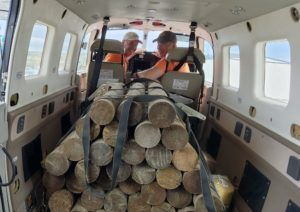
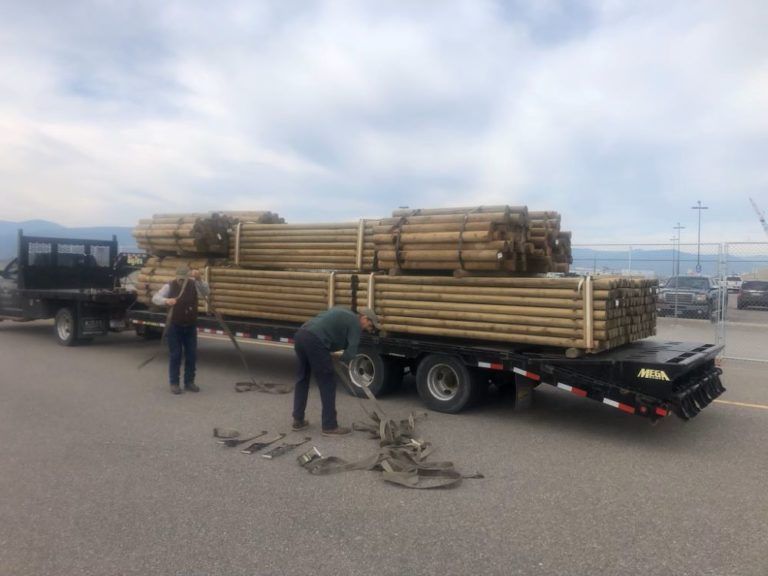
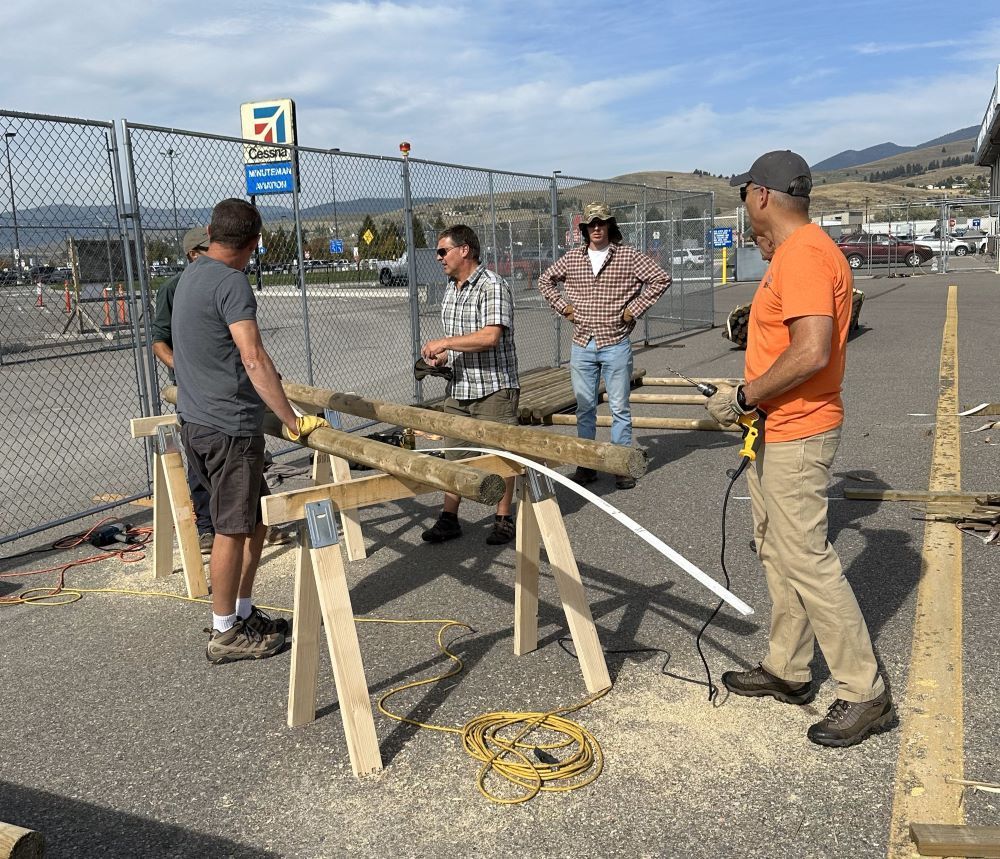
RAF Supporter Ed Kronfuss took on the logistics challenge and procured the posts and rails in Lincoln, Montana. Since no power tools are permitted in the Wilderness, Kronfuss had the posts and rails trucked to the Missoula airport where volunteers pre-drilled them for easier assembly. Daher-Kodiak provided the Kodiak 100 to haul the prepared posts to Moose Creek; and the USFS Shorts Sherpa carried the fence rails.
VOLUNTEER AIRLIFT SUPPORTS MOOSE CREEK RANGER STATION
The following is a press release announced by the U.S. Forest Service Nez Perce-Clearwater National Forest Public Affairs Officer.
Recreational Aviation Foundation President Bill McGlynn “considers getting to fly into Moose Creek a real privilege” as do many of his fellow aviation enthusiasts. So, when he learned that there was a volunteer opportunity that he and his fellow pilots were uniquely suited to help with, he jumped at the opportunity. At a regional level review of backcountry Forest Service airstrips, Bill told Forest Service employees that the Sand Point branch of the Daher Company—a French aviation conglomerate–“had offered us 50 hours of Kodiak time to help transport materials” and asked if he could be of assistance and after some discussion the Moose Creek project was identified as a good fit.
Once the project was identified, McGlynn began to mobilize. Utilizing a cost-sharing agreement with the Forest Service, he purchased posts and rails from a local Montana company and had them transported to the Missoula airport. Minuteman Aviation donated its maintenance ramp at the airport for a week so they could perform preparatory work. Because Moose Creek is in the Selway-Bitterroot Wilderness, where only hand tools can be used, his team needed to drill and perform other powered mechanical work before the airlift began. With the help of six eager volunteers, they were ready to start hauling the new fence to Moose Creek only a day later.
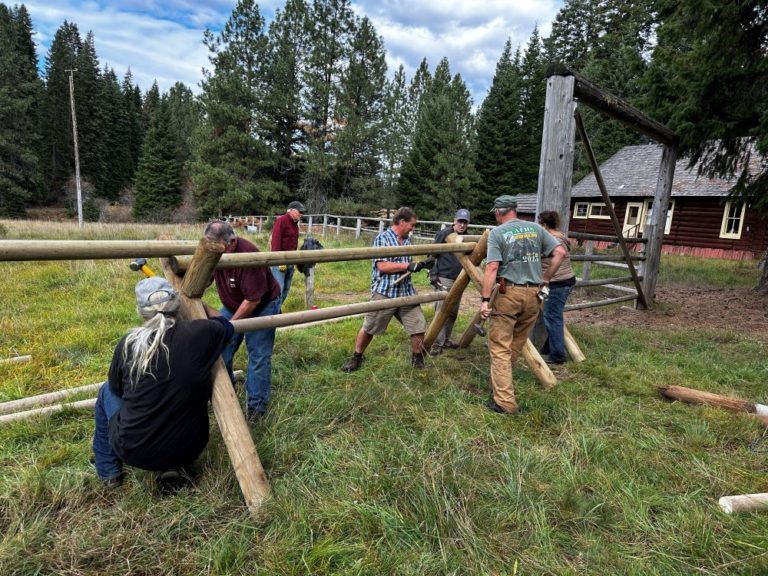
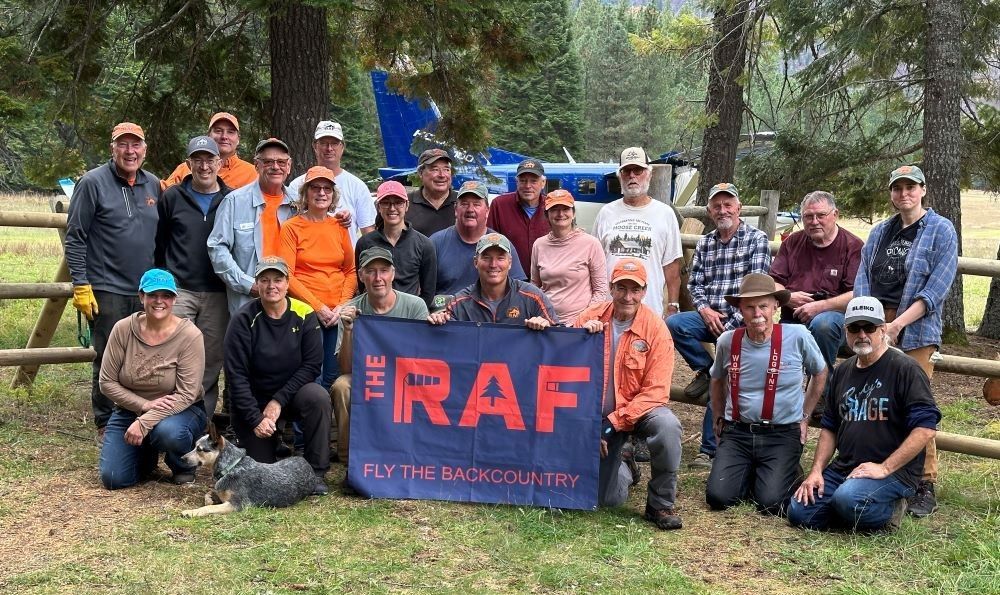
Unfortunately, their team hit another snag: the Kodiak was too small a plane for the 10 and 1/2 foot fence rails. Luckily, the USFS Region 1 aviation team led by Shane Bak was able to step in and help with the Shorts Sherpa and load crew that accommodated their materials. The longer rails were all transported, and the work began on time October 13, 2023. The first of 20 volunteers, which included people from Indiana, North Carolina, Wisconsin, and the Pacific Northwest, all flew to Moose Creek to start removing the old fence and assembling new jack-leg fence.
“It wasn’t hard at all for me to recruit people to come help out here when they found out this place needs work and they want to give back,” McGlynn explained. In fact, he intentionally limited recruitment: “We didn’t go broadly asking for people to sign up because we thought we’d get too many volunteers.” The process of putting up the fence “felt like an orchestra with everyone doing what they felt most comfortable doing and were best at.” “The fence went up so fast that we had to slow down because materials weren’t coming fast enough to keep up with us.”
In just four and a half days, McGlynn’s team installed 1260 feet of replacement fence and got all the old, deteriorated fence out and organized in piles to be burnt later. Only 1000 feet of replacement fence remains to be installed. The Historic Moose Creek Ranger Station is the Selway-Bitterroot Wilderness hub supporting youth development in resource stewardship, back country recreation, outfitter and guide operations, scientific research, wildland fire management and wilderness values. “RAF’s commitment to Moose Creek Ranger Station goes well beyond solely benefitting recreational aviation. Their work supports the wide variety of work we do, and we are fortunate to have them as partners,” said Moose Creek istrict Ranger Ron Tipton.
Submitted November 30, 2023
Posted in News
Recent Posts
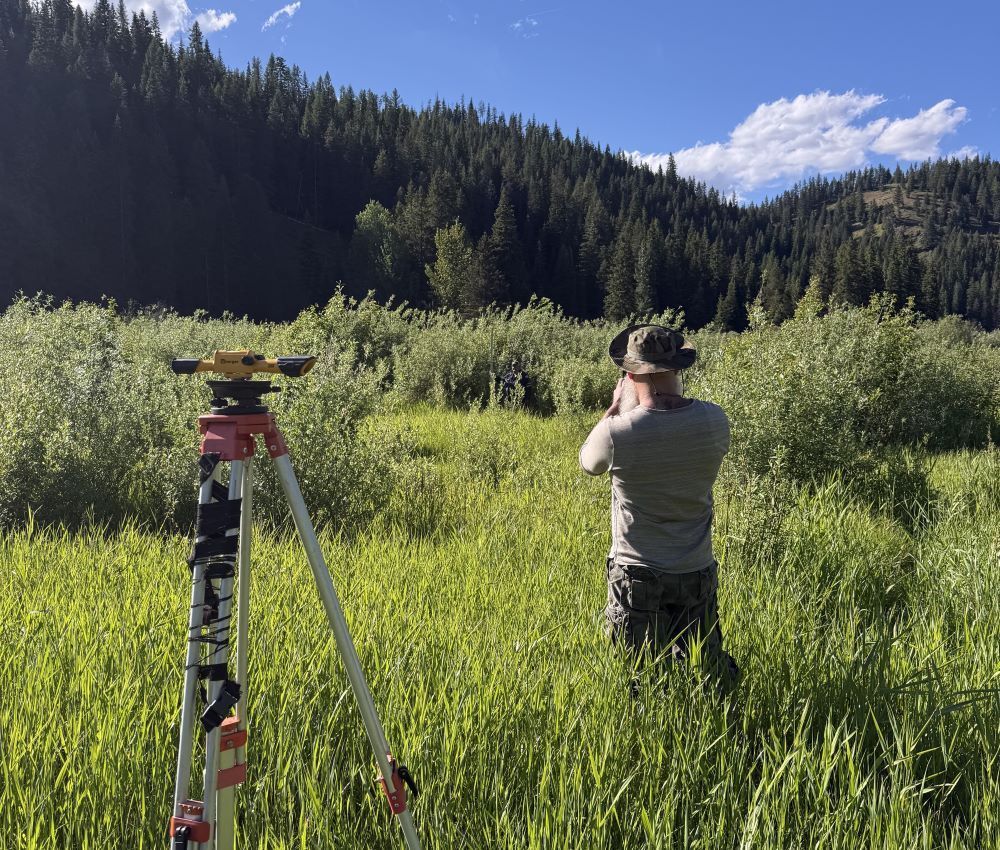
The RAF is excited that our Expand the Map initiative to open and rehabilitate airfields is off to an impressive start. As a result, we are seeking an airport engineer who is willing to volunteer their consulting services on airfield projects around the country. "Our supporters have many talents and areas of expertise," President Bill McGlynn said. “Please let us know if you’re an airport engineer who would be interested in volunteering your knowledge to improve recreational airfields.” Please contact Erin White, RAF Volunteer Coordinator, ewhite@theraf.org . Submitted October 8, 2026.
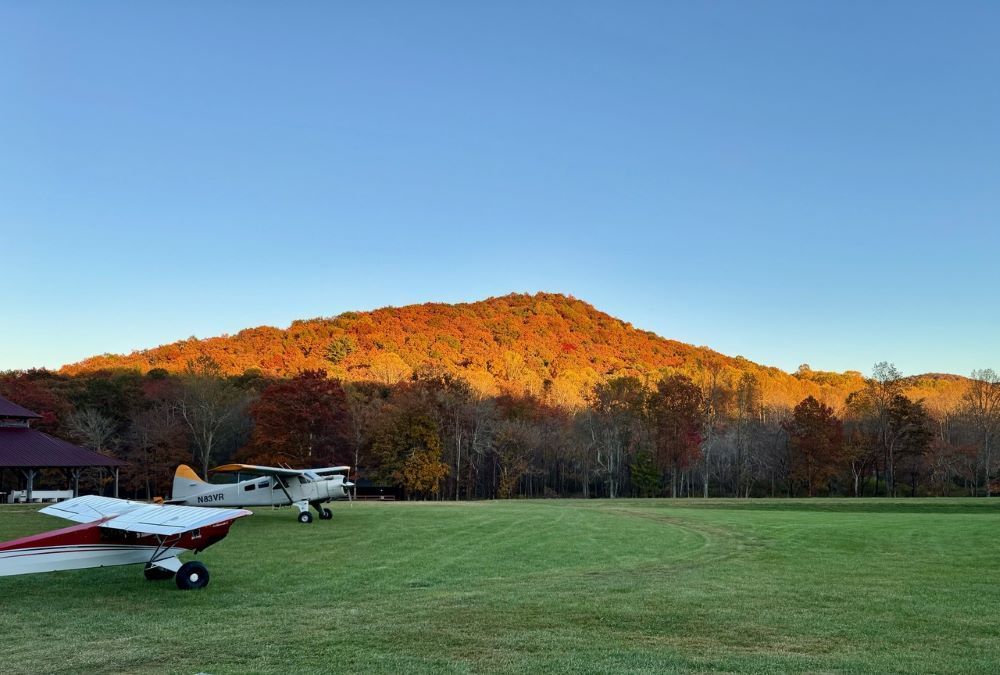
Like many people at this time of year, you may be considering your charitable contributions. The RAF is fortunate to have a deep bench of professional financial planning talent with several planned giving ideas to help you enjoy the advantage of tax benefits while benefiting the RAF mission. You can even specify a project that you'd like to support. You may not be aware of a new opportunity this year: Those who use the standard deduction (like most taxpayers), can deduct up to $1,000 ($2,000 for couples) for your direct donation to the RAF, without itemizing. This gives everyone a charitable giving tax-advantage, not just high-income donors who itemize. If you have any questions, a great way to start is to contact RAF Texas/Montana Ambassador Steve Maus, CLU, MSFS, and Chartered Advisor of Philanthropy. Reach him at: smaus@theraf.org .
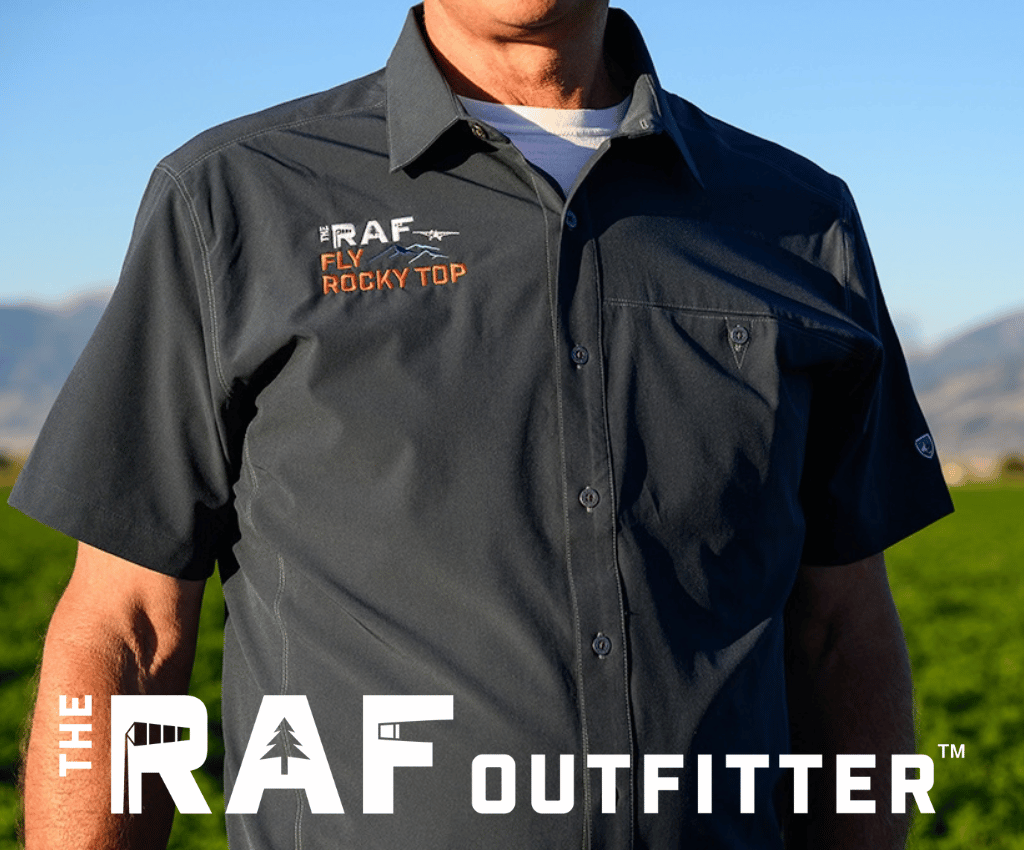
FEATURING: RAF FLY ROCKY TOP COLLECTION This summer, the RAF proudly announced the Fly Rocky Top Airstrip Network, opening up a new way to experience the beauty, adventure, and recreational flying opportunities of East Tennessee. Now, you can take a little Fly Rocky Top spirit with you wherever you go! The new Fly Rocky Top Collection has officially landed at the RAF Outfitter, with something for just about everyone. From adventure-ready KÜHL layers to hats, a lightweight women’s performance shirt, and stickers, the collection was made for days at the airstrip and everywhere your adventures take you in between.
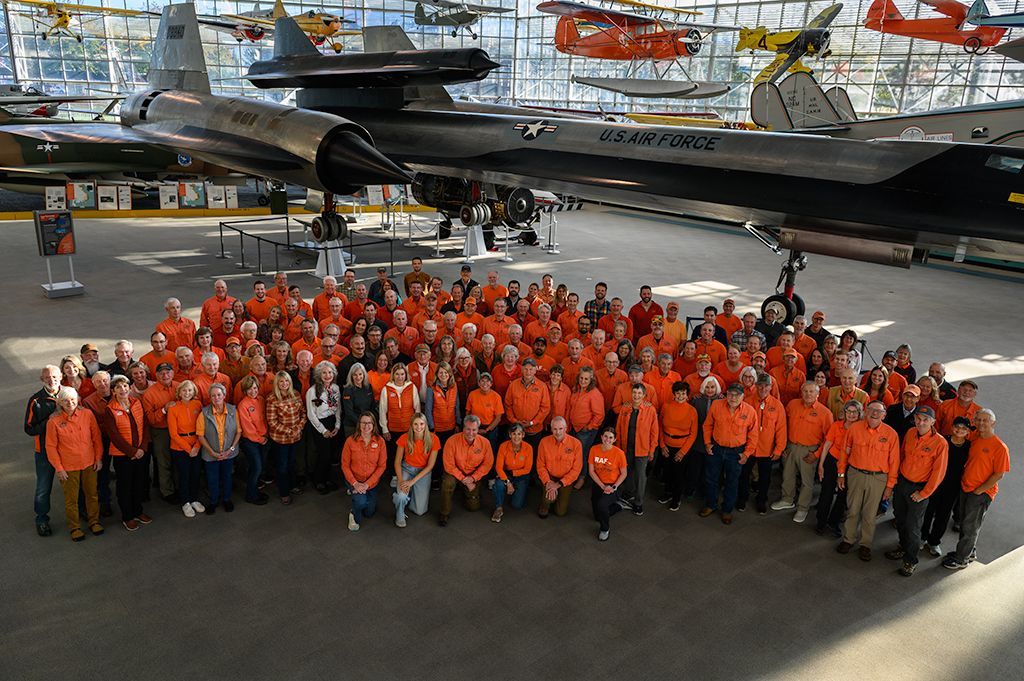
RAF key volunteers from across the nation gathered at Seattle’s Museum of Flight for a two-day RAF Educational Conference that ended Saturday, September 26. The days were filled with discussions about ways to further the RAF mission, beginning with the US Forest Service. The RAF Board of Directors and AOPA co-president Katie Pribyl and board member Peter Burwell updated the group over breakfast, and RAF Liaisons reported on airfield projects. Other presentations included author Richard Kyte on the importance of community, the RAF Safety, Education and Etiquette (SEE) committee reported on its messaging to pilots, Garmin presented its new Axis platform, author Richard Holm presented on the history of aviation’s role in the Idaho backcountry, and RAF Georgia Ambassador Dhruv Thakkar discussed the use of Digital Control Towers. Attendees also received an update on the RAF Airfield Guide and heard from RAF staff on tips for holding work parties and connecting RAF supporters. RAF Utah Liaison Wendy Lessig, RAF New Mexico Liaison Ron Keller, and Oregon Ambassador Kevin Johnson were presented with the RAF's Wind Beneath Our Wings Award for outstanding volunteer contributions to the RAF mission. Among the attendees were National RUS Liaison John Nadeau and his wife, who drove thousands of miles from Maine to join. "It was well worth the trip to learn about important projects fellow volunteers are working on from coast to coast, and how they successfully handle difficult situations using the RAF Way." The conference concluded with a talk from former and current principals of the adjacent Raisbeck Aviation High School. Dinner was later held in the high school, at which retiring RAF Director Steve Taylor was honored. Attendees enjoyed seeing their fellow volunteers and meeting new friends. Volunteers walked away feeling inspired and energized, with new ideas to continue their efforts preserving, improving, and creating airstrips for recreational access. Submitted September 1, 2026 Photo by Jake Peterson
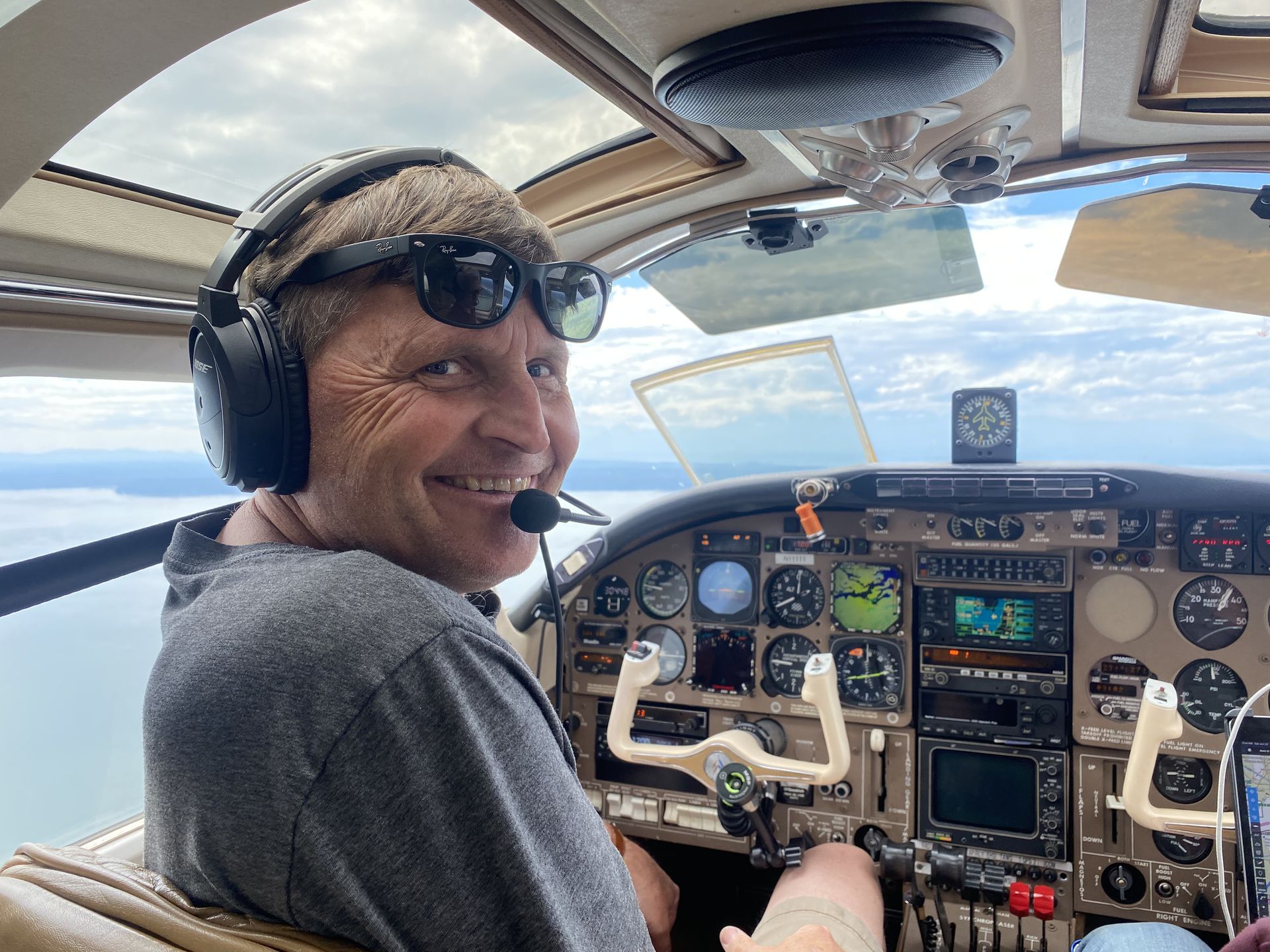
The RAF extends its appreciation to Steve Taylor of the Seattle area for his dedicated service on the RAF Board of Directors from 2019 to 2025. Throughout his time on the Board, Steve generously shared his aviation experience, perspective, and relationships in support of the RAF mission. He contributed to numerous RAF efforts, including the RAF Kodiak missions in support of airstrip work on the Nez Perce-Clearwater National Forest, and has been a valued advocate for the organization and recreational aviation. Steve also played an important role in helping bring the RAF’s 2026 National Educational Conference to Seattle. The gathering gave RAF volunteers, supporters, and partners an opportunity to learn, connect, and spend time together at the Museum of Flight and Raisbeck Aviation High School—two places that reflect Steve’s long-standing commitment to aviation and aviation education. In recognition of Steve’s service to the RAF and his support of the next generation of aviation leaders, the RAF made a donation to Raisbeck Aviation High School in his name during the conference. Steve’s contributions to the RAF extend well beyond any single project or event. We are grateful for the time, experience, relationships, and enthusiasm he has shared with the organization over the years, and we are proud to recognize him as a Director Emeritus. “We can't thank Steve enough for his devotion to the ongoing success of the RAF. He has ‘changed the game' for us in many ways and raised our stature as a volunteer organization,” said RAF President Bill McGlynn. Submitted September 1, 2026