RAF’S SEA OF ORANGE AT AIRVENTURE
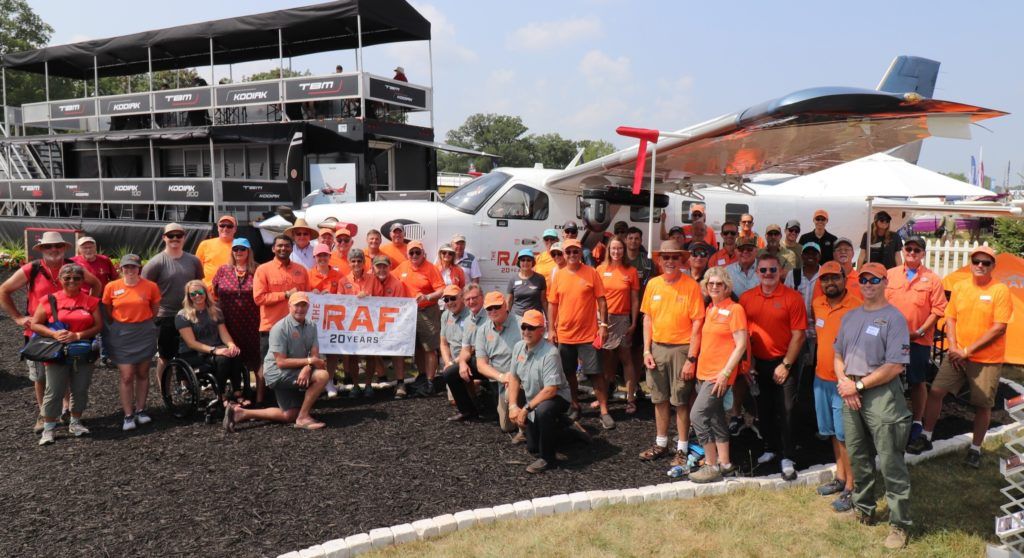
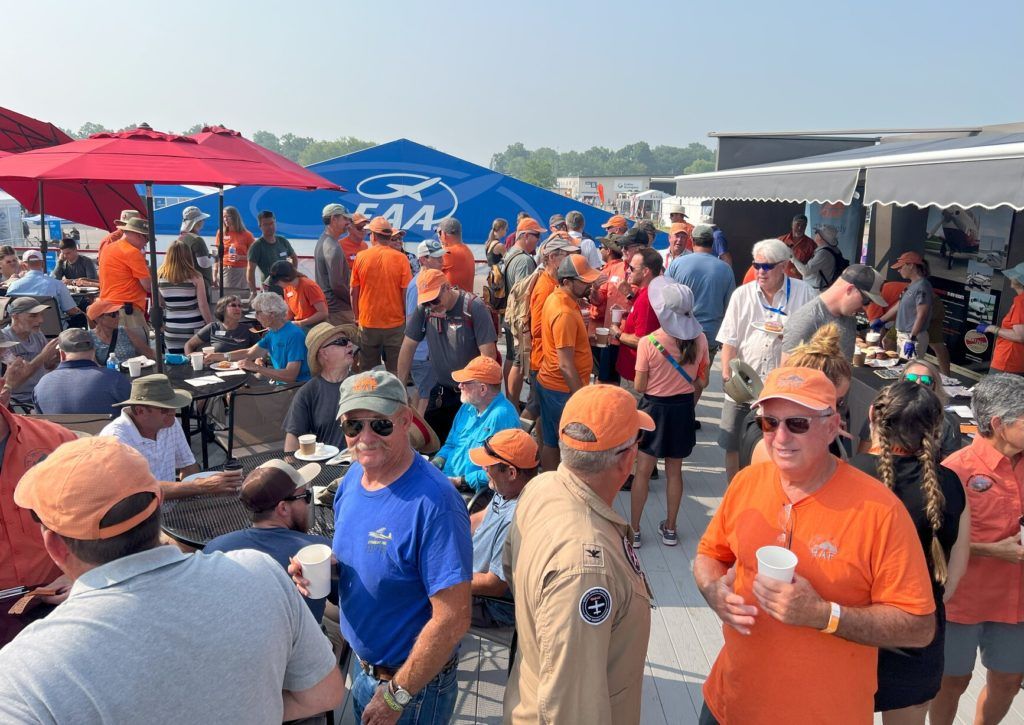
From high school campers to high-time pilots, the RAF engaged a wide group of AirVenture attendees throughout the week at Oshkosh. The RAF was invited to join displays at both the US Forest Service and Daher booths, and Hartzell again this year provided prime space on their rooftop for the traditional Tuesday morning Manderfield’s donuts and coffee social. 


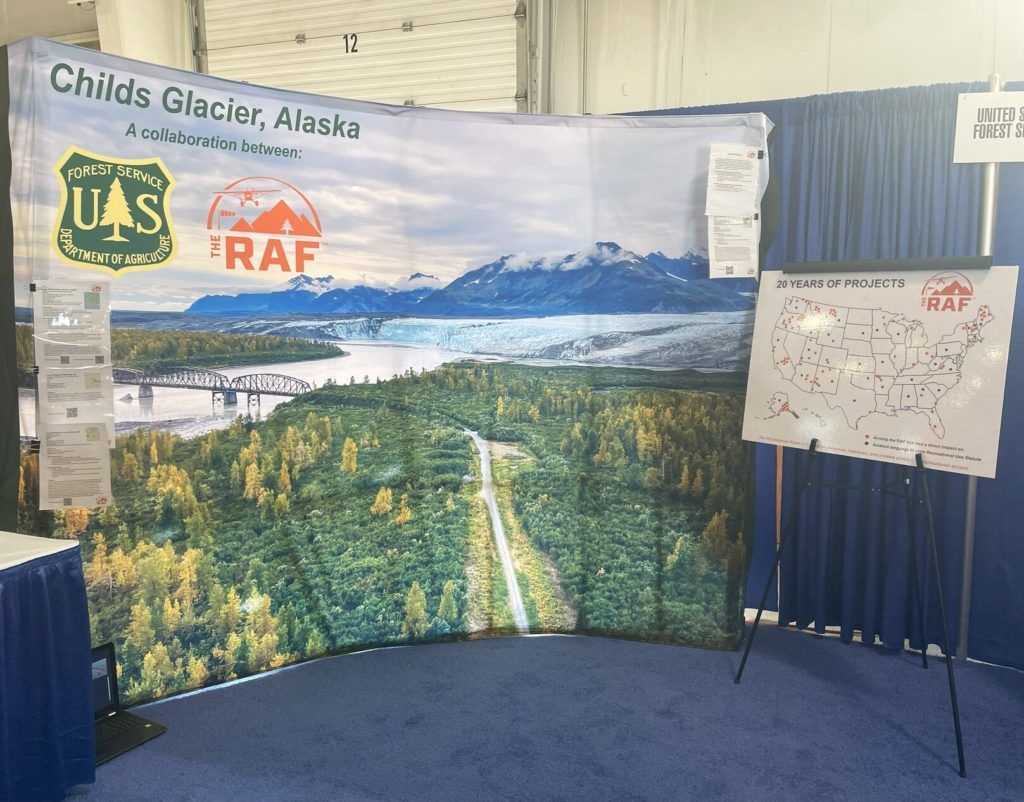
At the USFS booth, Alaska Liaison Stef Goza’s beautiful backdrop photo of Childs Glacier airstrip attracted passers-by. RAF volunteers were on hand throughout the week sharing the story about the USFS/RAF collaborative efforts at Childs Glacier airstrip, and other Forest Service/RAF collaborations. Thanks to the USFS and especially Chad Runyan for the opportunity to share a booth.


Daher has actively backed the RAF for many years, and in this spirit, the company provided display space and a beautiful Kodiak 100 with the RAF logo in its AirVenture booth all week. Visitors learned of the successful partnership between Daher, the RAF, and the US Forest Service on airfield projects in Idaho’s Wilderness. 


RAF Wisconsin Liaison Amanda Levin kicked off the presentations Monday and drew a crowd to her talk, “The Risk of Losing Access: The RAF at 20 Years” in the Pilot Proficiency Center. RAF Georgia Ambassador Dhruv Thakkar gave an enthusiastic presentation Monday evening to the high school students who spend the week camped at the Aviation Exploration Base in exchange for helping EAA staff throughout AirVenture. 


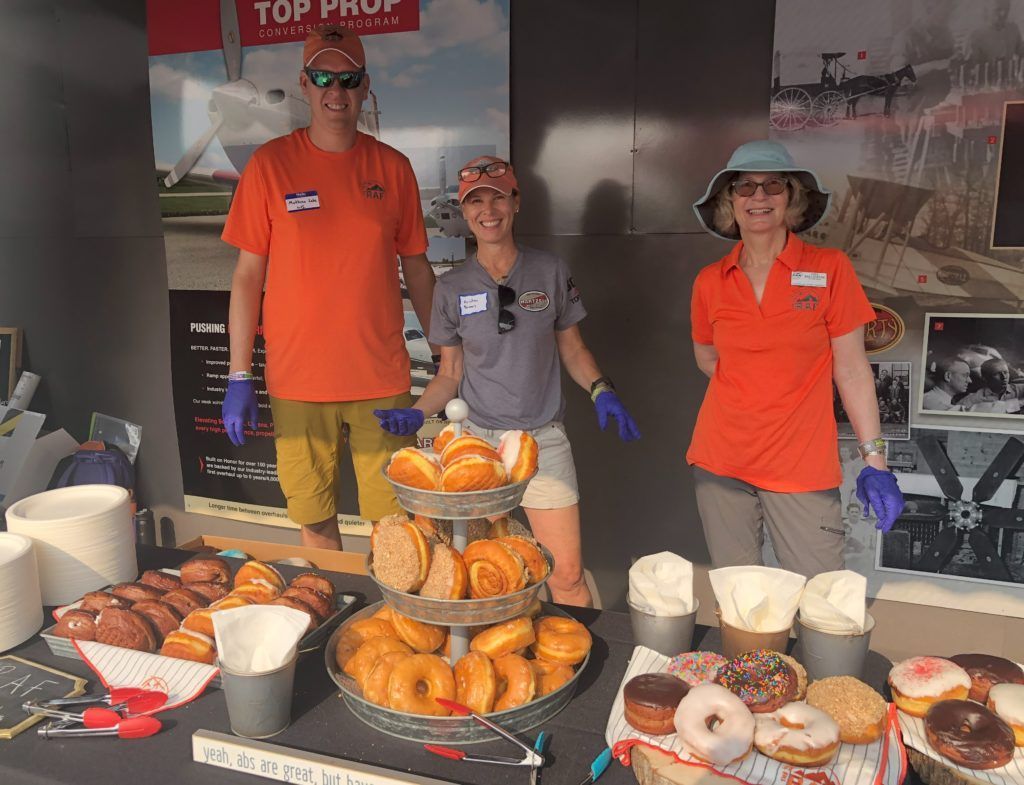
Tuesday morning, the Hartzell rooftop was standing-room only as RAF VPs of Appreciation Mathieu Labs and Lisa Ballantyne, and RAF supporter Kristen Brown served Manderfield’s donuts and coffee. Folks signed an RAF 20th anniversary banner to commemorate the event. Many stepped up and bared skin for RAF Washington State Ambassador Ray Ballantyne to help apply RAF 20th anniversary tattoos. The RAF thanks our friends at Hartzell for providing their rooftop once again.
There he led more than 6,000 of the world’s foremost scientists, engineers, researchers, and staff; oversaw the Enterprise Frontier, the world’s first and fastest exascale supercomputer; and two of the world’s most powerful sources of neutrons for research: the High Flux Isotope Reactor and the Spallation Neutron Source…you get the point. Jeff has used these resources and the platform of ORNL to help address some of the most complex national and global challenges that society faces. With breakthroughs in science, medicine, materials, technology – aviation – and more, through his leadership he has empowered and inspired others to pursue and achieve very (very!) big ideas and outcomes.
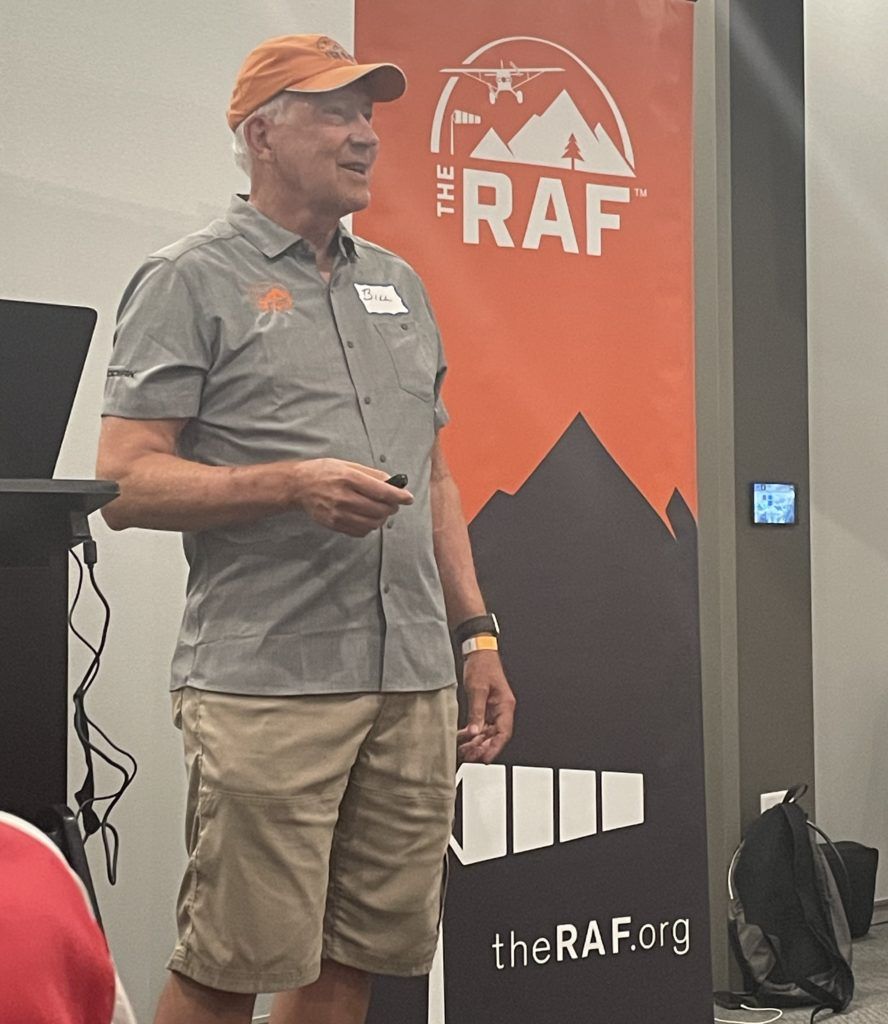
That afternoon, RAF President Bill McGlynn invited listeners to “set your watches back 100 years” with his presentation on backcountry flying and preserving public treasures. He explained the RAF’s role throughout the critical rehabilitation of the US Forest Service airfield at Moose Creek, ID. Daher Aircraft stepped up with a Kodiak 900 and solved the massive logistics challenge of operating in a Wilderness where there are no roads, nor mechanical equipment.


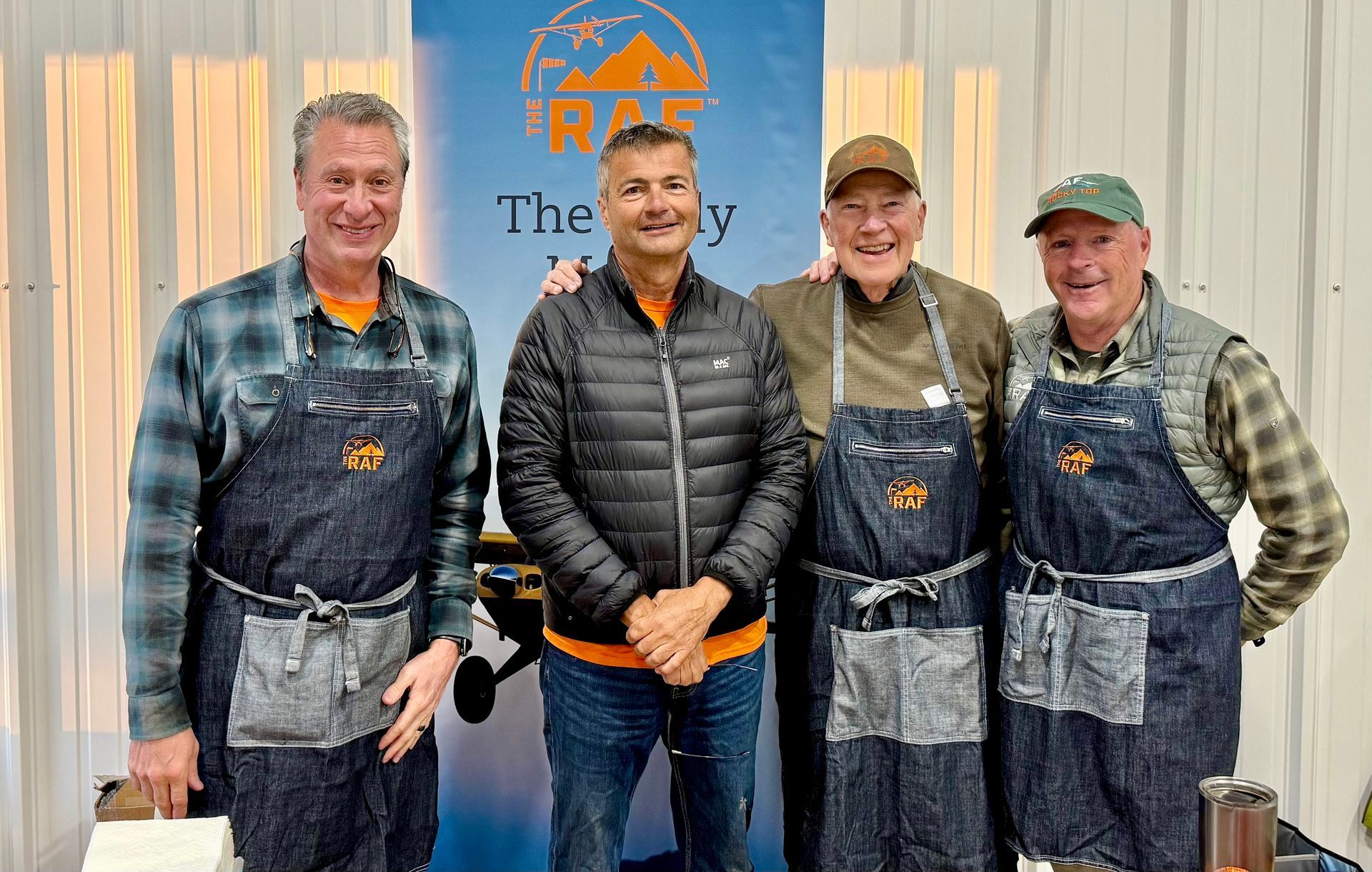
The Daher/Kodiak booth became a sea of orange earlier that day, as folks sporting RAF logo wear turned out for the “family photo.” A lively game of heads-or-tails was played, and an RAF logo item was given away.

Thursday morning RAF Director Jeff Russell and Indiana Liaison Bill Steinmetz recapped the RAF success at airstrips such as Cornucopia and North Fox Island in their talk, “How to Save an Airstrip”.

The RAF invited every Oshkosh visitor to the Brown Arch to view the growing array of tiles that commemorate RAF volunteers. One hundred tiles were generous donated by a long-time RAF supporter, whose goal is to honor the volunteers who fuel the mission. We will continue to add tiles in the coming years.


Special thanks go to Director Jeff Russell for all his help preparing for this year’s AirVenture.

Submitted July 31, 2023.
    Recent Posts
November 19, 2026
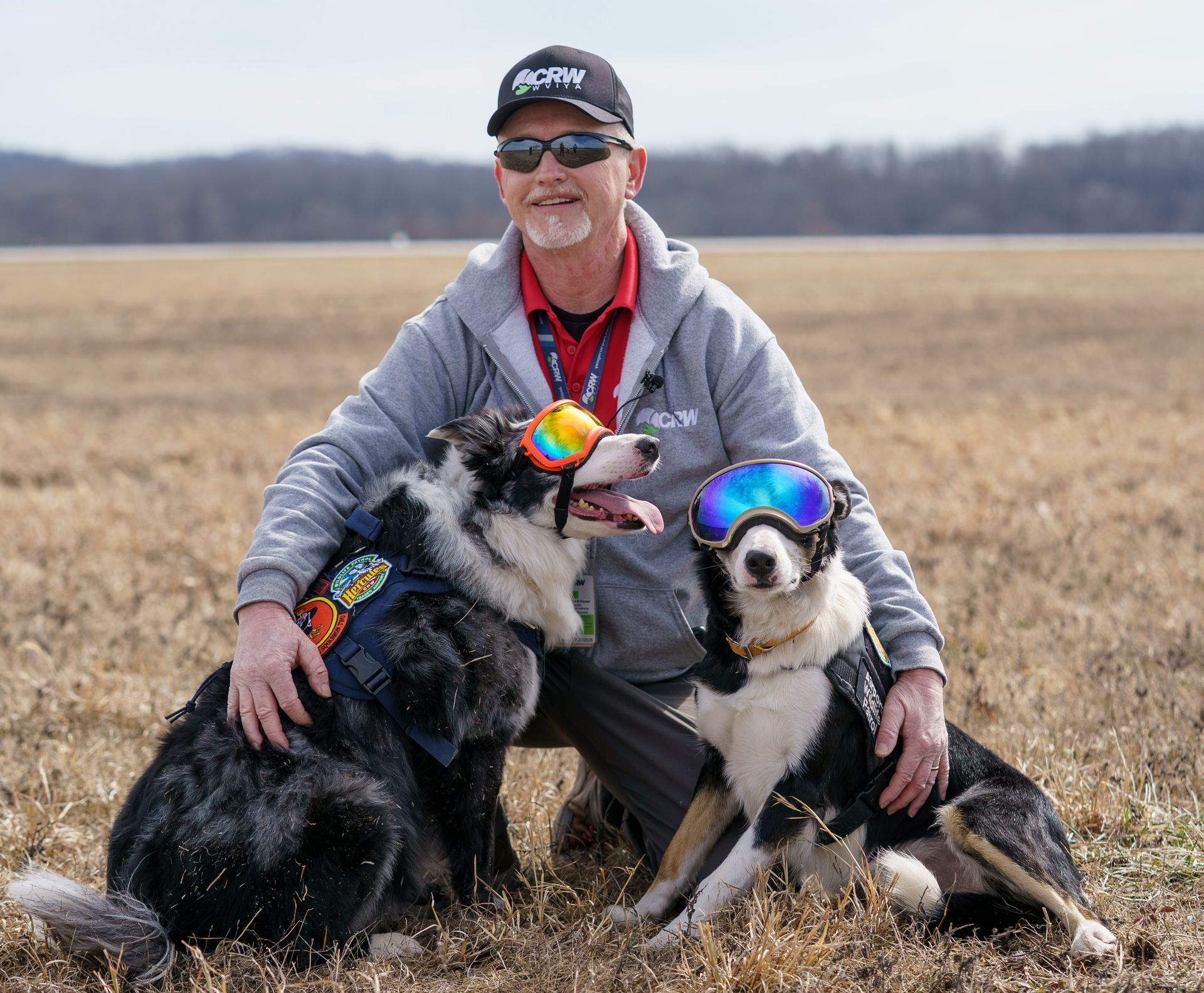
Our many RAF supporters have such vast and varied experience, and we’re capturing some of their words of wisdom to share with you. This guest editorial is by Wildlife Specialist Chris Keyser, who is the handler of Hercules and Ned: West Virginia International Yeager Airport's Wildlife Patrol dogs.
November 18, 2026
For many, the word “backcountry” brings to mind a setting in the wilderness. We at the RAF consider “backcountry” to be more than a place. It describes a style of flying we enjoy. Where patterns may not be rectangles, and where extra care must be taken to safely land and depart. In our world, “backcountry”…
November 16, 2026
Imagine escaping the crowded New York metro area in your taildragger, and within a half hour, you’re over a forested valley, heading for an open turf runway with lakes on either end. You roll out on the turf at Andover Aeroflex Airport in Kittatinny Valley State Park, less than 40 nm northwest of the city. Tie down and stroll to New Jersey’s deepest natural lake and discover why folks love to ply Lake Aeroflex for trout, landlocked salmon, and bass. Choose to explore any of several hiking and biking trails. It’s hard to believe that an idyllic gem like this exists, yet it does. Wouldn't it be a tragedy to lose it? The future of Andover Aeroflex (12N) is less than certain at the moment. “The RAF is not sitting idly by. We are working hard to help change the course of this potential disaster,” RAF Director Jeff Russell said. New Jersey Congressman Josh Gottheimer visited the airport October 2, and said, “This would be a devastating blow if closed.” The New Jersey Department of Environmental Protection (NJDEP) has moved to evict all tenants – including the flight school academy. They are to vacate by December 31 of this year so it can refit the historic hangars to accommodate New Jersey Forest Fire Service’s helicopter firefighting facility for this region’s short six-week fire season. 
By Carmine Mowbray • November 13, 2026
The RAF is fortunate to have notable scientist John Priscu as a supporter. John has helped at work parties, assisted HQ with the Airfield Guide, and contributed his wide academic/science expertise on occasional airfield projects. John grew up in the clear sunshine of Las Vegas, NV, where his uncle introduced him to flying. “My first flight was at age four, roped to my father in the open cockpit of my uncle’s PT-19. At the ripe age of 15, my uncle taught me to fly his Howard DGA-15P during our many visits to dirt strips in the Southwest, including Chicken Strip,” he says. Like many, John got the aviation bug early on, then spent years raising a family before returning to flight. He settled in Bozeman, MT, where in 1984 he began his 40+ year career at Montana State University. He earned his SEL ticket in 2002 and bought a Maule, which he says suits his flying profile, supporting conservation flying, and flying the backcountry. When he’s not flying the Mountain West or caring for his 1979 Porsche 911SC, he might be found anyplace in the world as he fulfills his assignments as Regents Professor Emeritus at MSU. He has spent over 40 seasons conducting ice field research in Antarctica, Alaska, Greenland, and the Himalaya. Or he may be nosed into a project for JPL or NASA. He returned recently from a whirlwind lecture tour for the US State Department in the far Southern Hemisphere. Engaging John in conversation, one will always learn something scientific before the talk turns to flying. While flying in the backcountry, he met RAF Chairman and RAF Administrative Director John and Tricia McKenna. “We bonded because we like to camp, mountain bike, and fly, among other things. I became an enduring RAF supporter. My wife, Barbara, and I took McKennas’ suggestion to buy a winter place near St. George, Utah, a decision we do not regret. We bought a hangar in Hurricane, where I met other RAF supporters like Gordon Rock (RAF supporter extraordinaire and all-around great guy), and we all enjoy flying in the Southwest.” While mountain biking together, John McKenna told him about the great biking and flying in Bentonville, AR. “I was sold.” In spring of 2024, John planned a flight to Bentonville with a stop in New Mexico. “One phone call to John McKenna mentioning my intentions was all it took to get the RAF connections moving. Within days I received emails from RAF New Mexico Liaison Ron Keller and RAF Arkansas Liaison Dave Powell, providing background and support. I began by flying to Gallup to visit RAF supporters Perry and Sandra Null, who were superb hosts. I highly recommend their Perry Null Trading Post.” At Bentonville, he was met by a welcoming crew organized by Dave Powell. The next day they flew “The OZ” with Dave in John’s right seat, Chip Gibbons leading, followed by RAF Texas/Montana Ambassador Steve Maus. “Having Dave in the right seat was invaluable because everything was so green, I couldn’t tell a grass strip from a mowed agricultural field.” The next day Dave had a mountain bike delivered to his hangar, and he took John on a “fantastic ride” followed by dinner with his wife Julie and Steve. Grounded for three days by IFR at Bentonville, John was able to depart in an MVFR window. After dodging weather through Oklahoma, Texas, and eastern New Mexico, he overnighted in Santa Fe, then flew directly back to 1L8, ending his journey. "Returning home, I reflected on the great folks who helped me along the way, and the huge role those RAF connections played. RAF really is a huge family of individuals who drop what they’re doing in a minute to help a fellow RAF’er. I am honored to be part of the RAF, and am forever indebted to all the RAF folks who make this happen.” Submitted November 13, 2026 By Carmine Mowbray
By John McKenna • November 12, 2026
Credit this month goes to Angela Duckworth, whose new book Situated suggests that our best comes when we work to shape our external environment so that good choices become automatic. To an outsider, it might seem obvious where the RAF finds itself today, but I assure you there has been a good deal of effort put into arranging the table so that good things are on it, and good people are there to be a part of it. I believe it starts with our RAF culture. You have heard it before around the RAF campfire when someone asks a question beginning with “why.” The answer they often hear is, “Well, that’s just the way we do it around here.” That applies to how we manage our resources, take on new projects, and most importantly, treat the people we deal with, as well as one another. To build that culture, the RAF has chosen people and partners who share the ideals and values our organization represents. I am pretty sure that most all of us would concur that the RAF has the best of the best when it comes to its greatest asset: its people. Author Duckworth goes on to say that you may not be able to control the world, but you can reign supreme over your surroundings. The RAF, IMHO, has done this as well as any organization. We have clearly focused on sticking to our mission in the backcountry, and that has allowed us to be a useful voice in the larger world of aviation. When you roll the principles of Ms. Duckworth's book into a formula for success, it’s my hope that you will see how the RAF has worked darn hard to be the kind of organization that is respected, and that you all are happy to be part of it. So, the next time you are asked “why” about something the RAF does, you too can answer, “It’s just the way we do things around here.” - John McKenna, RAF Chairman Submitted November 12, 2026