RAF OUTFITTER FEATURED VENDOR: PAMELA COX OF DAWGMUFFS
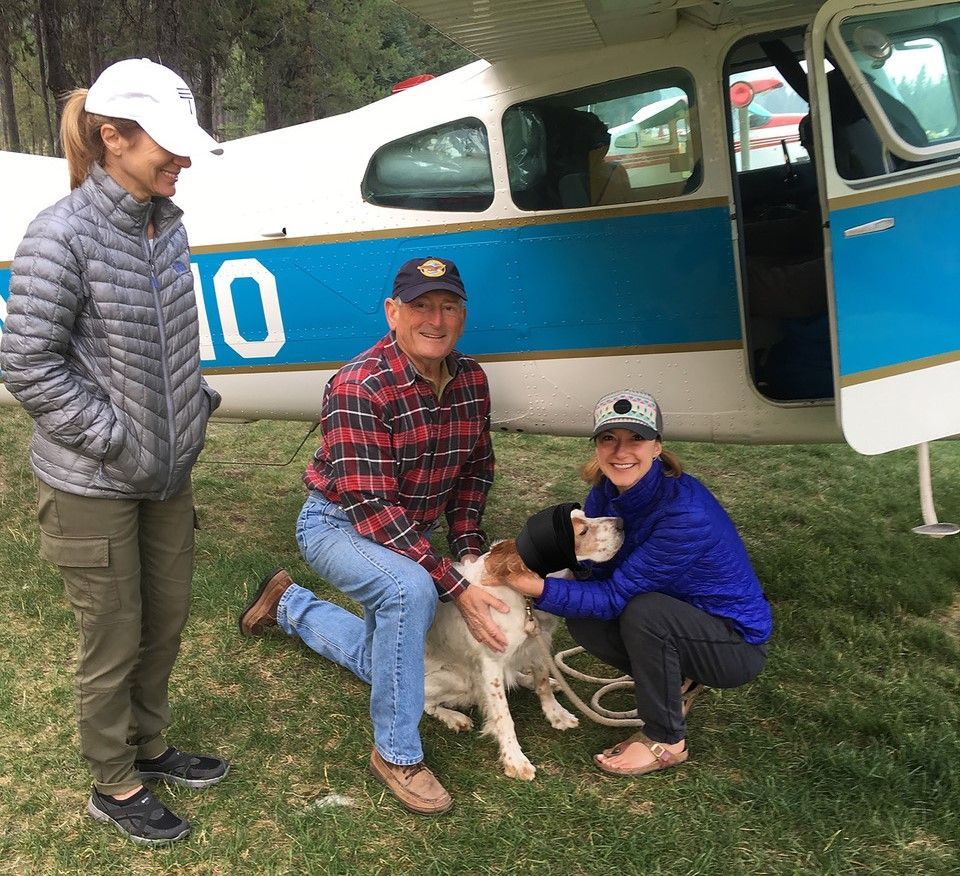
Pamela Cox is a designer. Professionally, she practiced architecture for a boutique firm in Dallas that was known for its roster of award-winning projects like libraries, the Dallas Zoo Veterinary Hospital, the Visitors Center at the Dallas Arboretum, and an array of beautiful private residences. She retired from that architectural firm and continued designing upscale Texas ranch homes. Now Pamela and her husband John live on, and manage the ranch that John’s great aunt and uncle homesteaded in west Texas in 1907. When the current generation expressed no interest in the ranch, John and Pamela bought them out. They run cattle, “and lots of wildlife. John has tamed anything with a heart,” she says.


Pamela was raised in Indiana, where farm animals need little space to graze the abundant forage. But on their Texas spread, their nearest neighbor is five miles away. John flies their Cessna 185 off their grass strip, and as is not uncommon in Texas, uses it to keep an aerial eye on fences, water sources, and their widely dispersed herd. Like the Old West, cowboys come in to help John round up, brand, and work the cattle seasonally. 


John has always loved flying in the mountains. The wedding gift he gave Pamela was a custom fly rod and one week of fly fishing instruction in Livingston, Montana; then a week of plying her new skills in Idaho’s Frank Church River of No Return Wilderness. “That’s where we spent our honeymoon,” Pamela says. They’ve enjoyed fishing as far away as Argentina, and many flying adventures throughout the US for the last 33 years, adding campouts in Idaho’s Wilderness airstrips, Montana, and Alaska.


Developing DawgMuffs


“I never even knew I loved dogs until John and I got our our first one thirty-three years ago, and twelve more have followed,” Pamela explains. They were heartbroken to learn that their beloved dogs had become deaf from flying with them. “We used ear protection on them, but did not realize our dogs were going deaf until it was too late,” she says. John encouraged her to put her creativity toward a better solution. “I’m a designer at heart,” Pamela says, “If I’m not designing houses, I’m designing these,” she adds.


She began researching the physiology of canine hearing and built her own digital sound chamber. She experimented with different materials, each with unique sound-suppressing characteristics. She then reached out to the Veterinary College at Purdue University to help obtain empirical data. The results were earth-shattering, as her prototype demonstrated a solid 70db reduction in noise. During testing, a behavioral veterinary doctor commented on the additional benefit that the cap acts like a therapeutic weighted blanket, and can ease a pet’s anxiety while cutting the noise. Test results were received by an appreciative audience at the American College of Veterinary Internal Medicine Forum in June of 2025. 


“Then I worked on designs that would fit and stay on the dog,” she said, leading to a study of the varied shapes of dogs’ heads and ears, so unlike a human head. “My aim was that the cap was comfortable enough for the dog to sleep while wearing it.” The result is her patented two-strap design that prevents slipping or removal.


After the laborious patent process, Pamela needed to find the right domestic manufacturer. She was delighted to find an innovative “mom and pop” sewing shop in Wichita Falls, Texas, that was willing to gear up for production. DawgMuffs have now come to market – with a growing number of satisfied customers – and the RAF Outfitter is proud to offer them. 


The DawgMuff website really sums up Pamela’s goal: “Elevating pet comfort through thoughtfully crafted hearing protection that fosters serenity and joy for dogs.”


See the RAF Outfitter to order yours!


Submitted March 24, 2026

By Carmine Mowbray

Recent Posts
May 8, 2026
A dozen volunteers in seven aircraft and a few cars arrived at Washington State’s Olympic Field on Saturday, May 2, to help with needed maintenance. They enjoyed mostly good weather, being Spring in the Olympic Peninsula. “A lot of things got accomplished in a short amount of time,” RAF Washington State Liaison RAF Ballantyne reported. The crews thinned an adjacent stand of trees to create about 500 feet of a “buck and rail” fence for runway safety. They trimmed around the runway lights and sanded and refinished a large circular table and several chairs for the camping area. The field is privately owned by Ryan Larrance and his wife, Marianne. “Marianne made delicious scones for the arrivals, and a great pulled pork on homemade bread with fixings for lunch,” Ballantyne said, adding, “We had a great time getting to know each other. Many hands truly make light work. We discussed current events in Washington, and even got to play a game for an RAF Yeti.” Olympic Field, near Port Townsend, has a 2,500-ft turf runway, bordered by an equally long pond for seaplanes to land. In 2025, using an RAF grant, volunteers built an off-the-grid bathhouse with a vault toilet and hot shower. The Larrances have a tradition of welcoming fly-in visitors to their field. See Olympic Field in the Airfield Guide . Submitted May 8, 2026
May 4, 2026
THE RAF SPRING SALE IS HERE! Gear up for the flying season ahead! For a limited time, take up to 30% off a selection of RAF Outfitter gear. Show off your support for the RAF and head into the summer flying season in style. Our Spring Sale includes items from Stio and Kuhl, along with hats, jackets, accessories, and more. Check it out before they are gone! Shop the Spring Sale here.
April 30, 2026
There are two fly-in public use cabins on Heckman Lake in the Ketchikan Misty Fjords Ranger District of Alaska. Both are approximately 15 miles from Ketchikan, and open year-round to welcome visitors for what RAF Alaska Liaison Jeff DeFreest calls “a very unique remote recreational experience. Relaxing on the deck gives you a view of the lake, surrounded by the Sitka Spruce and western hemlock forest.” Either site can be accessed by float plane or by boating into Naha Bay. Each cabin has a table, benches, a wood stove, and an outhouse. Guests should bring their own firewood, as it is not guaranteed. Drinking water is not available; guests should treat the creek or lake water, or bring their own. Southeast Heckman Fly-In Cabin is situated on the southeast shore of Heckman Lake and is only accessible by floatplane. The 16x22-ft pan-abode style log cabin accommodates eight people and is wheelchair accessible. In 2024, the RAF and Seaplane Pilots Association provided grants to restore the cabin. Volunteers, assisted by Misty Fjords Air, collaborated with the US Forest Service to complete work on the cabin, dock, outhouse, and trails. The other cabin is a 12x14-ft pan-abode style that can accommodate up to six people. It can be accessed by float plane or by boating into Naha Bay and hiking six miles on the Naha River National Recreation Trail. Visitors may use the 14-foot aluminum skiff with oars or bring their own short shaft motor. The Naha River is accessible from the cabins and provides opportunities to fish for trout. In season, there are steelhead and salmon runs. The Naha River National Recreation Trail winds downstream six miles through a rainforest where you may spot Roosevelt Lagoon, Jordan Lake, and a waterfall on your way to Naha Bay. Visitors would be wise to bring extra provisions, as occasionally, poor weather can cause extended stays. The RAF Airfield Guide includes information on these cabins. Recreation.gov allows visitors to check availability and find other USFS information on the Southeast Heckman Lake fly-in cabin and Heckman Lake cabin . Submitted April 30, 2026
April 30, 2026
RAF North Dakota Liaison Brian Rau and Ambassador Jeff Faught have been working with the Army Corps of Engineers and North Dakota Aeronautics Commission to develop an underwing camping area at Garrison Dam Recreational Airport (37N). Rau presented a plan to convert an adjacent day-use park with flush toilets, a picnic area, horseshoe and basketball facilities for the camping area. He gained approval from the Corps of Engineers and ND Aeronautics and was awarded an RAF grant to help with the project. “Garrison Dam Recreational Airpark is an excellent existing recreational airstrip. There is fishing, hunting, and hiking available adjacent to the proposed underwing camping area,” Rau said. The ND Aeronautics Commission will develop an existing road into a taxiway to connect the 3,200-ft long turf runway to the new camping area. The Commission has finalized its plans and has awarded the work to a contractor. Rau and Faught will organize volunteers to install signage, remove trees, grind stumps, prepare the camping and tie-down surface areas, install drain tile, and plant 75 new trees. Rau expects the contractors to begin work in June 2026. See the RAF Airfield Guide for information on Garrison Dam Recreational Airport. Submitted April 30, 2026
By Carmine Mowbray April 30, 2026
The RAF has done a deep dive into all 50 states’ Recreational Use Statutes, and you can find them here . The purpose of these statutes is to help keep private lands open to the public for recreation by limiting landowner liability. In its advocacy of recreational aviation, the RAF has made efforts to increase landowners’ protection when allowing others to use their airfields. With added protection, landowners are more willing to open their airfields to public use, with or without certain conditions. Thanks to these efforts, many states now include “aviation” in the named recreational, non-commercial activities in their Recreational Statutes; some states are more general. We invite you to check out your state’s legal language, or feel free to contact either of the RAF’s RUS Liaisons, John Nadeau at jnadeau@theraf.org or Rick McCraw at rmccraw@theraf.org . Our efforts continue to include “aviation” in all states’ statutes, so this information will be updated as needed. Submitted April 30, 2026 By Carmine Mowbray Photo Credit: Ron Barrett, Sullivan Lake, WA