Kevin Johnson

A breakfast when Kevin Johnson was in high school determined his future as a pilot. “My dad had served in the US Air Force Reserve as load master on the Fairchild C-119 Flying Boxcar, then got his private pilot license when I was five, so we were around flying. But when he flew me to that breakfast, I decided I wanted to learn to fly,” he says. 

Kevin began flying in the Portland, Oregon area when he could rent a “wet” Cessna 150 for about three bucks an hour. In spite of the area’s legendary rains, he attained his private, instrument, and commercial licenses, and eventually flew commercially for a corporate entity in Houston, where he met Melinda. They’ve been married for 37 years and have two grown sons. The elder is an associate professor of pharmacy in Little Rock, AR with two young children; and their younger son is in the construction business.

Now living in Gladstone Oregon a dozen miles south of Portland, Kevin helps his son in the family construction business, and manages their commercial and residential rental properties. Melinda is enjoying retirement.


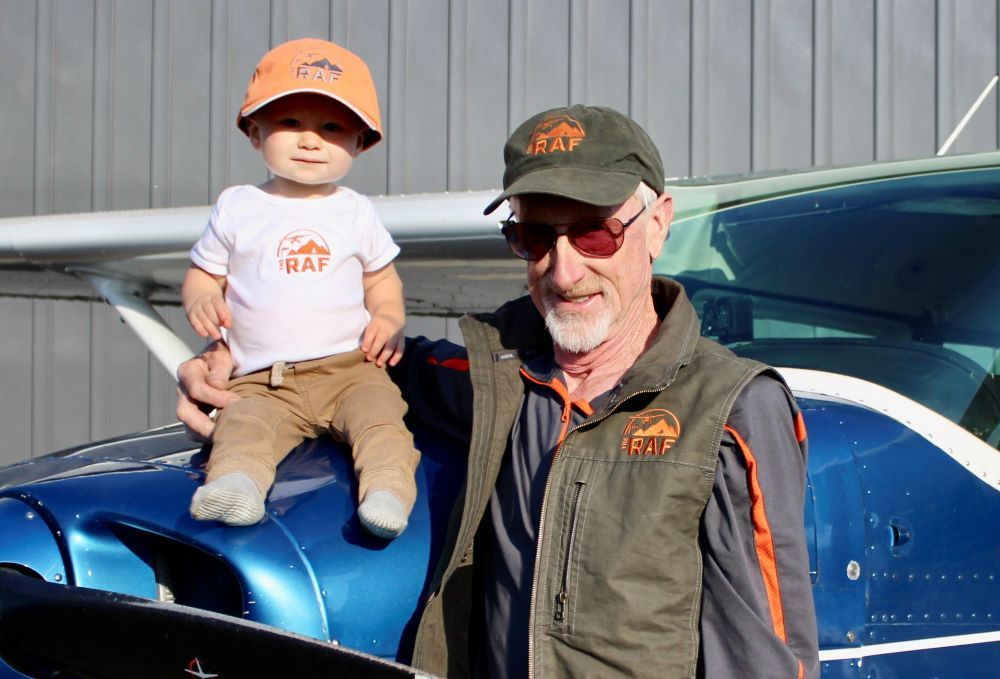
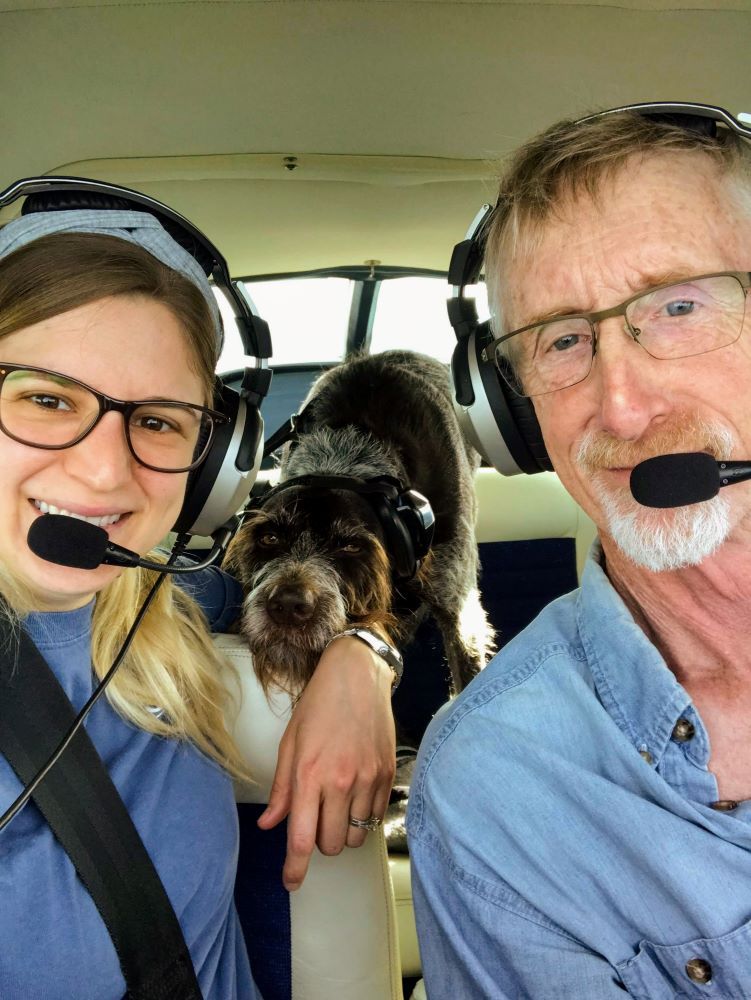
“In 1976 my dad and I bought a 1969 Cessna 172. We still own it. My son now owns my dad’s half,” he says. Kevin’s younger son earned his license while he was still in college, then got married. His wife earned her license a couple of years later. They have a child, so, “There might be a fourth generation of pilots in our family,” Kevin muses. The tot’s name is Jett, and Kevin’s “grand dog” is named Piper. “We like aviation stuff,” Kevin adds.

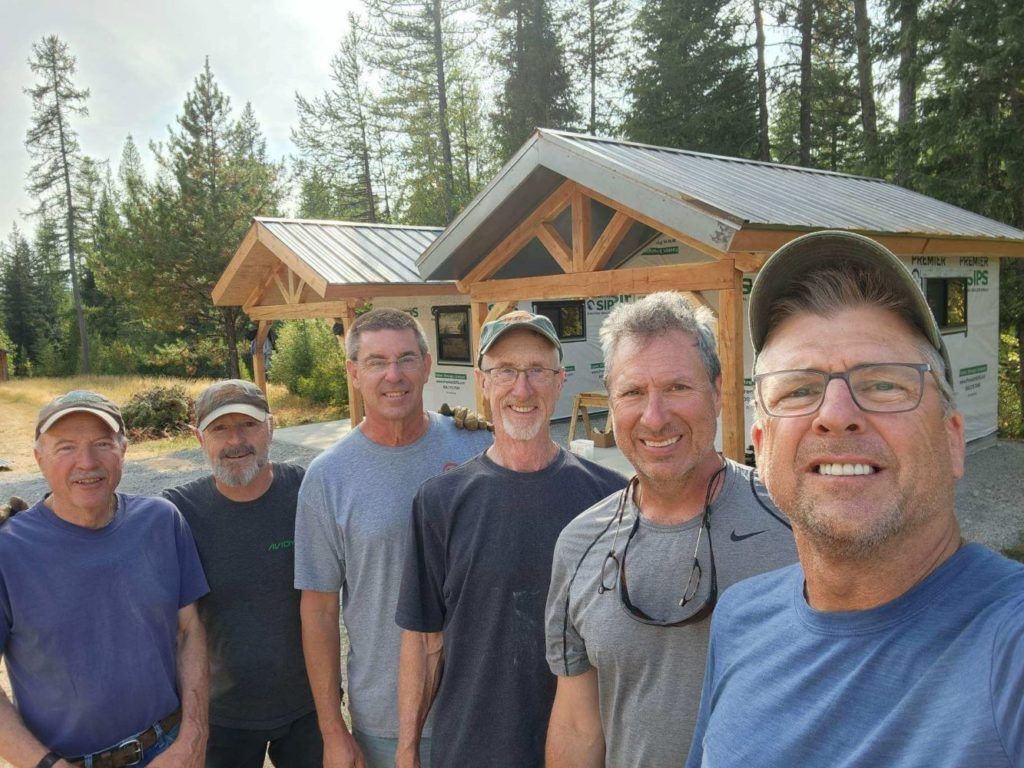
In addition to membership in AOPA and the Oregon Pilots Association, Kevin supports EAA and in 2016 he attended an RAF mountain flying seminar at AirVenture, and was motivated to become an RAF supporter. But that didn’t just mean signing up and sending a check. Kevin has volunteered at Oregon’s McKenzie Bridge work parties where he met RAF Oregon Liaison Richard Mayes. He has twice flown his C172, and twice driven to Ryan Field to work on the barn and cabins.

Kevin’s skills are in demand, and he has contributed a lot of gratis construction work locally, as well. He helped build a press box and storage building for Gladstone high school, where he and both his sons attended. Referring to his time on RAF projects, he says, “I’ve done a lot of volunteer work, but this has been the most fun, and the best people.”

He has watched the RAF gain attention and involve more people from all over the country, and their many hours of volunteer effort. “I’ve only worked a few weekends,” he says, adding, “People can see the stuff I do, but everything that people do that’s not visible is more important.” 

Submitted on November 11, 2022.


Recent Posts

By Kodi Myhre December 23, 2025
At about this time, every year, we have this conversation at the RAF about what our year end letter (code for asking for your financial support) should say to you, and about the RAF and the accomplishments of the past year.
By Taylin Trafton December 23, 2025
Our many RAF supporters have such vast and varied experience, and we’re capturing some of their words of wisdom to share with you. This guest editorial is by Stef Goza, a pilot and an RAF Alaska liaison.
By lellington December 21, 2025
Bill credits aviation for much of his success in business and the ability to serve his companies and family. What began in a Champ, and a Tri-Pacer owned by five people, turned into what Bill calls, “a key business tool” in which he accumulated 9,000 hours – in a Cheyenne, a Pilatus, and a TBM, where ninety-five percent of his flying was for business. “My retirement enabled me to recall ‘Why I Learned to Fly’, a slogan from an old RAF video.” Bill’s son, Patrick, purchased the C185 they now share. “While attending a business function, some associates arrived in corporate jets. As they joined up on the tarmac, the jet pilots gathered around Patrick’s 185, and one of the passengers asked, ‘What’s special about this?’ No explanation needed for this RAF audience,” Bill says. “My involvement in the RAF is, in a partial way, repaying the rewards aviation has endowed me with. Having been involved in many worthwhile nonprofits, this is one where financial support is only part of the picture. Physically participating in great projects that have a lasting effect, with good people, returns a great personal benefit,” he says. “My only regret is that I wasn’t there at the start.” Bill and his wife Jane are privileged to be able to split time between their long-time home in eastern Nebraska and Scottsdale, Arizona. While still serving on several boards, he enjoys golf “about every third shot,” biking, cars, and reading, but always looks forward to the time he can be involved in the RAF. “It’s flying with a purpose,” he adds. Bill can be reached at bdugan@theraf.org
December 15, 2025
AR Ambassador
By Taylin Trafton December 11, 2025
A Christmas gift of flight lessons from his parents started Scott Anttila’s aviation journey in 1985. “I learned at Johnson Field, a small grass strip tucked into the woods in Michigan’s Upper Peninsula, and that early exposure to simple backcountry flying stuck with me,” Scott says. Growing up in the U.P., he spent a lot of time outdoors and found that flying was another way to get to the places he liked to explore—especially the ones most people never saw. As he earned more ratings and eventually moved to the Detroit area for work, Scott realized he needed a way to stay connected to northern Michigan. He bought an airplane and used it to get back to the smaller airstrips and lake country he enjoyed. Along the way, he also flew gliders out of Frankfort, soaring along the Sleeping Bear Dunes and towing sailplanes over the Great Lakes. “Those flights gave me a different appreciation for the landscape and made me even more interested in the small, out-of-the-way airports scattered around the state,” he says. Visiting those kinds of places, Scott first came across the Recreational Aviation Foundation. He started using RAF-supported airstrips both inside and outside Michigan. “I noticed how well-kept they were and how much access they opened up,” he says, adding, ”Over the years, I’ve watched a number of grass strips close, which made the RAF’s mission feel especially important to me. Maintaining these airstrips keeps aviation connected to the outdoors and makes it possible for more people to reach the quiet, remote areas that inspired me to fly in the first place.” Scott joins the other two RAF Michigan Liaisons, General Grant and Tanmoy Ganguly. He can be reached at santtila@theraf.org . Submitted December 11, 2025.