Joe Feiler

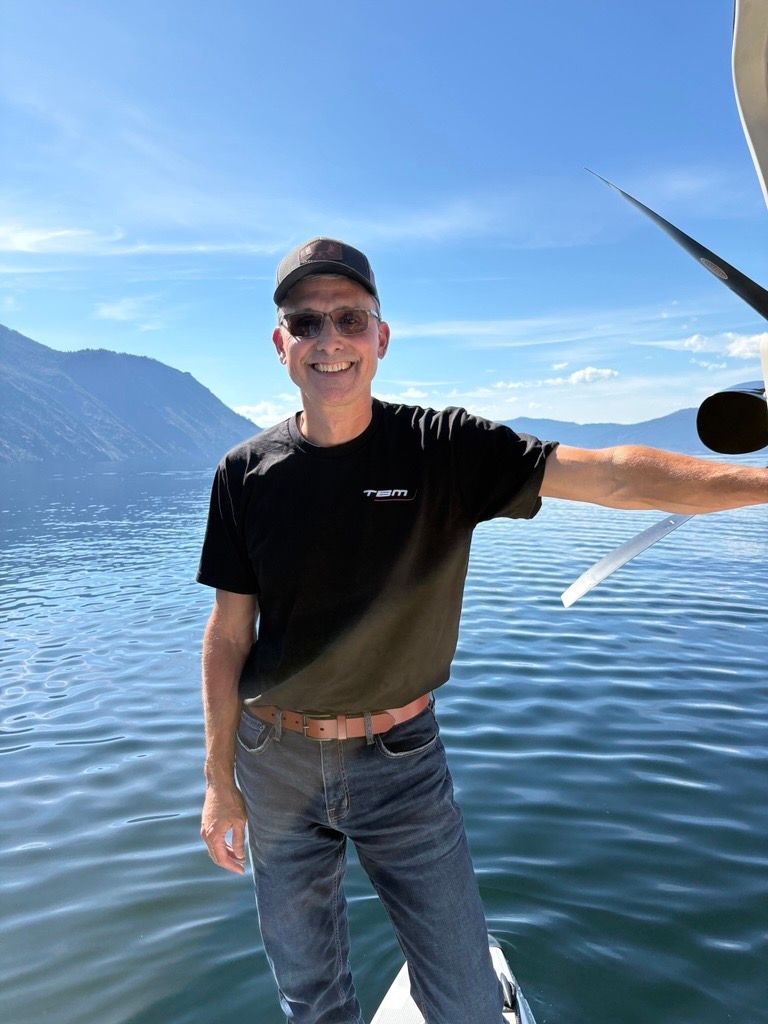
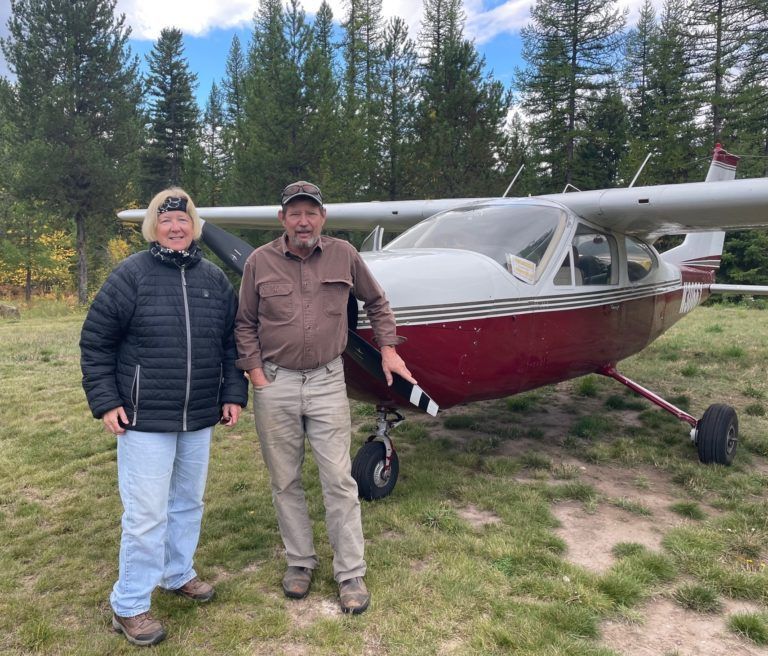
RAF supporter Joe Feiler of Casper, Wyoming loads his tools into his Cessna Cardinal and brings his skills where the RAF is making an impact. Joe’s 35-years teaching Career and Technical education included woodworking, carpentry, and welding, and he readily puts his knowledge and experience to work as a volunteer. “I learned Tim Riley was trying to establish a campground at Driggs, Idaho. I reached out to him, offering financial help and skills. He suggested picnic tables so I got the material, welded up some frames. I flew to Driggs to camp and really enjoyed helping put up the gazebo, as well.” Ever since, Joe has shown up wherever he could, with tools and a great attitude, and projects materialized.

The Ben and Butchie Ryan story intrigued Joe, and he flew into Ryan Field and got involved helping build the barn and cabins, all the while feeling a closeness with the late Ben Ryan. Joe’s father was a World War II fighter pilot stationed at Pearl Harbor during the attack. “Like most veterans, he never talked about it,” Joe says. Like Ben, Joe’s father was forced to bail out over the Pacific, earning eligibility for membership in the “Caterpillar Club.” Airman Feiler narrowly avoided the fatal outcome of his formation partner. The flying boat intended to rescue Feiler was damaged in the landing due to rough seas, and had to be towed back to the harbor with a Naval vessel. He survived this ordeal, and wrote a detailed account of it. “I have Dad’s foot locker full of combat reports, photos, historical newspaper clippings and the letters he wrote from Pearl,” Joe says, who muses if perhaps his father and Ben Ryan may have ever crossed paths during their military service. 
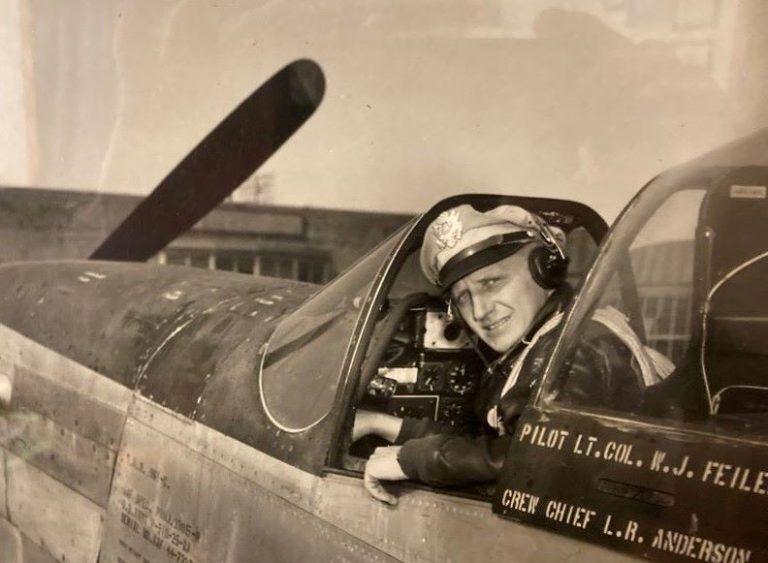

After the war, Lt. Col. Feiler flew P-51 Mustangs for the Iowa National Guard. Joe was always intrigued with aviation, and enrolled in a ground school at an early age, but struggled to move forward in aviation as many younger people do, without good mentorship. He finally had the time to invest in getting his own license, “kind of coming to flying late, compared to some.” He learned to fly “in the wind” in Casper, partnered on a Cessna 182, got involved with the Civil Air Patrol, then bought his Cardinal. He says it was a breakthrough moment in his life. “Flying out of Casper, I suddenly realized how accessible the backcountry is. The airplane gives you the ability to get out early, set up camp, and you have the rest of the day to recreate.” 


Joe is an avid outdoorsman, enjoying backpacking, horse packing, and climbing, and says, “None of it has given me more enjoyment than aviation.” He sees a clear parallel to his passion for education. “When I got my pilot license, I was told it was my ticket to learn, and my chance to constantly improve my skills.” He admits the Cardinal is not commonly thought of as a backcountry plane, but with attention to conditions, it has taken Joe and his wife Julie into many Idaho and Montana backcountry fields. 


Joe has memberships in other professional and sport organizations, and says, “All organizations have their mission, but what I see that separates the RAF from other organizations is the great people. They share a passion for aviation and work hard toward common goals. I’ve never met a better group of people who enjoy working on a common cause, then enjoy sharing the fruits of their labor.”

Having experienced Ryan Field, as much to work as to relax, he deeply appreciates that Ben and Butchie have shared the place with others. Next time you fly into Ryan Field, you may get the chance to meet Joe and Julie, as they have volunteered for camp host duties again. It’s likely that Joe will have his tools and will show you whatever improvements are underway.

Top photo: Julie and Joe with their airplane at Ryan Field.

Submitted on January 14, 2021.


Recent Posts

By Kodi Myhre December 23, 2025
At about this time, every year, we have this conversation at the RAF about what our year end letter (code for asking for your financial support) should say to you, and about the RAF and the accomplishments of the past year.
By Taylin Trafton December 23, 2025
Our many RAF supporters have such vast and varied experience, and we’re capturing some of their words of wisdom to share with you. This guest editorial is by Stef Goza, a pilot and an RAF Alaska liaison.
By lellington December 21, 2025
Bill credits aviation for much of his success in business and the ability to serve his companies and family. What began in a Champ, and a Tri-Pacer owned by five people, turned into what Bill calls, “a key business tool” in which he accumulated 9,000 hours – in a Cheyenne, a Pilatus, and a TBM, where ninety-five percent of his flying was for business. “My retirement enabled me to recall ‘Why I Learned to Fly’, a slogan from an old RAF video.” Bill’s son, Patrick, purchased the C185 they now share. “While attending a business function, some associates arrived in corporate jets. As they joined up on the tarmac, the jet pilots gathered around Patrick’s 185, and one of the passengers asked, ‘What’s special about this?’ No explanation needed for this RAF audience,” Bill says. “My involvement in the RAF is, in a partial way, repaying the rewards aviation has endowed me with. Having been involved in many worthwhile nonprofits, this is one where financial support is only part of the picture. Physically participating in great projects that have a lasting effect, with good people, returns a great personal benefit,” he says. “My only regret is that I wasn’t there at the start.” Bill and his wife Jane are privileged to be able to split time between their long-time home in eastern Nebraska and Scottsdale, Arizona. While still serving on several boards, he enjoys golf “about every third shot,” biking, cars, and reading, but always looks forward to the time he can be involved in the RAF. “It’s flying with a purpose,” he adds. Bill can be reached at bdugan@theraf.org
December 15, 2025
AR Ambassador
By Taylin Trafton December 11, 2025
A Christmas gift of flight lessons from his parents started Scott Anttila’s aviation journey in 1985. “I learned at Johnson Field, a small grass strip tucked into the woods in Michigan’s Upper Peninsula, and that early exposure to simple backcountry flying stuck with me,” Scott says. Growing up in the U.P., he spent a lot of time outdoors and found that flying was another way to get to the places he liked to explore—especially the ones most people never saw. As he earned more ratings and eventually moved to the Detroit area for work, Scott realized he needed a way to stay connected to northern Michigan. He bought an airplane and used it to get back to the smaller airstrips and lake country he enjoyed. Along the way, he also flew gliders out of Frankfort, soaring along the Sleeping Bear Dunes and towing sailplanes over the Great Lakes. “Those flights gave me a different appreciation for the landscape and made me even more interested in the small, out-of-the-way airports scattered around the state,” he says. Visiting those kinds of places, Scott first came across the Recreational Aviation Foundation. He started using RAF-supported airstrips both inside and outside Michigan. “I noticed how well-kept they were and how much access they opened up,” he says, adding, ”Over the years, I’ve watched a number of grass strips close, which made the RAF’s mission feel especially important to me. Maintaining these airstrips keeps aviation connected to the outdoors and makes it possible for more people to reach the quiet, remote areas that inspired me to fly in the first place.” Scott joins the other two RAF Michigan Liaisons, General Grant and Tanmoy Ganguly. He can be reached at santtila@theraf.org . Submitted December 11, 2025.