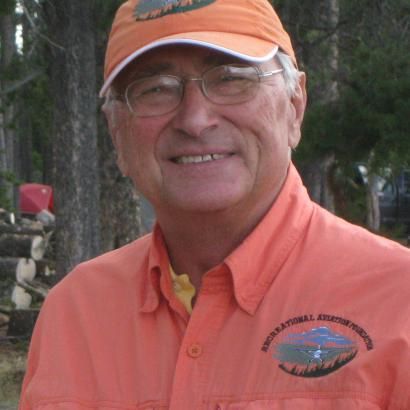
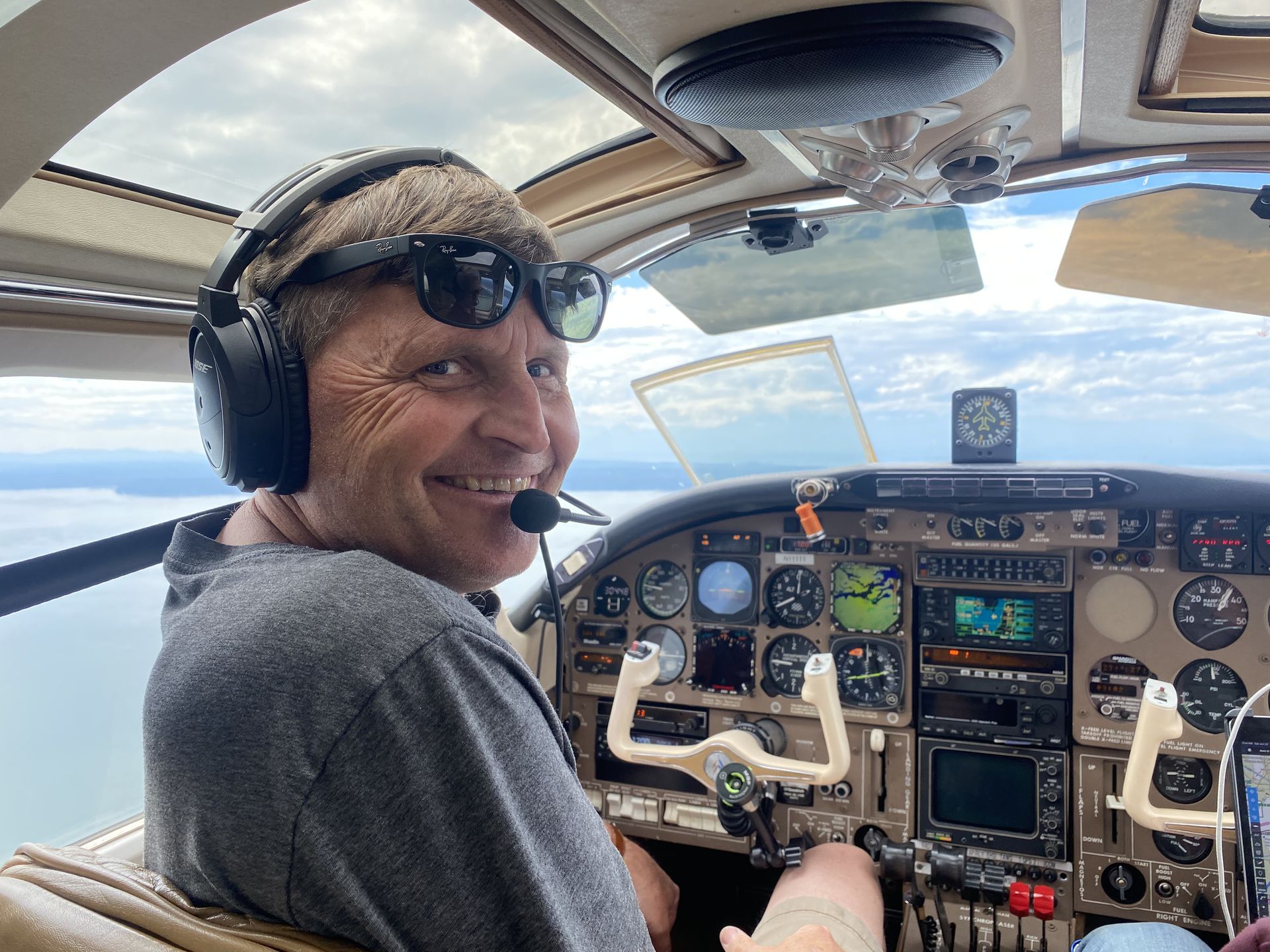
JEROME MORRISON “JERRY” CAIN

Director Emeritus

Thoughts After Retirement


When I raised my hand at the Montana Pilots Association’s (MPA) Board of Directors retreat in Bozeman in September of 2003, I had no idea what I was getting myself into!  I had been following the MPA’s Recreational Airstrip Committee for several years and watching them try to raise money. I even donated dogsled rides for their online auction.  To boost their fundraising effectiveness I suggested  they create an Internal Revenue Service (IRS) 501(c) (3) Public Charity in order to solicit tax-deductible donations.

Since the MPA charter included commercial aviation a legally separate organization needed to be created, and about a half dozen attendees indicated that they would like to be involved in such an organization and I set it up.

We decided on the name Recreational Aviation Foundation (RAF).  We decided that it should be a national organization – not limited to just Montana – since we were now going to be separate from the MPA.  After further discussion about mission, organization, location, etc., I began the process of filing the application with the State of Montana to become a Montana Non-Profit organization and then with the IRS to become a 501(c) (3) Public Charity.

During the process, I needed and asked for Articles of Incorporation, Bylaws, Mission Statement, logo, etc..  To my surprise, when I sent out an email asking for these, the reply was almost immediate.  I then found out that several of the pilots at the organizing meeting in Bozeman had previously been involved in trying to create just such an organization several years before to be named the Backcountry Airstrip Foundation or BAF.  They had already created the necessary documentation, etc., but hadn’t actually filed with a state and the IRS.  It was agreed to change BAF to RAF and other necessary modifications were made, and I filed everything with the State of Montana and the IRS in December 2003.

After about 90 days, the IRS requested more documentation. I sent the IRS a one-inch three-ring binder filled with all of the information they requested. 90 days later, we received our Letter of Determination granting the RAF 501(c) (3) Public Charity status effective in December 2003.

From there the rest is history. We started with our original Board Of Directors made up mostly from the pilots at the original organizing meeting in Bozeman plus a few new ones to satisfy IRS requirements. I volunteered to be Secretary / Treasurer. By the end of 2004, we had about $15,000 in the bank and a membership of several hundred. I continued in this role for eight years retiring December 31, 2011, when the RAF membership had grown to several thousand from all fifty states and about a dozen foreign countries. The RAF had preserved, maintained, and created multiple backcountry airstrips across the country, and my RAF activities had become so involved that I was spending ten to fourteen hours almost every day trying to keep up with it. I was either going to retire or go insane!

Fortunately, the transition of my duties to a new Administrative Director and new Treasurer went fairly smoothly, and I was able to retire as “Director Emeritus” which meant that I could continue to participate in BOD activities without the right to vote. I have continued to monitor and participate as appropriate in emails and the monthly BOD teleconferences, and other activities. It’s extremely satisfying to observe how the RAF is progressing and growing on a first-hand basis. Wow! Retirement is wonderful!

I could not have imagined in 2003 what the RAF would accomplish in its first ten years and could not be more proud of those accomplishments and the members of the BOD, and the membership who make this all possible through their generous support of both their time and their dollars.  And to do all of this with all volunteers except for the Administrative Director is absolutely phenomenal!  Again, who would have imagined what has been accomplished.  The RAF is now nationally recognized as the “go to” organization for anything related to recreational and backcountry airstrips.

I offer a big “Thank you!” and “Well done!” to all who have been a part of the RAF.  Keep up the good work, and good luck.  I hope I will be around and involved for the next ten years!

406-461-5631
jcain@theraf.org


Posted in Former Director

    Recent Posts

August 18, 2026
Posted in Ambassadors , Georgia Ambassador
By Carmine Mowbray August 14, 2026
Join the excitement as the RAF continues its momentum Expanding The Map, making these the most exciting years in our history! We encourage you to explore the growing number of destinations where you can share the joys of recreational aviation with family and friends. This time, we’re announcing the reopening of Keg Knoll Airstrip in central Utah, closed years ago by the designation of the Labyrinth Canyon Wilderness Area. Thanks to RAF efforts to gather widespread support from pilots and RAF allies, the BLM has allowed this airstrip to be reopened for public access. RAF Utah Liaison Wendy Lessig has led the effort over the past three years in advocating for the reopening of Keg Knoll airstrip. Various meetings were organized with the BLM to explore whether the airstrip could be reopened as allowed by the Wilderness Act. After the BLM prepared an environmental assessment of the airstrip, they issued a final decision to approve Keg Knoll airstrip for reopening, subject to a set of reasonable conditions that protect the wilderness area. Keg Knoll Airstrip has outstanding recreational value and offers pilots ready access to a true wilderness experience. Visitors can experience dispersed primitive camping next to their airplanes, hiking around Horseshoe Canyon, and stargazing under the dark skies at night. “One thing that makes Keg Knoll airstrip unique is the accessibility of the relatively easy two-mile hike to Colonnade Arch, also known as Five-Hole Arch,” RAF Utah Liaison Wendy Lessig points out. Keg Knoll is now open, with a cooperative work party to further improve the airstrip and install a windsock planned for the fall that will include volunteer pilots and the BLM. Since Keg Knoll airstrip is in a Wilderness area, no motorized or mechanized devices are allowed, so volunteers will be limited to the use of hand tools to perform maintenance. Current reports state the airstrip itself is in good shape, but pilots must be aware that the south 700 feet of the original airstrip is closed, and will be marked with rock X’s. What remains open is 2,000 feet of runway length. “We will need help from all the pilots who visit Keg Knoll airstrip to be good stewards to help protect and preserve the Wilderness environment for this special airstrip,” Lessig said. For more information about Keg Knoll, visit our dedicated web page . Submitted August 15, 2026 By Carmine Mowbray
By Carmine Mowbray August 14, 2026
When a few New Mexico backcountry pilots observed the closure of a backcountry airstrip on public land, they understood the need for a goal-focused group to preserve these valuable recreational destinations — places in the high desert where you could land your own GA aircraft, pitch your tent with panoramic views of ponderosa, piñon pine, and Rocky Mountain juniper, and easily hike into the Gila Wilderness area. New Mexico Liaisons Ron Keller and Larry Filener started the New Mexico Backcountry effort in 2009 and the New Mexico Airstrip Network partnership formed in 2014. “With their vision and a bit of organizing, we got a lot accomplished,” New Mexico Pilots Association former President Joyce Woods says. Their work brought about a historic MOU, formalizing “the collaborative partnership of federal and state agencies, aviation groups, landowners, and other stakeholders to preserve, promote, and enhance New Mexico’s growing inventory of recreational airstrips and related airports.” This document was signed at the USFS Regional Headquarters in Albuquerque in 2016. Thanks to these visionaries, access to choice flying destinations is available to pilots, nearly 20 in number. The RAF has provided grants for improvements at several New Mexico airstrips, and has formal agreements with the Gila National Forest to maintain and improve airstrips within the Forest. Additionally, NM Liaison Ron Keller has put in many hours and weekends organizing RAF and New Mexico Pilot volunteers for work parties. Joyce credits Keller as a “real workhorse", mowing the airstrips and leading work parties. Plan your New Mexico flying adventures, and bring your camping gear and hiking shoes. Lining the trails are 1,500 different plant species like the Wright's silktassel, Apache plume, cliff fendlerbush, mountain snowberry, and manzanita. You can access sites with prehistoric rock art. Spring visitors might hear the sweet song of the warbler during its migratory stop in the Gila. Night brings the darkest skies you’ve ever seen, sparkling with the Milky Way. Enjoy the warmth of a campfire as the desert night cools, and thank those wise and determined pilots who worked to preserve these New Mexico gems among the New Mexico Airstrip Network. Find more about these airstrips using these valuable resources: RAF Airfield Guide New Mexico Pilots Association Submitted August 15, 2026 By Carmine Mowbray
By Robert Miller August 14, 2026
As a career pilot, Thread and Error Management (TEM) has been ingrained in how I fly. I’ve become convinced that Threat and Error Management matters more in backcountry flying than just about anywhere else. Not because the principles are different but because the timeline for decisions is. In “normal flying,” a poor decision often gives you time to recognize it, correct it, and move on. In the backcountry, the chain gets compressed. Threats are closer, mistakes can compound quickly, and options disappear in a hurry. By the time you realize you're behind the airplane, there may not be enough runway, climb performance, or room to recover. That's why TEM isn't about avoiding mistakes. It's about breaking the chain before the situation starts making decisions for you. Most of the threats are familiar. Density altitude. Winds that don't behave as forecast. Narrow strips, rising terrain, soft surfaces, visual illusions, and airplanes that perform a little differently than they did last time. Add a little fatigue, a little confidence from yesterday's success, or an eager passenger, and the margins start shrinking. The interesting part is that accidents rarely begin with one big mistake. They usually begin with a series of small decisions that seem reasonable at the time. "The tailwind isn't that bad." "We'll climb out fine." "The approach will come together." In the aftermath of a near accident or a survived accident, we’ve heard all of these testimonials…sometimes from the voice in our own headset. The best backcountry pilots I've flown with all seem to have one thing in common. They're willing to change the plan early. They don't wait for proof that something is wrong. If the approach isn't shaping up, they leave. If the takeoff isn't developing as expected, they abort. If the conditions don't match what they planned for, they wait or go somewhere else. That's TEM in its simplest form: anticipate the threats, recognize when reality no longer matches the plan, and act while you still have options. One thought has stayed with me over the years: backcountry accidents rarely begin with bold decisions…they begin with delayed decisions. The RAF Safety, Education, and Etiquette team is looking at practical ways to apply TEM in the backcountry, including personal decision gates, arrival and departure briefs, and recognizing the traps that catch even experienced pilots. Let us know by sharing your own tips and ideas in “Comments” below. Until then, ask yourself one question before every approach and every takeoff: If this doesn't work exactly as planned, what's my next move? If you have a good answer, you're probably ahead of the airplane. Submitted August 8, 2026 By Robert Miller, RAF West Virginia Liaison & Safety, Education, and Etiquette Committee member
August 11, 2026
Irene was born and raised in Los Angeles but eventually found her way to Michigan's Upper Peninsula, where she quickly fell in love with the slower pace of life, the endless outdoor adventures, and the welcoming community. After spending a few years between Mississippi and Los Angeles, she knew Marquette was where she wanted to be and returned to make it home. Travel has always been one of Irene's greatest passions. Her mother once joked that she needed to find a career that could support her expensive travel habit—and she did. As a full-time flight attendant, Irene has had the opportunity to experience incredible places and cultures around the world. About five years into her airline career, a pilot casually suggested, "You should be a pilot!" Just one week later, Irene took her first flight lesson and discovered a passion for flying she never knew she had, and hasn’t looked back since. In addition to working as a full-time flight attendant, Irene is a Certified Flight Instructor (CFII/MEI) who is passionate about helping aspiring pilots achieve their aviation goals while developing the skills and confidence to become safe aviators. She is also preparing to begin her second year as a part-time high school Career and Technical Education (CTE) aviation teacher, where she enjoys introducing students to the various opportunities aviation has to offer. When she is not in the air, Irene enjoys spending time with family and friends, cheering on motocross/supercross races, and now volunteering with the RAF. Irene looks forward to contributing to the mission of supporting recreational aviation for future generations and cannot wait to meet the members, volunteers, and aviation enthusiasts who make this community so special. Submitted on August 11, 2026