Glenn and Carol Punske-Brasch
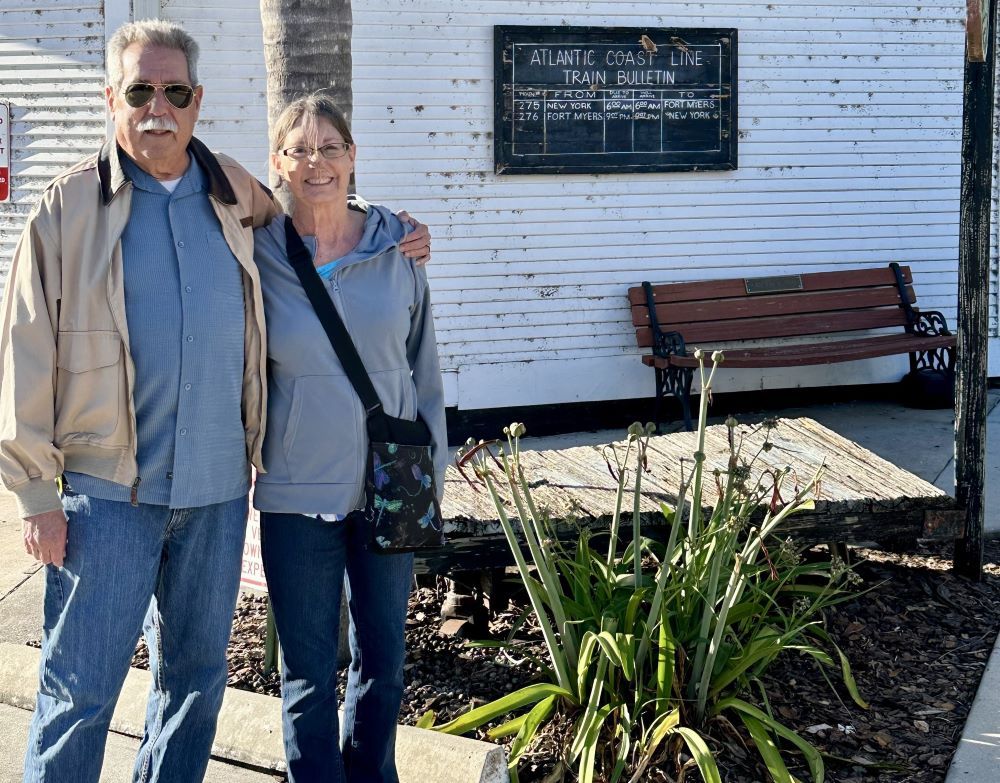
Glenn and Carol Punske-Brasch give back through public service.

Like many pilots, Glenn always wanted to fly. He grew up in Chicago, attended college at Southern Illinois University where he began to fulfill his dream of flight fairly early in life by getting his private pilot license. 


Another desire was to find clearer skies, so he moved to Tucson, Arizona in 1974. After serving as a beat cop and first responder, he was able to further his dream to fly helicopters, and his path placed him squarely in the Flight and Safety Department of the Tucson Police Department, “chasing criminals with a helicopter,” he says. He soon earned Commercial, Multi-Engine and Instrument ratings for fixed wing and helicopters, and has instructed in both.


Glenn met Carol Punske at a health club and eventually they married.

After twenty-one years in the police department, Glenn retired in 2001 and took time away to help Carol raise their son, then shifted to another area of public service. Glenn signed on with PHI Air Medical as a medevac helicopter pilot. “It was very rewarding work,” Glenn says. “I saw people on the worst day of their life, and was able to help them.” He admitted there were times the weather was so bad that he should not have been in the air, “but it was worth it,” he adds. His company had fifty flight bases and got calls from all across the Southwest US but the busiest base, ironically, was tiny Safford, AZ. Why? Because it was about equal distance from the larger cities of Phoenix, Albuquerque and El Paso. “If someone is injured, they want to be treated near their home, not near ours,” he said.


Carol is as dedicated to public service as Glenn, and served 30 years in Arizona’s Child Protective Service as an abuse investigator. In her “retirement” Carol worked ten more years for a nonprofit agency serving kids in foster care. She has been repeatedly honored for her service and just recently won the “Heroes Without Capes” award from Southwest Arizona’s Childrens’ Advocacy Center for her dedication to ending child abuse and her compassion for children who need safety and healing.
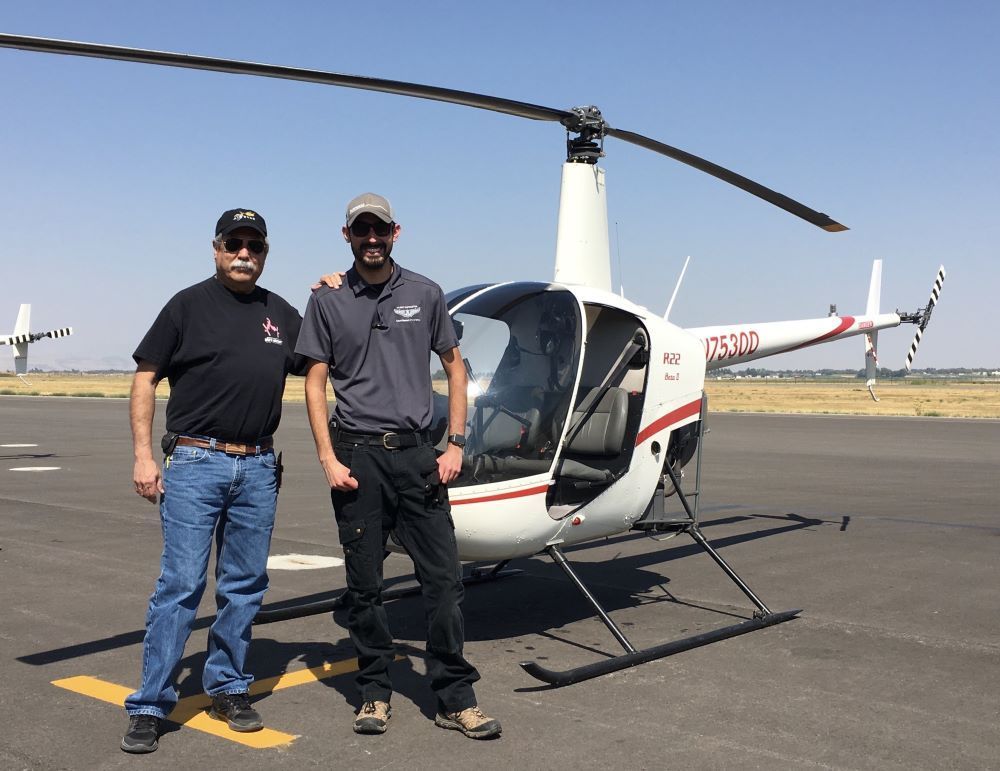

Their son is now a helicopter pilot. “I guess I gave him one too many rides,” Glenn jokes. “But it paid off for us.” He lives in Tucson with his wife and flew for an air ambulance operation, and was promoted to a position as instructor and check airman as well.


Because Glenn knows what it’s like to have a dream and overcome challenges, he decided he wanted to help others fulfill their dream to fly. In 2017, he and a few other pilots created their own nonprofit called Southern Arizona Teen Aviation, Inc. (SATA) and welcome high school students to learn about aviation from rivets to flight. So far, they have completed and sold three airplanes, and are working on their fourth, an RV-12iS. “These kids don’t get high school credit for this. They come on their own time, and it’s really a cool thing,” he says. With over 50 years and 6,500 hours in his logbooks, Glenn can share a lot of experience with these eager learners. Students have gone on to become certified mechanics, CFI’s, some have become Air Force pilots, and some return to SATA to become mentors themselves.
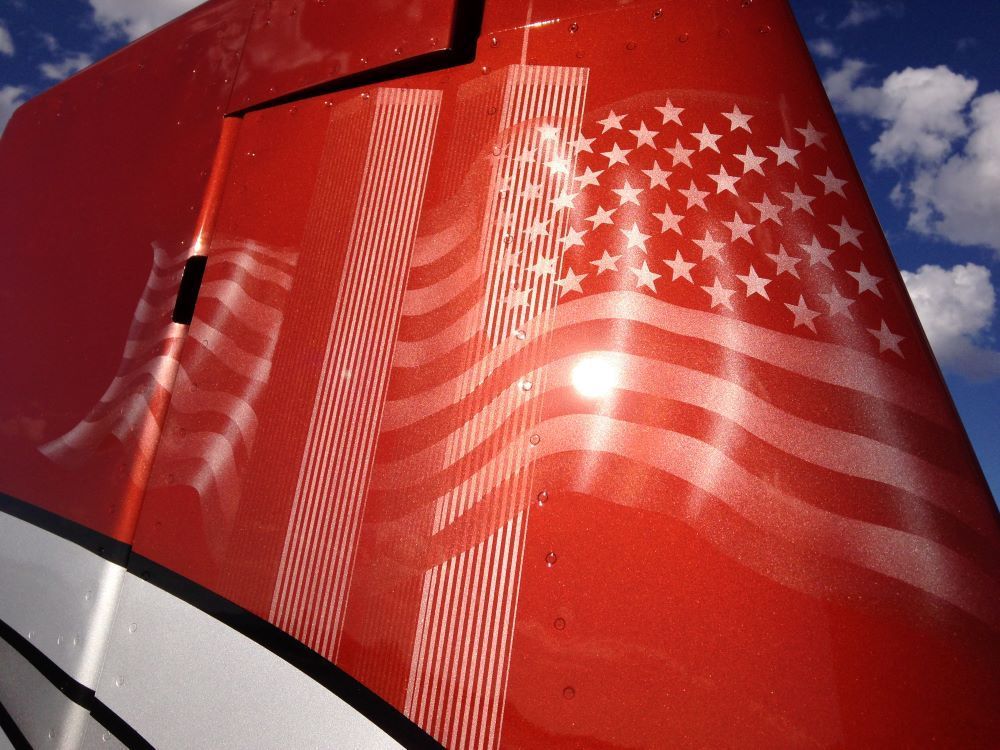
Like the other SATA mentors, Glenn is an aircraft builder. He loves his RV-9A, and when passengers ask about the placard on his panel that says “10/10/22” he explains, “It took me ten years, ten months and twenty-two days to complete this airplane.”


Completely happy in the West, Glenn and Carol spend much of their summers in western Montana. Many folks have either met, or will meet Glenn while he volunteers as host at Ryan Field. Ask him about SATA and you’ll feel his passion about helping young people fulfill their dream to fly. 

See https://soazteenaviation.org to learn more.


Submitted on June 11, 2024
By Carmine Mowbray

Recent Posts
By Kodi Myhre December 23, 2025
At about this time, every year, we have this conversation at the RAF about what our year end letter (code for asking for your financial support) should say to you, and about the RAF and the accomplishments of the past year.
By Taylin Trafton December 23, 2025
Our many RAF supporters have such vast and varied experience, and we’re capturing some of their words of wisdom to share with you. This guest editorial is by Stef Goza, a pilot and an RAF Alaska liaison.
By lellington December 21, 2025
Bill credits aviation for much of his success in business and the ability to serve his companies and family. What began in a Champ, and a Tri-Pacer owned by five people, turned into what Bill calls, “a key business tool” in which he accumulated 9,000 hours – in a Cheyenne, a Pilatus, and a TBM, where ninety-five percent of his flying was for business. “My retirement enabled me to recall ‘Why I Learned to Fly’, a slogan from an old RAF video.” Bill’s son, Patrick, purchased the C185 they now share. “While attending a business function, some associates arrived in corporate jets. As they joined up on the tarmac, the jet pilots gathered around Patrick’s 185, and one of the passengers asked, ‘What’s special about this?’ No explanation needed for this RAF audience,” Bill says. “My involvement in the RAF is, in a partial way, repaying the rewards aviation has endowed me with. Having been involved in many worthwhile nonprofits, this is one where financial support is only part of the picture. Physically participating in great projects that have a lasting effect, with good people, returns a great personal benefit,” he says. “My only regret is that I wasn’t there at the start.” Bill and his wife Jane are privileged to be able to split time between their long-time home in eastern Nebraska and Scottsdale, Arizona. While still serving on several boards, he enjoys golf “about every third shot,” biking, cars, and reading, but always looks forward to the time he can be involved in the RAF. “It’s flying with a purpose,” he adds. Bill can be reached at bdugan@theraf.org
December 15, 2025
AR Ambassador
By Taylin Trafton December 11, 2025
A Christmas gift of flight lessons from his parents started Scott Anttila’s aviation journey in 1985. “I learned at Johnson Field, a small grass strip tucked into the woods in Michigan’s Upper Peninsula, and that early exposure to simple backcountry flying stuck with me,” Scott says. Growing up in the U.P., he spent a lot of time outdoors and found that flying was another way to get to the places he liked to explore—especially the ones most people never saw. As he earned more ratings and eventually moved to the Detroit area for work, Scott realized he needed a way to stay connected to northern Michigan. He bought an airplane and used it to get back to the smaller airstrips and lake country he enjoyed. Along the way, he also flew gliders out of Frankfort, soaring along the Sleeping Bear Dunes and towing sailplanes over the Great Lakes. “Those flights gave me a different appreciation for the landscape and made me even more interested in the small, out-of-the-way airports scattered around the state,” he says. Visiting those kinds of places, Scott first came across the Recreational Aviation Foundation. He started using RAF-supported airstrips both inside and outside Michigan. “I noticed how well-kept they were and how much access they opened up,” he says, adding, ”Over the years, I’ve watched a number of grass strips close, which made the RAF’s mission feel especially important to me. Maintaining these airstrips keeps aviation connected to the outdoors and makes it possible for more people to reach the quiet, remote areas that inspired me to fly in the first place.” Scott joins the other two RAF Michigan Liaisons, General Grant and Tanmoy Ganguly. He can be reached at santtila@theraf.org . Submitted December 11, 2025.