FATHER-SON PAIR CONTINUE TO IMPROVE CREIGHTON ISLAND
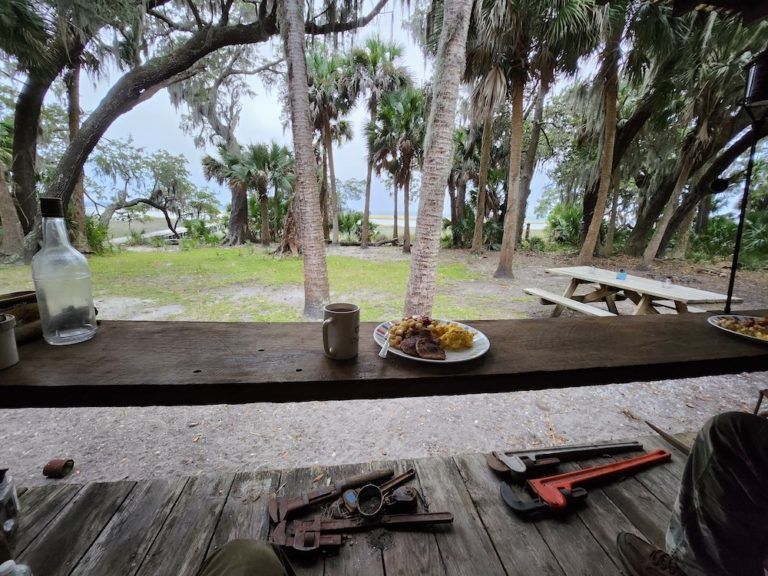
RAF Georgia Ambassador and Bonanza pilot Eric Davis and his father Gary evaded poor flying weather and made the four-hour drive and boat ride into Creighton Island in October to make a variety of improvements to the unique fly-in island setting. They have proven to be a multi-skilled “dynamic duo” when it comes to upkeep and upgrades.


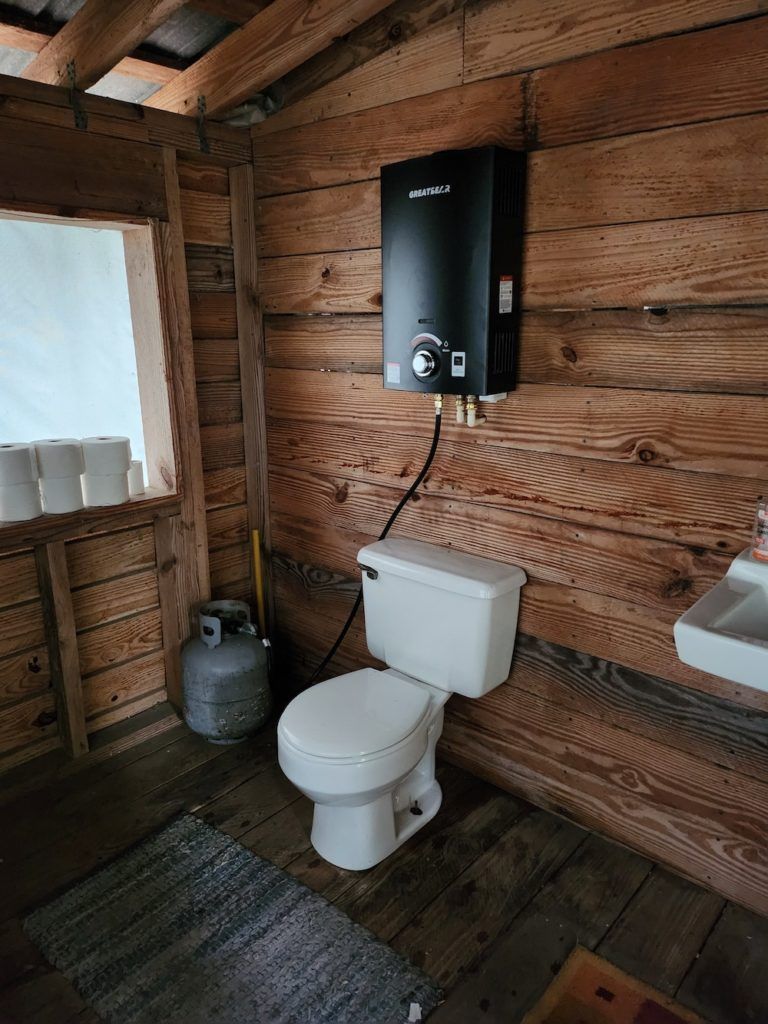
They installed a second new tankless water heater, so both showers have dedicated hot water. Thanks to the water pressure boost pump Eric installed last year, “we finally have good water pressure so both showers can be used at the same time,” he said. With no electricity on the island, he noted that the Honda generator must be running in order for the boost pump to operate, and the shower lights to burn. They also repaired the PVC water supply lines that feed the middle cabin, restoring water service to that location.
Gary spent time on the tractor mowing the runway, then using the box blade implement, he leveled some high spots, and they smoothed out dips caused by animals digging. Gary also mowed the area between the pavilion and the shoreline, where volunteers had cleared underbrush and installed an RAF fire ring during a previous work party.


Eric completed battery maintenance on the 100-ft high fire-watch tower where he’d previously installed the island’s line-of-sight wireless radios. He explains that Island owner Frank Williams had purchased the tower from the Forest Service, then barged the parts to the Island and rebuilt it with help from friends, years before Creighton Island was known to the RAF. 


“The views from the tower are amazing and it’s a great place to enjoy the sunrise or sunset,” Eric says. “It was the perfect place for me to install the radios, providing an unobstructed view to the mainland where we connect to the Internet. From this tower, I redistribute the signal wirelessly to several structures on the island as well as the windsock tower, where the runway cameras and weather station are installed.” The solar-powered system provides WiFi internet service to island visitors as well as keeping the runway camera and weather station feeds online. “I am pleased that it’s been in near-continuous operation since 2019, powered only by the sun,” he added.
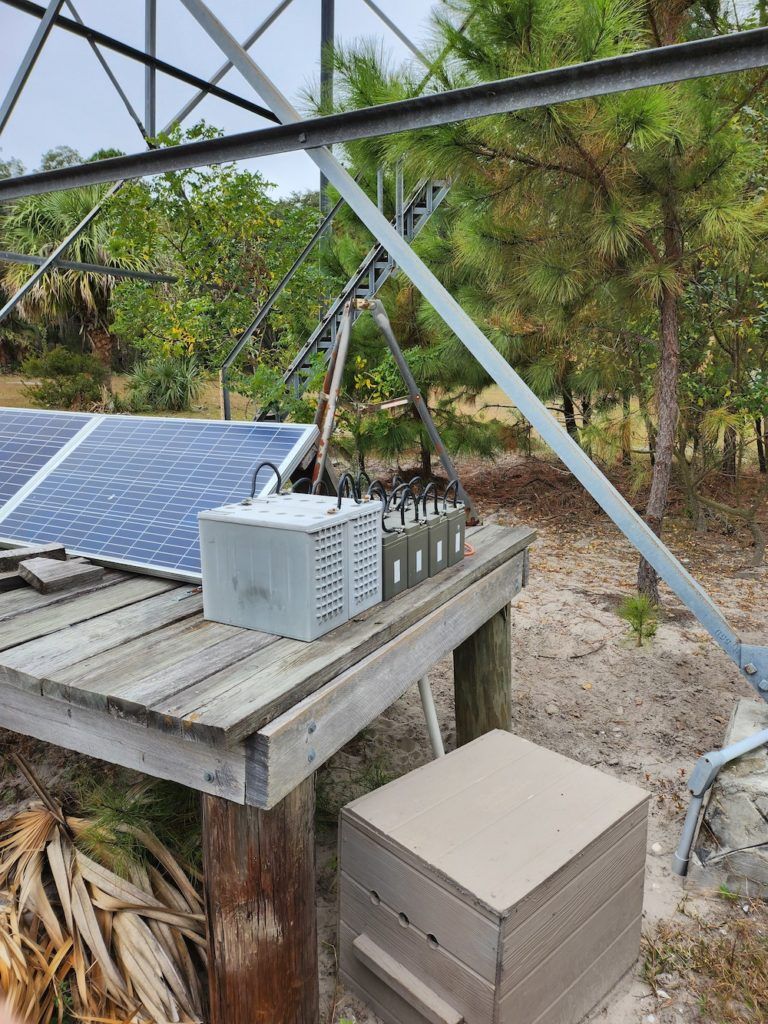

The batteries ensure the system stays online overnight and during extended periods of cloud coverage. Users may have noted some recent intermittence. If the battery voltage drops below a safe level, the runway system shuts down until the solar panels can recharge the batteries the following day. The batteries on the windsock tower need to be replaced due to age, combined with shorter seasonal daylight. Eric plans to replace them in December.


The RAF thanks Eric and Gary for their skills and dedication to improving Creighton Island for all to enjoy. The pair have devoted hundreds of hours, substantial materials and travel expense.


“Fortunately there’s not much needed in the way of maintenance except to clean the solar panels and replace the batteries every couple of years,” Eric says. “As an RAF supporter and ambassador, I’ve done this in the spirit of the RAF’s mission and as far as most are concerned, these improvements were made by the RAF,” he adds.

Submitted on December 14, 2022


Posted in News

Recent Posts
By Kodi Myhre December 23, 2025
At about this time, every year, we have this conversation at the RAF about what our year end letter (code for asking for your financial support) should say to you, and about the RAF and the accomplishments of the past year.
By Taylin Trafton December 23, 2025
Our many RAF supporters have such vast and varied experience, and we’re capturing some of their words of wisdom to share with you. This guest editorial is by Stef Goza, a pilot and an RAF Alaska liaison.
By lellington December 21, 2025
Bill credits aviation for much of his success in business and the ability to serve his companies and family. What began in a Champ, and a Tri-Pacer owned by five people, turned into what Bill calls, “a key business tool” in which he accumulated 9,000 hours – in a Cheyenne, a Pilatus, and a TBM, where ninety-five percent of his flying was for business. “My retirement enabled me to recall ‘Why I Learned to Fly’, a slogan from an old RAF video.” Bill’s son, Patrick, purchased the C185 they now share. “While attending a business function, some associates arrived in corporate jets. As they joined up on the tarmac, the jet pilots gathered around Patrick’s 185, and one of the passengers asked, ‘What’s special about this?’ No explanation needed for this RAF audience,” Bill says. “My involvement in the RAF is, in a partial way, repaying the rewards aviation has endowed me with. Having been involved in many worthwhile nonprofits, this is one where financial support is only part of the picture. Physically participating in great projects that have a lasting effect, with good people, returns a great personal benefit,” he says. “My only regret is that I wasn’t there at the start.” Bill and his wife Jane are privileged to be able to split time between their long-time home in eastern Nebraska and Scottsdale, Arizona. While still serving on several boards, he enjoys golf “about every third shot,” biking, cars, and reading, but always looks forward to the time he can be involved in the RAF. “It’s flying with a purpose,” he adds. Bill can be reached at bdugan@theraf.org
December 15, 2025
AR Ambassador
By Taylin Trafton December 11, 2025
A Christmas gift of flight lessons from his parents started Scott Anttila’s aviation journey in 1985. “I learned at Johnson Field, a small grass strip tucked into the woods in Michigan’s Upper Peninsula, and that early exposure to simple backcountry flying stuck with me,” Scott says. Growing up in the U.P., he spent a lot of time outdoors and found that flying was another way to get to the places he liked to explore—especially the ones most people never saw. As he earned more ratings and eventually moved to the Detroit area for work, Scott realized he needed a way to stay connected to northern Michigan. He bought an airplane and used it to get back to the smaller airstrips and lake country he enjoyed. Along the way, he also flew gliders out of Frankfort, soaring along the Sleeping Bear Dunes and towing sailplanes over the Great Lakes. “Those flights gave me a different appreciation for the landscape and made me even more interested in the small, out-of-the-way airports scattered around the state,” he says. Visiting those kinds of places, Scott first came across the Recreational Aviation Foundation. He started using RAF-supported airstrips both inside and outside Michigan. “I noticed how well-kept they were and how much access they opened up,” he says, adding, ”Over the years, I’ve watched a number of grass strips close, which made the RAF’s mission feel especially important to me. Maintaining these airstrips keeps aviation connected to the outdoors and makes it possible for more people to reach the quiet, remote areas that inspired me to fly in the first place.” Scott joins the other two RAF Michigan Liaisons, General Grant and Tanmoy Ganguly. He can be reached at santtila@theraf.org . Submitted December 11, 2025.