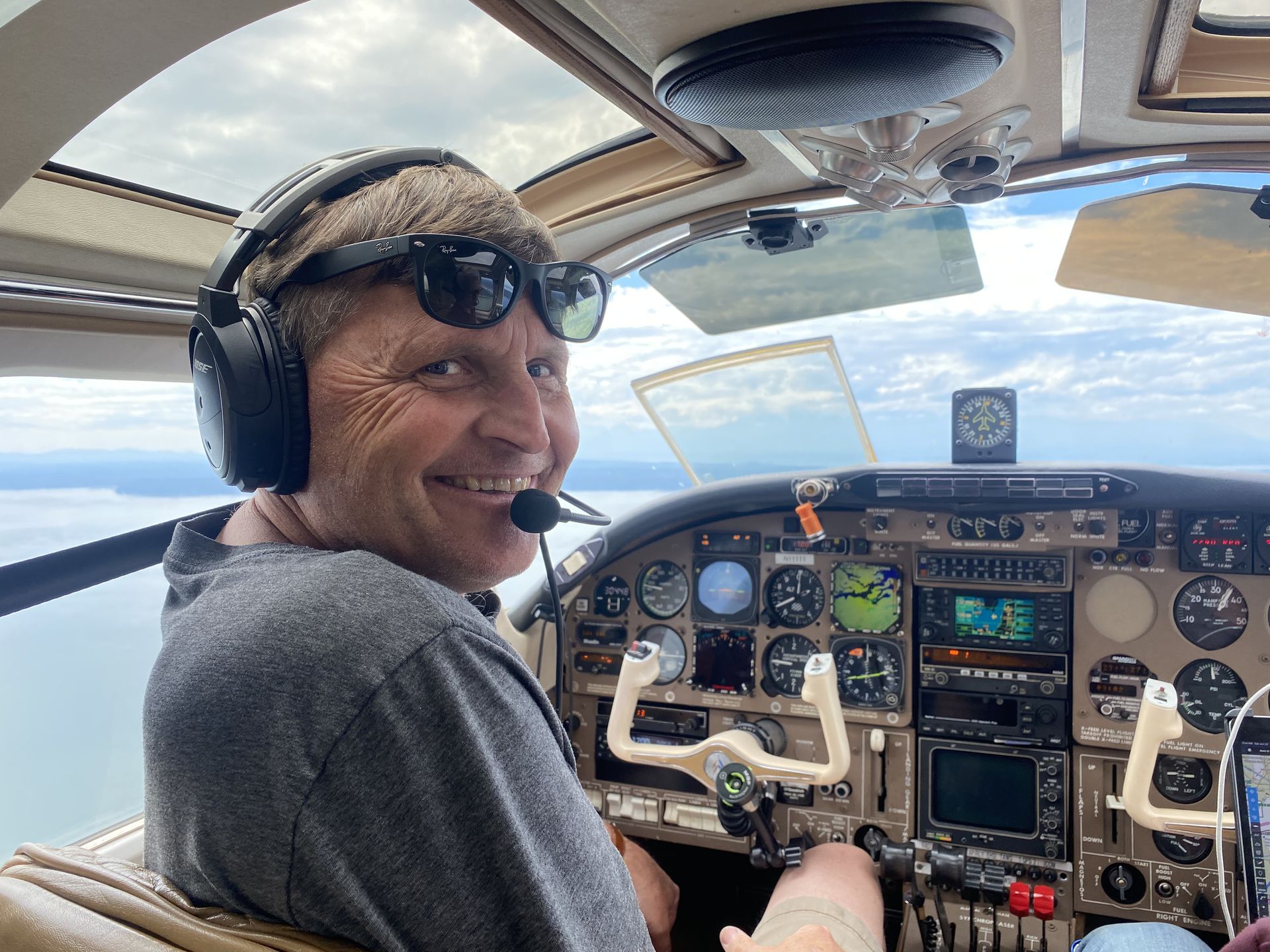
Donn Castonguay

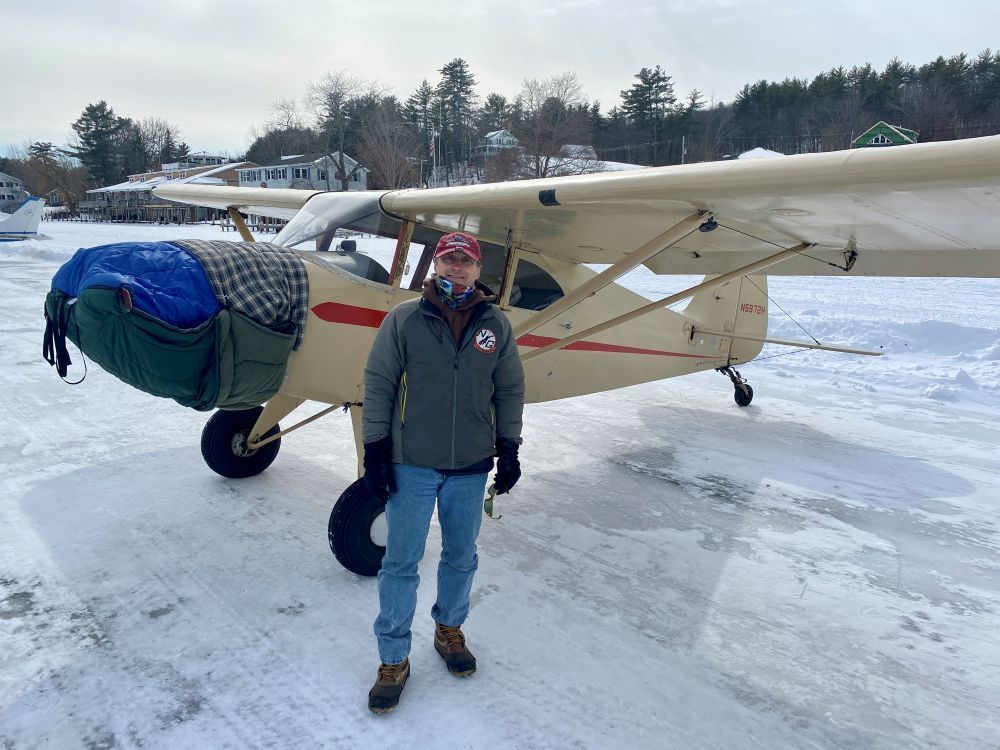
From watching a radar screen the better part of his work day, to watching out the windscreen of his 1949 Piper PA-16 Clipper, RAF Supporter Donn Castonguay is very happy to have made the transition to his place in the GA world. He and his wife Suzanne enjoy leisurely flights over the green rolling hills, colonial architecture, and covered bridges of the Northeast from their home in West Cornwall, Connecticut. 


RAF Liaison Drew Lyons — then of Connecticut — got the couple engaged in work parties at Mt. Tobe (Waterbury airfield), one of the few remaining public turf airfields in Connecticut.  Suzanne and Donn recognized and appreciate the RAF mission to preserve this and other idyllic airfields against development pressure and willingly pitch in to help.

Donn’s career was a New York Center controller located at Long Island MacArthur Airport. He might have been the voice on your radio when you asked for flight following, or transitioned into or out of his busy New York airspace. 

Donn retired in 2018, trading busy Long Island for Connecticut’s quiet corner. His wife Suzanne, also retired from her career as an architectural consultant specializing in “curtain wall” construction — the high-rise glass and metal wall designed to move independently from the floors.

They met in college at Pratt Institute in Brooklyn, both pursuing architecture, then Donn discovered a new interest in aviation. He got his private pilot license in 2010 and wanted his tailwheel endorsement, which Berkshire Aviation in Great Barrington, Massachusetts provided in their Cubs.


Flying with the Civil Air Patrol Oxford, Conn. Squadron, Donn tows gliders during CAP’s summer ten-day Academies and enjoys his role helping teens solo in those ten days. “There’s nothing like soloing an airplane to make someone feel that they can do anything,” he says. Many cadets advance to the Air Force Academy.


Piper’s first Clipper rolled out of the Lock Haven factory in 1949, priced just under $3,000. Donn found this one in March of 2018. The plane is perfectly suitable for Donn, Suzanne and camping gear. They flew it to AirVenture in 2021, enjoying the Piper Short Wing gathering along the way. They have flown to Sun N’ Fun, and to an Antique Airplane Association fly-in in Blakesburg, Iowa. To get a dose of high speed flying, Donn attended several Reno Air Races with a friend.


Castonguays have two grown sons. One is employed in a New York area school for autistic children. The other settled in Maine after discovering his passion for boats aboard a windjammer out of Penobscot Bay. He is engaged in digital design for boat builders.

Today, Donn flies photo missions for the state with his CAP squadron, and serves as a lifeguard at the local YMCA. He enjoys motorcycle touring, and tinkering with their 1993 Volkswagen “Weekender” camper van. He and Suzanne enjoy a half-day flight to a favorite camping airfield, like Plumb Island, north of Boston where they take a car to the beach, or Parlin in New Hampshire where the RAF made improvements, and you can bicycle to a nice dinner in Newport. 


In contrast to the West with its higher elevations, density altitude and convective turbulence, Donn points out, “You don’t need a 180 here in the Northeast to enjoy beautiful flying over forested areas with welcoming small towns here and there.” In fact, at 100 mph, one can really enjoy sightseeing New England.

Submitted on January 10, 2025
By Carmine Mowbray


Recent Posts
By Kodi Myhre December 23, 2025
At about this time, every year, we have this conversation at the RAF about what our year end letter (code for asking for your financial support) should say to you, and about the RAF and the accomplishments of the past year.
By Taylin Trafton December 23, 2025
Our many RAF supporters have such vast and varied experience, and we’re capturing some of their words of wisdom to share with you. This guest editorial is by Stef Goza, a pilot and an RAF Alaska liaison.
By lellington December 21, 2025
Bill credits aviation for much of his success in business and the ability to serve his companies and family. What began in a Champ, and a Tri-Pacer owned by five people, turned into what Bill calls, “a key business tool” in which he accumulated 9,000 hours – in a Cheyenne, a Pilatus, and a TBM, where ninety-five percent of his flying was for business. “My retirement enabled me to recall ‘Why I Learned to Fly’, a slogan from an old RAF video.” Bill’s son, Patrick, purchased the C185 they now share. “While attending a business function, some associates arrived in corporate jets. As they joined up on the tarmac, the jet pilots gathered around Patrick’s 185, and one of the passengers asked, ‘What’s special about this?’ No explanation needed for this RAF audience,” Bill says. “My involvement in the RAF is, in a partial way, repaying the rewards aviation has endowed me with. Having been involved in many worthwhile nonprofits, this is one where financial support is only part of the picture. Physically participating in great projects that have a lasting effect, with good people, returns a great personal benefit,” he says. “My only regret is that I wasn’t there at the start.” Bill and his wife Jane are privileged to be able to split time between their long-time home in eastern Nebraska and Scottsdale, Arizona. While still serving on several boards, he enjoys golf “about every third shot,” biking, cars, and reading, but always looks forward to the time he can be involved in the RAF. “It’s flying with a purpose,” he adds. Bill can be reached at bdugan@theraf.org
December 15, 2025
AR Ambassador
By Taylin Trafton December 11, 2025
A Christmas gift of flight lessons from his parents started Scott Anttila’s aviation journey in 1985. “I learned at Johnson Field, a small grass strip tucked into the woods in Michigan’s Upper Peninsula, and that early exposure to simple backcountry flying stuck with me,” Scott says. Growing up in the U.P., he spent a lot of time outdoors and found that flying was another way to get to the places he liked to explore—especially the ones most people never saw. As he earned more ratings and eventually moved to the Detroit area for work, Scott realized he needed a way to stay connected to northern Michigan. He bought an airplane and used it to get back to the smaller airstrips and lake country he enjoyed. Along the way, he also flew gliders out of Frankfort, soaring along the Sleeping Bear Dunes and towing sailplanes over the Great Lakes. “Those flights gave me a different appreciation for the landscape and made me even more interested in the small, out-of-the-way airports scattered around the state,” he says. Visiting those kinds of places, Scott first came across the Recreational Aviation Foundation. He started using RAF-supported airstrips both inside and outside Michigan. “I noticed how well-kept they were and how much access they opened up,” he says, adding, ”Over the years, I’ve watched a number of grass strips close, which made the RAF’s mission feel especially important to me. Maintaining these airstrips keeps aviation connected to the outdoors and makes it possible for more people to reach the quiet, remote areas that inspired me to fly in the first place.” Scott joins the other two RAF Michigan Liaisons, General Grant and Tanmoy Ganguly. He can be reached at santtila@theraf.org . Submitted December 11, 2025.