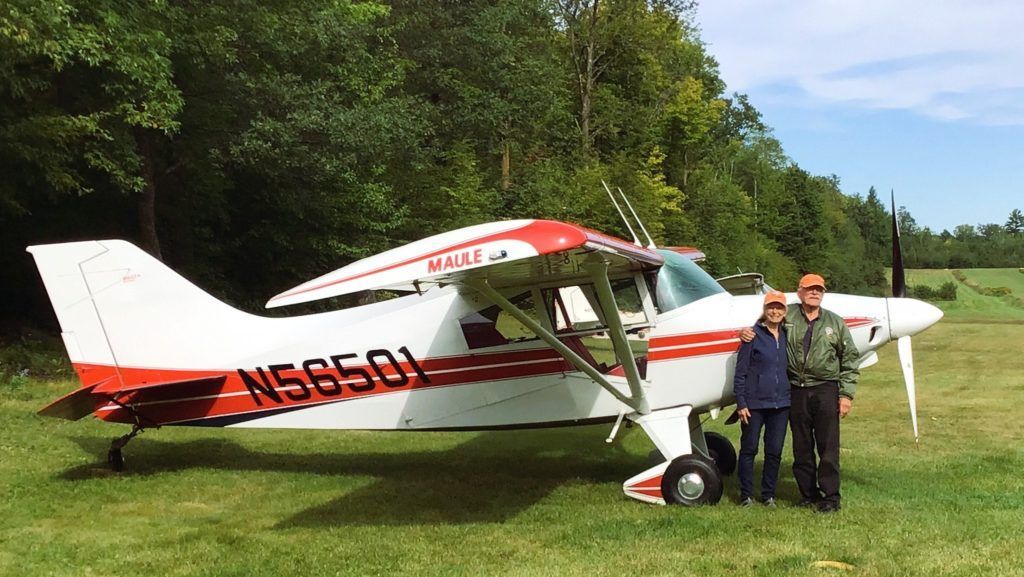
Bob & Judy Gillette

When you meet Bob and Judy Gillette, it’s easy to imagine them sailing their traditional two masted teak ketch off the California coast, or tooling around the Midwest countryside in one of their vintage wire-wheeled Jaguars. Visitors have enjoyed Gillette’s warm hospitality after landing on their 2,400-ft turf airfield at Lakewood Lodge in northern Wisconsin, where Bob and Judy hangar their airplanes. Wisconsin winters don’t slow them down, as they have enjoyed their Maule on skis, and in the past spent time on snowmobiles, snowshoes and cross-country skis.


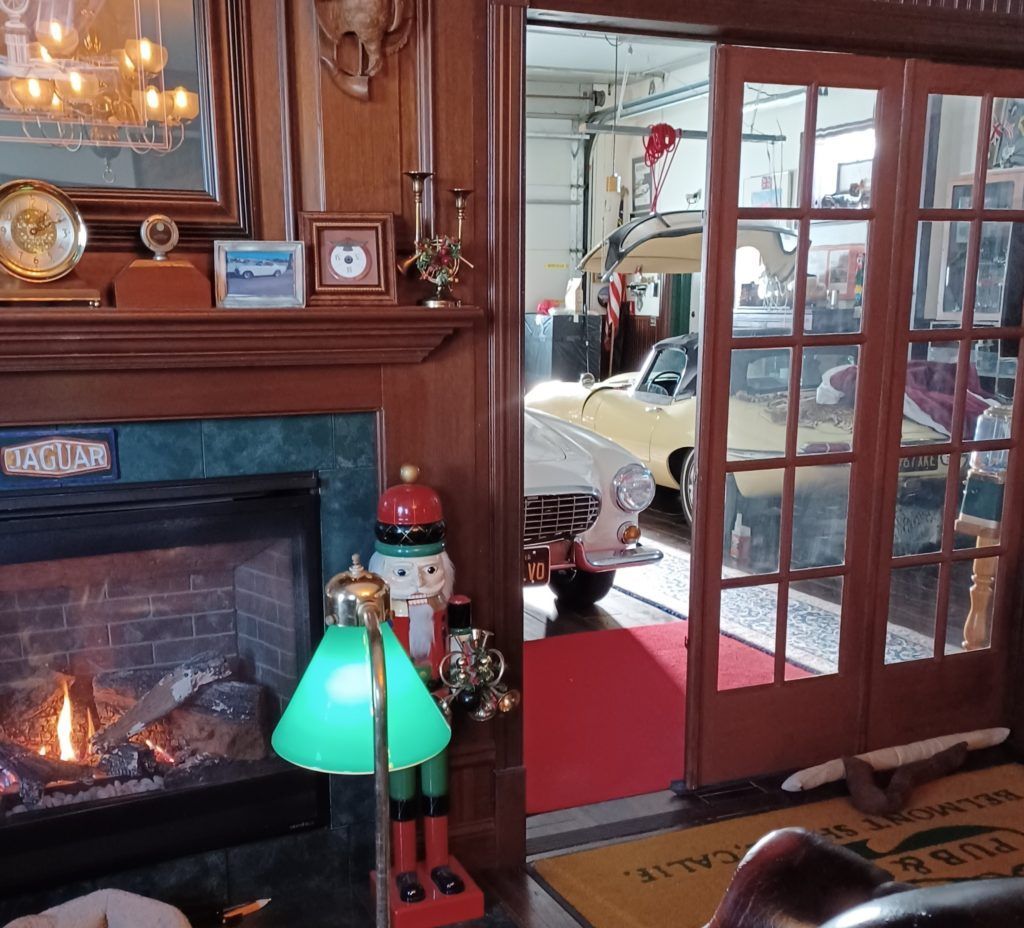
“Now we go north for our winters,” Bob says. North? “About five miles north of the Lodge to our home in town,” Judy adds. They purchased the old Stone Lake fire hall, and turned that drab gray building into their cozy home, installing coffered ceilings and filling it with memorabilia. There’s adequate shop space for Bob to work on his array of vintage autos – more than you can count on both hands. One, a 1960 XK 150S with right hand drive was owned by British actor Trevor Howard. “We like old things,” Bob confesses. Lakewood Lodge is on a gravel road, and Judy explains, “We prefer living in town most of the winter rather than drive on all that gravel. It saves me a lot of polishing.”


Judy, originally from Tillamook Oregon, and Bob, a native of Wisconsin, met thanks to their respective careers with United Airlines. Judy had tried office work in Portland after graduating from high school, but says, “Office work wasn’t fun,” so she applied as a flight attendant. “I took Newark, since no one else wanted it,” she added. Bob was a pilot initially based in Chicago, and it was fortuitous for them both when he got tired of digging his car out of snowbanks and bid for Los Angeles, where Judy was then based. They married, and lived for a time on “Blackguard”, the 40-ft Taiwan-built ketch that Bob had bought by then.


Ever since taking the stick of a J-3 as a kid, Bob knew he wanted to fly. “I was working nights in the development department for Woodward Governor Company in Rockford, Illinois. I went home, and thought about my friend having hired on at United. I could have just stayed in bed and gotten more sleep. We have chances in life where we come to a fork in the road. So I headed for O’Hare for my interview with United,” he says, and left a job he liked as machinist and lab technician. “In my rush, I forgot to put on a belt, so I spent the whole interview with my stomach sucked in and my suit coat buttoned so they wouldn’t know I was forgetful. I knew they wouldn’t want THAT in a pilot!”

Bob’s passion for learning and flying led to his 33 year United career with both recip and turbine ratings. He starting as Flight Engineer on the DC6, then Boeing 737 and 720; then First Officer on the 727. He stopped counting after reaching 18,000 hours all over the world. In 2000, he reached the mandatory retirement age of 60, but certainly kept flying. Gillettes have owned a variety of GA aircraft including Bob’s first, a Piper Vagabond; and more recently, a Luscombe 8A, and one-of a-kind Maule M5-200, still owned by an RAF supporter.


Judy earned her private pilot license, and enjoyed flying their Luscombe off their airfield. She retired from United after 32 years, when Bob retired.


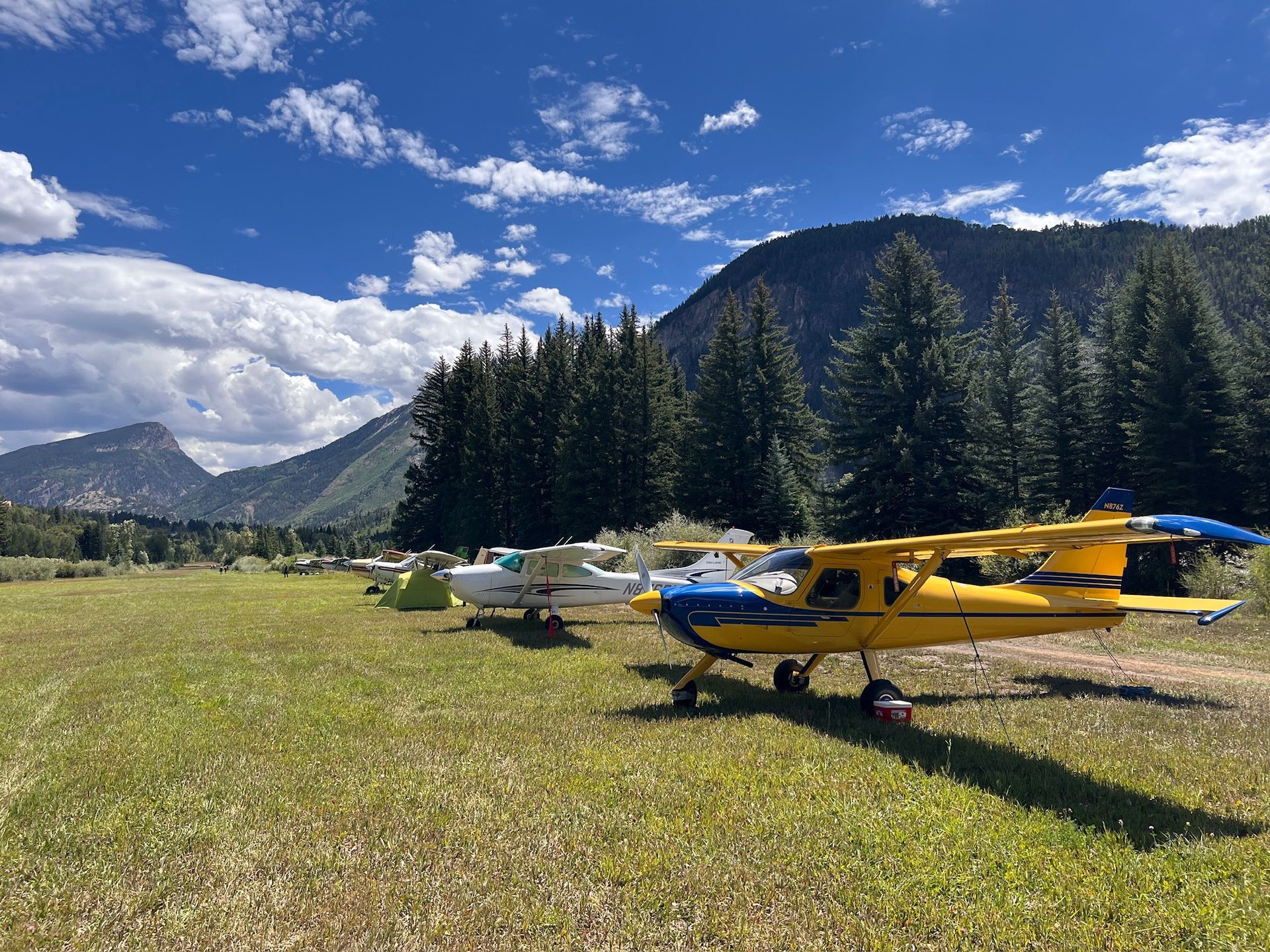
Gillettes invite folks to come enjoy their facilities on the shore of Loyhead Lake. They added an RV campground in the pine trees with picnic tables, fire ring and electrical hookups. There are tie-downs for airplane camping. They host an annual fly-in and picnic there. The four-day event is an annual gathering of local EAA chapter 631 and RAF friends, and is a leisurely opportunity for folks to gather and spend time together.
Submitted March 14, 2024

By Carmine Mowbray


Recent Posts

By Kodi Myhre December 23, 2025
At about this time, every year, we have this conversation at the RAF about what our year end letter (code for asking for your financial support) should say to you, and about the RAF and the accomplishments of the past year.
By Taylin Trafton December 23, 2025
Our many RAF supporters have such vast and varied experience, and we’re capturing some of their words of wisdom to share with you. This guest editorial is by Stef Goza, a pilot and an RAF Alaska liaison.
By lellington December 21, 2025
Bill credits aviation for much of his success in business and the ability to serve his companies and family. What began in a Champ, and a Tri-Pacer owned by five people, turned into what Bill calls, “a key business tool” in which he accumulated 9,000 hours – in a Cheyenne, a Pilatus, and a TBM, where ninety-five percent of his flying was for business. “My retirement enabled me to recall ‘Why I Learned to Fly’, a slogan from an old RAF video.” Bill’s son, Patrick, purchased the C185 they now share. “While attending a business function, some associates arrived in corporate jets. As they joined up on the tarmac, the jet pilots gathered around Patrick’s 185, and one of the passengers asked, ‘What’s special about this?’ No explanation needed for this RAF audience,” Bill says. “My involvement in the RAF is, in a partial way, repaying the rewards aviation has endowed me with. Having been involved in many worthwhile nonprofits, this is one where financial support is only part of the picture. Physically participating in great projects that have a lasting effect, with good people, returns a great personal benefit,” he says. “My only regret is that I wasn’t there at the start.” Bill and his wife Jane are privileged to be able to split time between their long-time home in eastern Nebraska and Scottsdale, Arizona. While still serving on several boards, he enjoys golf “about every third shot,” biking, cars, and reading, but always looks forward to the time he can be involved in the RAF. “It’s flying with a purpose,” he adds. Bill can be reached at bdugan@theraf.org
December 15, 2025
AR Ambassador
By Taylin Trafton December 11, 2025
A Christmas gift of flight lessons from his parents started Scott Anttila’s aviation journey in 1985. “I learned at Johnson Field, a small grass strip tucked into the woods in Michigan’s Upper Peninsula, and that early exposure to simple backcountry flying stuck with me,” Scott says. Growing up in the U.P., he spent a lot of time outdoors and found that flying was another way to get to the places he liked to explore—especially the ones most people never saw. As he earned more ratings and eventually moved to the Detroit area for work, Scott realized he needed a way to stay connected to northern Michigan. He bought an airplane and used it to get back to the smaller airstrips and lake country he enjoyed. Along the way, he also flew gliders out of Frankfort, soaring along the Sleeping Bear Dunes and towing sailplanes over the Great Lakes. “Those flights gave me a different appreciation for the landscape and made me even more interested in the small, out-of-the-way airports scattered around the state,” he says. Visiting those kinds of places, Scott first came across the Recreational Aviation Foundation. He started using RAF-supported airstrips both inside and outside Michigan. “I noticed how well-kept they were and how much access they opened up,” he says, adding, ”Over the years, I’ve watched a number of grass strips close, which made the RAF’s mission feel especially important to me. Maintaining these airstrips keeps aviation connected to the outdoors and makes it possible for more people to reach the quiet, remote areas that inspired me to fly in the first place.” Scott joins the other two RAF Michigan Liaisons, General Grant and Tanmoy Ganguly. He can be reached at santtila@theraf.org . Submitted December 11, 2025.