AOPA REGIONAL MANAGER TEAM FEATURED AT RAF SEPTEMBER ONLINE MEETING
AOPA’s entire State Advocacy team anchored a second annual online meeting with RAF key volunteers on September 22. More than 40 RAF volunteers were brought up-to-date on current efforts of AOPA Regional Managers, and engaged in collaborative discussions about issues critical to both organizations.

AOPA’s Mike Ginter, VP of Airports and State Advocacy, introduced each Regional Manager, stating their purpose as year-round advocates for airports and General Aviation. “We are special interest lobbyists for general aviation and we love it,” Ginter said. Each manager is tasked with staying vigilant on relevant issues. They heartily invite RAF liaisons to bring issues to their attention, and as registered lobbyists, they have the credentials to influence legislators. They have successfully blocked detrimental aircraft fees and taxes, and bolstered state funding programs for GA airports. They’ve educated legislators on industry progress toward cleaner avgas, and advocated for transparent ramp fees, hangar use, Recreational Use Statutes, and turf operating areas, and responded to noise complaints. Ongoing issues include preventing monopolistic FBO pricing, preserving airspace and preventing obstructions like wind turbines and encroaching housing developments. 

Ginter said current casework includes over 400 airports, adding, “We don’t say ‘no’ to any airport issue” that AOPA members bring to them. Some are big closure issues, and some are as simple as renewing airport leases, he said.

This year is the 25th anniversary of AOPA’s Airport Support Network, and a few RAF liaisons serve as ASN volunteers, what Ginter called “The eyes and ears, our early warning system at each airport.” AOPA now has 2,000 such volunteers, and is inviting more people to get involved  here. Anyone may access AOPA’s Resource Library here.

The chat turned to Adam Williams, AOPA’s Airport Policy Manager who interacts with the FAA, and educates policy makers on the value of GA and airports. Bill Dunn, Aviation Strategies Consultant – who started the ASN system – also spoke briefly.

Each Regional Manager then summarized their specific issues, and invited RAF liaisons to respond with regional concerns. Topics they raised ranged from approval of turf operating areas; Wakulla, Florida’s tabling the vote to terminate its airport lease; preserving Alaska’s fly-in cabins, the reclamation of Childs Glacier strip, and adding Alaska weather stations and cameras; Washington state aviation fuel tax allocations; charting Oregon and Utah’s recreational strips; Idaho’s funding surplus that could result in lowering aircraft sales tax, and upcoming housing developments at McCall, Donnelly, and Cascade.

The RAF appreciates its successful relationship with AOPA, and specifically thanks each of these executives for their participation on September’s Fire Hub Chat.

Here is  AOPA’s website  displaying each region. You are welcome to contact your state’s AOPA Regional Manager:

Mike Ginter
VP of Airports and State Advocacy
mike.ginter@aopa.org

Adam Williams
Manager, Airport Policy, DC Office
adam.williams@aopa.org

Tom Chandler
Central Southwest Region
tom.chandler@aopa.org

Jared Yoshiki
Western Pacific Region
jared.yoshiki@aopa.org

Tom George
Alaska Region
tom.george@aopa.org

Brad Schuster
Northwest Mountain Region
brad.schuster@aopa.org

Kyle Lewis
Great Lakes Region
kyle.lewis@aopa.org

Sean Collins
Eastern Region
sean.collins@aopa.org

Stacey Heaton
Southern Region
stacey.heaton@aopa.org

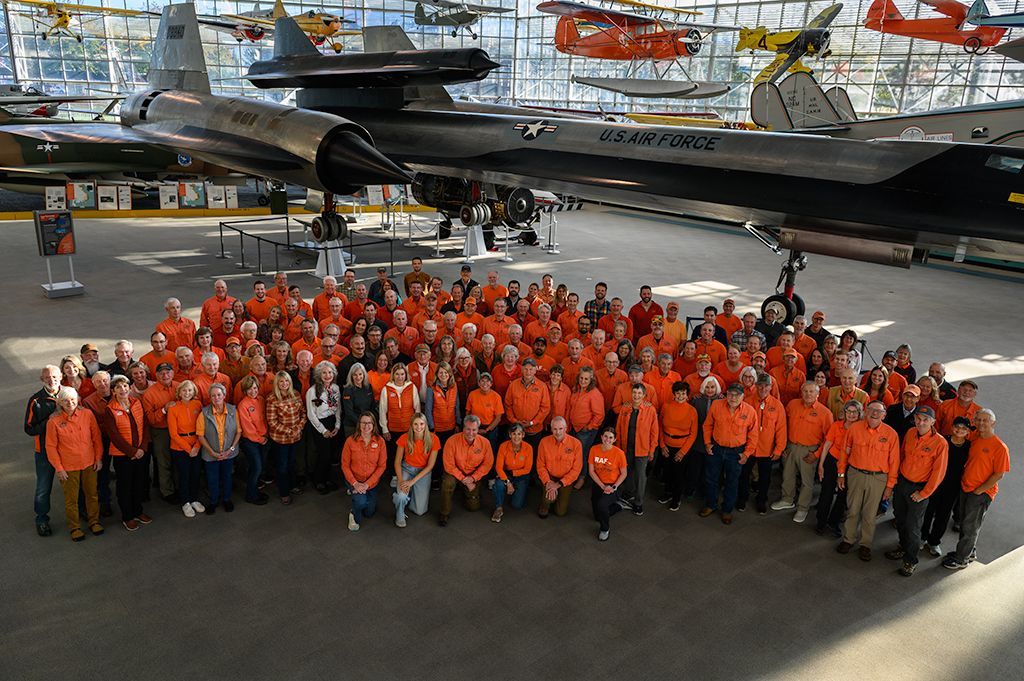
Submitted on September 27, 2022. Photo by Sarah Tamar.
Written by Carmine Mowbray.


Posted in News

Recent Posts
By Kodi Myhre December 23, 2025
At about this time, every year, we have this conversation at the RAF about what our year end letter (code for asking for your financial support) should say to you, and about the RAF and the accomplishments of the past year.
By Taylin Trafton December 23, 2025
Our many RAF supporters have such vast and varied experience, and we’re capturing some of their words of wisdom to share with you. This guest editorial is by Stef Goza, a pilot and an RAF Alaska liaison.
By lellington December 21, 2025
Bill credits aviation for much of his success in business and the ability to serve his companies and family. What began in a Champ, and a Tri-Pacer owned by five people, turned into what Bill calls, “a key business tool” in which he accumulated 9,000 hours – in a Cheyenne, a Pilatus, and a TBM, where ninety-five percent of his flying was for business. “My retirement enabled me to recall ‘Why I Learned to Fly’, a slogan from an old RAF video.” Bill’s son, Patrick, purchased the C185 they now share. “While attending a business function, some associates arrived in corporate jets. As they joined up on the tarmac, the jet pilots gathered around Patrick’s 185, and one of the passengers asked, ‘What’s special about this?’ No explanation needed for this RAF audience,” Bill says. “My involvement in the RAF is, in a partial way, repaying the rewards aviation has endowed me with. Having been involved in many worthwhile nonprofits, this is one where financial support is only part of the picture. Physically participating in great projects that have a lasting effect, with good people, returns a great personal benefit,” he says. “My only regret is that I wasn’t there at the start.” Bill and his wife Jane are privileged to be able to split time between their long-time home in eastern Nebraska and Scottsdale, Arizona. While still serving on several boards, he enjoys golf “about every third shot,” biking, cars, and reading, but always looks forward to the time he can be involved in the RAF. “It’s flying with a purpose,” he adds. Bill can be reached at bdugan@theraf.org
December 15, 2025
AR Ambassador
By Taylin Trafton December 11, 2025
A Christmas gift of flight lessons from his parents started Scott Anttila’s aviation journey in 1985. “I learned at Johnson Field, a small grass strip tucked into the woods in Michigan’s Upper Peninsula, and that early exposure to simple backcountry flying stuck with me,” Scott says. Growing up in the U.P., he spent a lot of time outdoors and found that flying was another way to get to the places he liked to explore—especially the ones most people never saw. As he earned more ratings and eventually moved to the Detroit area for work, Scott realized he needed a way to stay connected to northern Michigan. He bought an airplane and used it to get back to the smaller airstrips and lake country he enjoyed. Along the way, he also flew gliders out of Frankfort, soaring along the Sleeping Bear Dunes and towing sailplanes over the Great Lakes. “Those flights gave me a different appreciation for the landscape and made me even more interested in the small, out-of-the-way airports scattered around the state,” he says. Visiting those kinds of places, Scott first came across the Recreational Aviation Foundation. He started using RAF-supported airstrips both inside and outside Michigan. “I noticed how well-kept they were and how much access they opened up,” he says, adding, ”Over the years, I’ve watched a number of grass strips close, which made the RAF’s mission feel especially important to me. Maintaining these airstrips keeps aviation connected to the outdoors and makes it possible for more people to reach the quiet, remote areas that inspired me to fly in the first place.” Scott joins the other two RAF Michigan Liaisons, General Grant and Tanmoy Ganguly. He can be reached at santtila@theraf.org . Submitted December 11, 2025.